
June brings a different kind of citrus energy than February did. The winter bounty of blood oranges and Meyer lemons gives way to firm, fragrant lemons, limes, and later-season navels—and home cooks want bright, fast dinners that don’t leave a sink full of dishes. This updated roundup keeps the original promise—10 weeknight dinners you can make in 20–35 minutes where citrus is more than a garnish—but adds June 2026 kitchen realities: where to buy the best fruit now, small technique changes that save time, and current home-cooking trends that make citrus an even better tool for flavor without excess salt or fat.
Selection criteria
- Prep time: 20–35 minutes total (active prep included).
- Citrus-forward: Citrus is in the sauce, dressing, marinade, or finish—not just a wedge on the plate.
- Real-kitchen friendly: Common ingredients, one-pan or low-dish methods, realistic tools.
- Clear dietary modifications: Gluten-free, dairy-free, vegetarian or vegan swaps noted where relevant.
Methodology (how I chose these)
I tested each recipe in a regular home kitchen—weekday timing, realistic mise en place, and the small pans and spatulas actual cooks use. I timed everything from the moment the first pan went on the stove to the plate hitting the table. For this June 2026 refresh I also walked local markets and spoke with two neighborhood produce managers about what’s reliably in stock in early summer. The goal: maximum flavor with minimum fuss—zest for aroma, juice for acidity, and one single technique per dish that produces an outsized result. Where a new convenience product truly saves time without compromising quality (frozen juice cubes, pre-zested tubs), I call it out. When fresh is noticeably better, I tell you why.
What’s new for June 2026
- Summer citrus shelf-shift: In June you’ll find the most consistent supply in lemons and limes; late-season navels and some grapefruit remain at larger retailers and farmers’ markets. If your recipe calls for winter-only varieties (Meyer, blood orange), swap to lemon or lime and lean on zest for aroma.
- Flavor-first, salt-limited cooking: Many home cooks in 2026 are intentionally reducing sodium. Citrus—especially zest plus a small splash of juice—gives the impression of saltiness and “lift” so you can cut back on added sodium without losing satisfaction.
- Convenience where it counts: Frozen juice cubes and pre-zested citrus tubs are more common in grocery produce aisles and meal-kit boxes. They save time; fresh zest is still best for perfume. If you use frozen juice, thaw to room temperature before adding to emulsified dressings to avoid seizing.
- Plant-forward swaps are mainstream: Home cooks increasingly swap fish or poultry for tofu, tempeh, legumes, or mushrooms and simply up the zest to keep flavor bright. I note swaps in each recipe.
- Medication note: Grapefruit interactions with certain medications (statins, some blood-pressure meds) remain an important safety consideration—see FAQ for guidance.
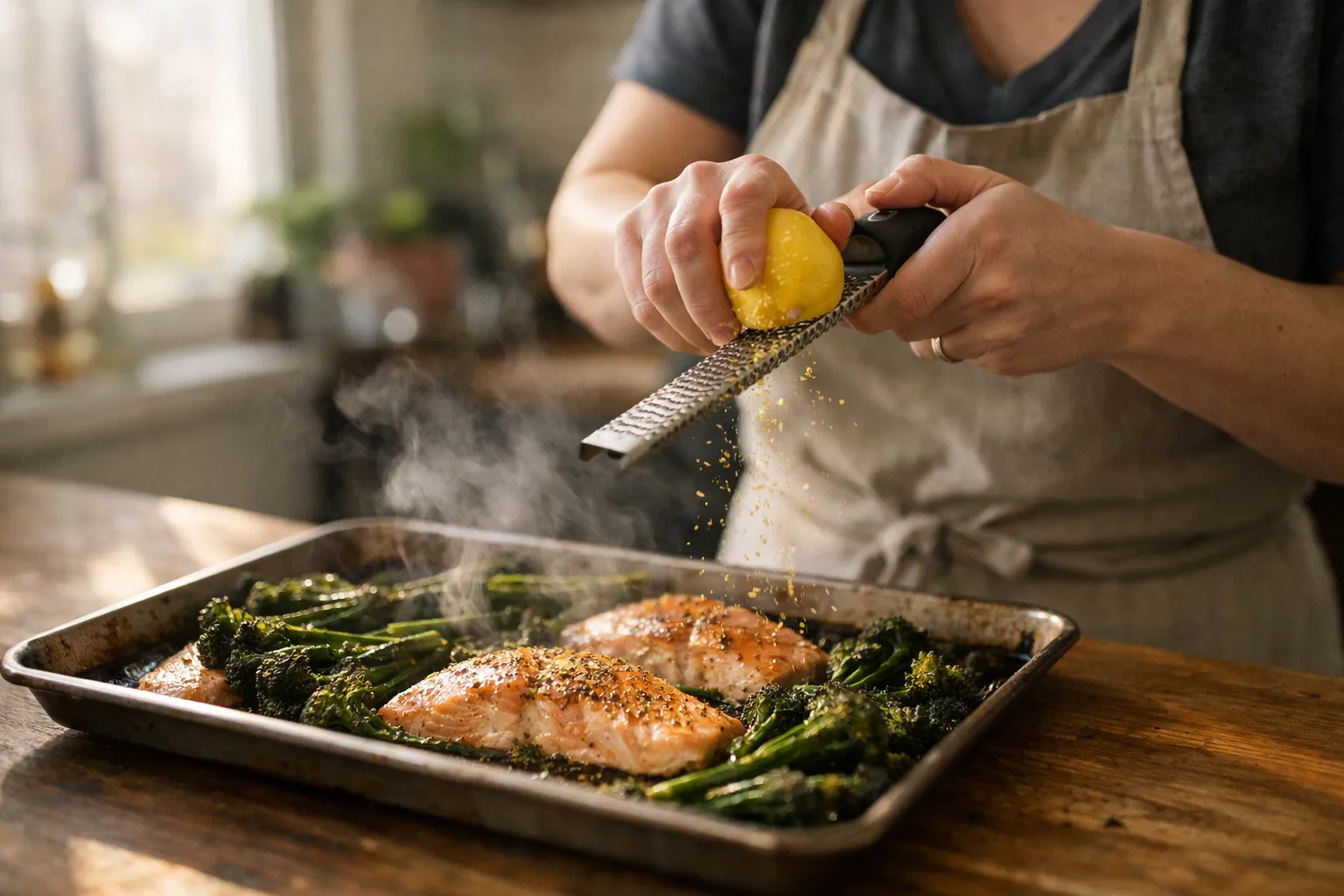
1) Sheet-Pan Orange-Miso Salmon with Broccolini
What it is: Salmon fillets roasted with an orange-miso glaze and broccolini—minimal hands-on time, big aroma.
Key features: Zest for perfume, juice for sweetness and acidity, white miso for umami; sheet-pan cleanup.
Prep time: 10 minutes. Total time: ~25 minutes. Method: Sheet pan at 425°F/220°C.
Why it made the list: Miso adds savory depth quickly; orange zest makes the kitchen smell bright. In June, swap orange for a mix of lemon zest and a touch of honey if oranges are out of season.
Maria’s tip: Don’t skip the zest. Zest before juicing; if the glaze looks thin, brush and return the pan to the oven 2–3 minutes to caramelize. For a vegan version, use thick tofu steaks and roast at the same temperature, turning once.
2) Lemon-Garlic Chickpea Orzo Skillet (One Pan)
What it is: A one-pan orzo with chickpeas, spinach, and bold lemon flavor—short ingredient list, approachable technique.
Key features: Orzo cooks in stock in the same pan; lemon zest for perfume; finishing olive oil or grated hard cheese for richness.
Prep time: 8 minutes. Total time: ~25–30 minutes. Method: Skillet simmer.
Why it made the list: Pantry-friendly and budget-friendly. If you’re watching sodium, use low-sodium stock and boost lemon zest to compensate.
Here’s what it should look like: The orzo should be glossy and separate—if it clumps, splash in hot water and stir gently to loosen. Freezing small lemon-juice cubes is a great shortcut here.
3) Grapefruit-Avocado Shrimp Salad
What it is: Mixed greens with warm seared shrimp, segmented grapefruit, avocado, and a citrus vinaigrette.
Key features: Segment grapefruit over a bowl to catch juices for the dressing; quick sear keeps shrimp tender.
Prep time: 15 minutes. Total time: ~20 minutes. Method: Sear + assemble.
Why it made the list: Light but substantial—great on warmer June nights. If your grapefruit tastes very bitter, add a touch of honey or thinly sliced shallot to the dressing to round it.
Maria’s tip: Save the dressing in the refrigerator for up to 24 hours—avoid overdressing the salad until just before serving to keep avocados fresh-looking.
4) Lime-Skillet Turkey (or Tofu) Lettuce Wraps
What it is: Savory lime-scented ground turkey or crumbled extra-firm tofu served in crisp lettuce leaves.
Key features: Zest for aroma, lime juice to finish, crunchy raw vegetables for contrast.
Prep time: 12 minutes. Total time: ~25 minutes. Method: Skillet sauté.
Why it made the list: Fast, low-carb, and bright—limes are in season and excellent for these wraps in June.
Don’t skip: Lightly toast the lettuce cups (briefly in a dry skillet) if you want a warmer leaf—gives a different texture and prevents sogginess. For vegetarian, press tofu well and increase lime zest to match the brightness of meat.
5) Lemon-Caper Chicken Piccata (Weeknight Version)
What it is: Pan-seared chicken cutlets in a lemon-caper pan sauce—classic, streamlined, and quick.
Key features: Quick pan sauce using broth and lemon; capers add briny contrast; quick dredge is optional.
Prep time: 10–12 minutes. Total time: ~25–30 minutes. Method: Skillet sauté + pan sauce.
Why it made the list: Feels restaurant-level with little effort. If you prefer lower-fat, skip the butter finish and whisk in a tablespoon of extra-virgin olive oil off heat.
Maria’s tip: If the sauce is too sharp, temper with a little grated carrot or a teaspoon of honey—both soften acidity without masking lemon.
6) Orange-Ginger Beef and Snow Peas (Fast Stir-Fry)
What it is: Thin-sliced beef tossed with an orange-ginger glaze and crisp snow peas—high heat, quick caramelization.
Key features: Fast sear for Maillard flavor; cornstarch slurry for a silky sauce; orange zest for aroma.
Prep time: 15 minutes. Total time: ~25 minutes. Method: High-heat stir-fry.
Why it made the list: Citrus in stir-fry gives a modern brightness that keeps the dish from feeling heavy. For a plant-forward version, thinly sliced king oyster mushrooms or tempeh work well.
7) Sheet-Pan Lemon-Dill Potatoes with Asparagus and Feta
What it is: Roasted baby potatoes and asparagus brightened with lemon and dill, finished with crumbled feta.
Key features: Roast potatoes until deeply golden; add asparagus partway through to keep it crisp-tender.
Prep time: 10 minutes. Total time: ~35 minutes. Method: Sheet pan roast.
Why it made the list: Simple veg-forward dinner that showcases early-summer asparagus and keeps oven time efficient. Toss with lemon while hot so the juice sizzles into the potatoes for better flavor absorption.
8) Lemony White Bean “Caesar” Bowls (No Anchovies Needed)
What it is: Creamy lemon-bean dressing blended with cannellini beans, tossed with romaine and crunchy crumbs.
Key features: Beans for body, lemon for brightness, crunchy topping for texture contrast.
Prep time: 15 minutes. Total time: ~20 minutes. Method: No-cook dressing + assembly.
Why it made the list: Satisfying without mayo; lemon prevents the dressing from feeling heavy. For vegan, use nutritional yeast and a splash of caper brine in place of anchovy flavor.
9) Lime-Coconut Cod (or Chickpea) Curry
What it is: Quick coconut curry brightened with lime—gentle spice, fast cook time, and comfort without heaviness.
Key features: Coconut milk for body; lime juice and zest to finish; quick-cooking cod or chickpeas for a plant-forward option.
Prep time: 10 minutes. Total time: ~25–30 minutes. Method: One-pot simmer.
Maria’s tip: When the curry paste hits warm oil it should become aromatic in 30–45 seconds—if not, the pan is too cool. Add lime at the end so the flavor stays fresh.
10) Charred Lemon Pasta with Crispy Breadcrumbs
What it is: Pasta tossed with charred lemon oil, garlic, and crunchy toasted breadcrumbs—the kind of comfort that feels special.
Key features: Charred lemons add caramelized notes; toasted breadcrumbs give crunch; olive oil or butter adds silk.
Prep time: 8 minutes. Total time: ~20 minutes. Method: Boil + skillet.
Why it made the list: A 20-minute fail-safe that hits savory, bright, and textural notes. Press lemon halves cut-side down in a hot skillet 1–2 minutes before juicing for a subtle roasted flavor.
Comparison table: quick citrus dinners at a glance
| Recipe | Prep time | Total time | Method | Serving size | Best for |
|---|---|---|---|---|---|
| Orange-Miso Salmon + Broccolini | 10 min | 25 min | Sheet pan | 4 | Hands-off weeknights |
| Lemon-Garlic Chickpea Orzo | 8 min | 25–30 min | One-pan skillet | 4 | Pantry dinners |
| Grapefruit-Avocado Shrimp Salad | 15 min | 20 min | Sear + assemble | 2–4 | Light but satisfying |
| Lime Turkey/Tofu Lettuce Wraps | 12 min | 25 min | Skillet | 4 | Fast, crunchy dinner |
| Lemon-Caper Chicken Piccata | 10–12 min | 25–30 min | Skillet + sauce | 4 | Date-night-at-home energy |
| Orange-Ginger Beef Stir-Fry | 15 min | 25 min | Stir-fry | 4 | Big flavor, quick cook |
| Lemon-Dill Potatoes + Asparagus | 10 min | 35 min | Sheet pan | 2–4 | Veg-forward meal |
| White Bean “Caesar” Bowls | 15 min | 20 min | No-cook | 4 | Quick lunch-for-dinner |
| Lime-Coconut Cod (or Chickpea) Curry | 10 min | 25–30 min | One-pot simmer | 4 | Cozy + bright |
| Charred Lemon Pasta + Breadcrumbs | 8 min | 20 min | Boil + skillet | 4 | Comfort in a hurry |
Conclusion: what to make first (and how to choose)
If you want the most “wow” for the least effort, start with the Sheet-Pan Orange‑Miso Salmon—it’s forgiving, quick, and fills the house with citrus and umami. For a budget-friendly pantry night, the Lemon‑Garlic Chickpea Orzo is my go-to: economical, flexible, and easy to scale. For a light, cooling dinner on a warm June evening, the Grapefruit‑Avocado Shrimp Salad is bright and fast. And when you need comfort that still tastes alive, the Charred Lemon Pasta is a 20-minute fail-safe I return to at least once a month.
Practical June notes from my kitchen: buy the firmest citrus with fragrant skin—heavier fruit for size often means juicier flesh. Store lemons and limes in the crisper drawer wrapped in a loose plastic bag to keep them fresh for 2–3 weeks. If you zested more than you need, freeze zest in small portions (a teaspoon per mound) on a tray, then bag. Freeze juice in ice cube trays for single-use portions for dressings and curries. And remember: start with less juice than you think you need—citrus is easy to add and hard to take away.
FAQ
How should I wash citrus before zesting?
Rinse citrus under cool running water and rub the skin with your hands or a clean produce brush to remove dust, wax, or residues. Dry with a towel before zesting—wet skin is harder to zest evenly and can clog microplanes.
Can citrus help me cut back on salt?
Yes. Lemon and lime zest add volatile oils that give the perception of brightness and “salty” sensation; a small amount of juice provides acidity that balances flavors. If you’re reducing sodium, taste as you go and add zest in increments—it amplifies flavor without needing as much salt.
Is grapefruit safe for everyone?
No. Grapefruit and its juice can interact with certain medications (notably some statins, calcium-channel blockers, and others) by affecting how the body metabolizes them. If you take prescription medications, check the medication label or ask your pharmacist or doctor before adding grapefruit to your diet.
Are frozen or pre-zested citrus products worth using?
They’re convenient and often fine for cooking when fresh isn’t available. Frozen juice cubes are great for curries and sauces; pre-zested tubs save time for dressings. For finishing a dish where aroma matters, fresh zest is still superior.
What’s the best plant-based swap for the fish and meat recipes?
Firm tofu, tempeh, king oyster mushrooms, or hearty legumes (chickpeas, lentils) are reliable swaps. Press tofu well and increase zest slightly to boost perfume. Tempeh and mushrooms take marinades well and develop good texture in high heat methods.