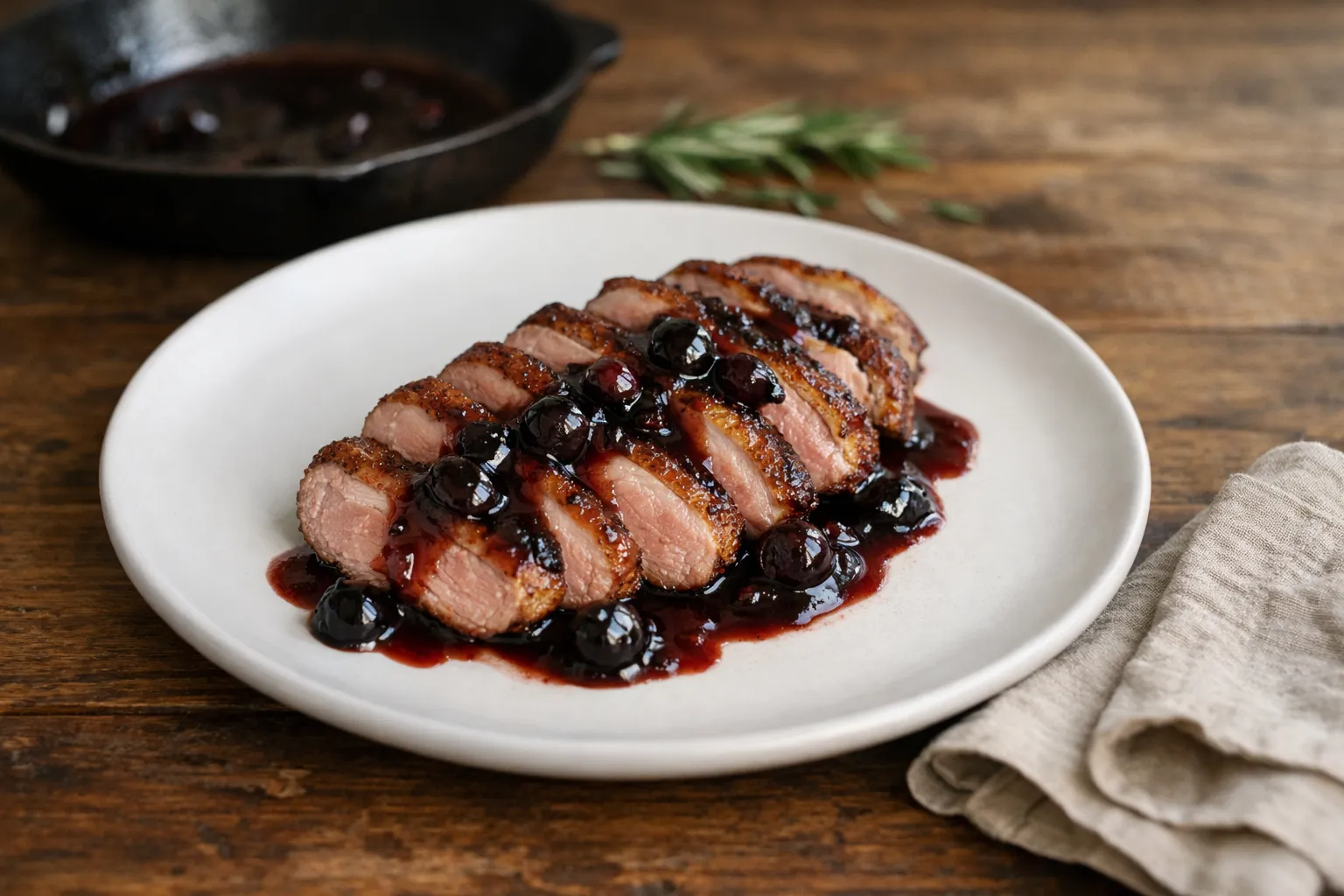
What you'll learn
You will learn two reliable ways to cook restaurant‑quality duck breast at home: the classic pan‑seared—slow fat render, sear, oven‑finish—and a precise sous‑vide then sear method. You’ll also get updated 2026 sourcing guidance, cherry selection tips (fresh vs. frozen), temperature targets, storage advice for rendered duck fat, and common troubleshooting fixes.
What you'll need
- 2 duck breasts (10–12 oz / 280–340 g each), skin on
- Coarse kosher salt and freshly ground black pepper
- Heavy skillet or cast‑iron pan; ovenproof preferred
- Instant‑read thermometer or probe (essential)
- Optional: sous‑vide circulator, vacuum bags or ziplock, immersion searing torch
- 1 shallot, ½ cup pitted cherries (fresh or frozen—see notes), ¼ cup dry red wine or 2 tbsp balsamic + 2 tbsp water, ½ cup low‑sodium stock, 1 sprig rosemary, 1 tbsp butter
- Time: ~45–60 minutes for pan‑sear; 2–3 hours (hands‑on ~25 minutes) for sous‑vide option
Why this updated method matters (2026 context)
Home cooks in 2026 favor precision and sustainability. Sous‑vide has grown more mainstream for consistent doneness; frozen fruit quality has improved, making tart Montmorency or sweet Bing cherries reliable year‑round; and many diners ask about sourcing—look for pasture‑raised or small‑farm labels and ask your butcher about bird breed for flavor and fat content. The core cooking principles remain: slowly render fat for crisp skin, hit the meat side for color, rest before slicing, and build a sauce from the fond.
Step‑by‑step instructions
Option A — Classic pan‑seared (recommended for most home cooks)
1. Score and season (5 minutes)
Pat skin dry with paper towels. Lightly score the skin in a crosshatch without cutting into the meat. Season both sides with 1 tsp coarse salt total and ½ tsp pepper. For crisper skin, dry‑age uncovered in the fridge 30–60 minutes (optional).
Expected result:
Skin surface looks dry and pale, scoring visible; meat chilled but not frozen.
2. Render the fat, low and slow (8–12 minutes)
- Place a cold cast‑iron skillet on the stove; lay breasts skin‑side down—no oil needed. Set heat to medium‑low.
- Press with a spatula until the skin makes firm contact. Maintain a gentle steady sizzle, adjusting heat. Spoon off excess fat into a heatproof jar; reserve for roasting.
- Continue 8–12 minutes until skin is deep golden and most fat has rendered.
Expected result:
Skin is crisp and deeply golden; the pan contains rendered fat and browned fond.
3. Sear meat side and oven finish (6–10 minutes)
- Flip and sear the meat side 1–2 minutes to brown. Insert a probe thermometer into the thickest part.
- Transfer skillet to a 400°F (200°C) oven (reduce 25°F if using fast convection). For medium‑rare remove at 130–135°F (54–57°C); medium 140–145°F (60–63°C). Pull the duck ~5°F (3°C) below target to allow carryover.
- Note: USDA guidance for immunocompromised diners remains 165°F—cook accordingly.
4. Rest (8–10 minutes)
Transfer breasts to a cutting board, tent loosely with foil. Resting redistributes juices and firms the meat for cleaner slicing.
5. Cherry‑rosemary pan sauce (8–10 minutes)
- Discard most fat, leaving about 1 tbsp and the fond.
- Sauté finely chopped shallot 1–2 minutes. Deglaze with ¼ cup wine (or balsamic water), scrape fond, add ½ cup cherries, ½ cup low‑sodium stock, and chopped rosemary.
- Simmer 4–6 minutes until cherries soften and sauce reduces by half. Stir in 1 tbsp butter off heat. Taste and season.
Expected result:
Glossy sauce that coats the back of a spoon, balanced tart‑sweetness; cherries softened but not completely mashed.
Option B — Sous‑vide then sear (precision, recommended if you own a circulator)
- Season breasts and vacuum‑seal or use water‑displacement in a zipbag. Cook at 54°C (129°F) for 1–2 hours for reliably medium‑rare; 57°C (135°F) for medium, 1–2 hours.
- Remove from bag, pat skin very dry (this is critical). Render skin in a cold pan as above but expect a shorter time because meat is already cooked—2–4 minutes to crisp.
- Sear meat side 30–60 seconds for color. Rest briefly and make pan sauce as above using the rendered fat.
Expected result: uniform pink throughout with restaurant consistency and very crisp skin when dried properly.
Screenshots / Visual cues (what you should see)
- After rendering: the skin is deep golden, firm, with clearly rendered puddles of fat in the pan.
- When oven‑done: thermometer probe reads your target (remember carryover), the meat side has a caramelized brown crust.
- Sauce: glossy, reduced by roughly half, cherries soft but intact unless using thawed cherries that will break down faster.
Troubleshooting & tips
- If skin is soggy: you likely started at too high heat. Start again with a thoroughly dry skin and lower the heat—slow rendering prevents burning.
- If fond is bitter: you've scorched it. Lower heat and add more liquid to loosen the browned bits; avoid scraping aggressively with a metal tool.
- Sauce too thin: simmer to concentrate or whisk in cold butter off heat to emulsify; a cornstarch slurry (1 tsp cornstarch + 1 tbsp water) adds body—cook 30–60 seconds.
- Saving duck fat: strain and refrigerate in an airtight jar. In home practice, store refrigerated up to 3 months or freeze up to 1 year for best quality.
- Cherry choice: fresh June–July cherries are peak, but frozen tart (Montmorency) or sweet (Bing) cherries perform very well year‑round and often outscore fresh off‑season fruit.
Make‑ahead & storage
- Cooked duck: refrigerate in airtight container up to 3 days. Reheat gently in a 300°F (150°C) oven 8–10 minutes or warm slices briefly in a skillet to preserve texture.
- Sauce: keeps 3–4 days refrigerated; reheat gently and whisk in a tablespoon of butter or olive oil to rebuild gloss.
Next steps
Try pairing the duck with roasted baby potatoes tossed in reserved duck fat, or a salad of peppery arugula, shaved fennel, and a lemon‑balsamic vinaigrette to cut richness. If you liked the precision of sous‑vide, practice on chicken or pork loins next to build timing familiarity.
FAQ
Can I safely eat duck breast medium‑rare?
Yes—many chefs and culinary schools serve duck breast at medium‑rare (130–135°F / 54–57°C) for optimal tenderness. For people who are immunocompromised, pregnant, or very young/old, follow USDA guidance and cook to 165°F for safety.
Are frozen cherries as good as fresh in the sauce?
Frozen cherries are an excellent, often preferable choice outside peak season. They retain acidity and flavor and break down predictably in the pan. Thaw and drain slightly if they release a lot of juice, or add directly and reduce the sauce a little longer.
How do I store and reuse rendered duck fat?
Strain rendered fat through a fine sieve or cheesecloth into a clean jar. Refrigerate up to about 3 months or freeze for up to a year. Use for roasting potatoes, root vegetables, or to add depth to braises.
Is sous‑vide worth the extra equipment?
If you value repeatable results and precise doneness, yes. Sous‑vide removes much guesswork for home cooks and is particularly useful when cooking for a group where timing is critical. Finish sous‑vide breasts in a hot pan for crisp skin.
How should I serve the duck for best presentation?
Slice thinly against the grain, fan slices on warm plates, spoon a small pool of cherry‑rosemary sauce beside or over the slices, and finish with a scattering of flaky salt or microgreens for contrast.