What you'll learn
- Three reliable tempering techniques (seeding, microwave, sous‑vide) and exact target temperatures.
- How to handle modern vegan and sugar‑free temperable chocolates (2026 supplier advances).
- Practical tips for dipping, preventing bloom, and prepping for events or small batches.
What you'll need
- 12–18 large strawberries (washed and completely dry; room temperature)
- 8–10 oz (225–285 g) high‑quality chocolate or temperable couverture (dark, milk, or white). For vegan options, buy a labeled temperable vegan couverture from a reputable supplier.
- Digital probe thermometer (±0.5°C accuracy recommended) or candy thermometer; optional Bluetooth thermometers with app alerts for sous‑vide
- Heatproof bowls, small saucepan (for double boiler), microwave, or sous‑vide circulator and vacuum bags
- Baking sheet lined with parchment, forks or dipping tool, spatula
- Optional: small tempering machine or tabletop melter for larger batches
Step‑by‑step instructions
Seeding method (most reliable for home cooks)
- Chop chocolate: Finely chop 200 g (7 oz) and reserve ~50–60 g (2 oz) of extra chocolate as seed. Uniform pieces melt/cool predictably.
- Melt base: Place the larger portion in a heatproof bowl over gently simmering water (double boiler). Stir constantly until it reaches:
Dark: 45–50°C (113–122°F).
Milk/white: 40–45°C (104–113°F). - Seed and cool: Remove from heat. Add the reserved seed in small handfuls, stirring continuously until temperature falls to the cool setting:
Dark: 27–28°C (80–82°F).
Milk/white: 26–27°C (79–81°F). - Bring to working temp: Briefly rewarm by dipping the bowl edge in warm (not simmering) water or microwave for 2–3 second bursts while stirring until you reach the working temperature:
Dark: 31–32°C (88–90°F).
Milk/white: 29–30°C (84–86°F). - Dip: Hold strawberries by stems, dunk, swirl to coat, lift and let excess drip. Place on parchment; add toppings immediately if desired.
- Set: Let set at room temperature (15–30 minutes). For faster setting use the fridge for 10–15 minutes—avoid >1 hour refrigeration to prevent condensation and sugar bloom.
Microwave method (fast, small batches)
- Chop chocolate and place in microwave‑safe bowl. Microwave at 50% power in 15–20 second bursts, stirring well between bursts.
- Stop when most chocolate is melted with small unmelted pieces. Stir—residual heat will melt the rest. Target the same temperature ranges above.
- If you struggle to reach stable temper, add 5–10% finely chopped solid chocolate (seeding) to promote proper crystal formation.
New in 2026 — Sous‑vide tempering (consistent, low‑waste for events)
By 2026 sous‑vide circulators have become a practical option for tempering chocolate at home and for small events because they maintain precise water temperatures without risk of steam or overheating. Use this method if you need consistent results across larger batches.
- Vacuum or seal chocolate in a heavy‑duty zip bag (no air). Place bag in sous‑vide water bath set to the melt temperature:
Dark: 45–48°C (113–118°F).
Milk/white: 40–45°C (104–113°F). - Remove, open bag, pour into a bowl and add seed chocolate to cool to the same cool temp ranges listed earlier.
- Return briefly to warm water to reach working temp. The sous‑vide method reduces chance of overheating and makes tempering scalable.
Screenshots / visual cues (what you should see)
- When melted to top temp: chocolate is smooth but still viscous, no streaks.
- After seeding and cooling: chocolate will thicken slightly and become glossy as crystals form; temperature should be at the cool setting for your chocolate type.
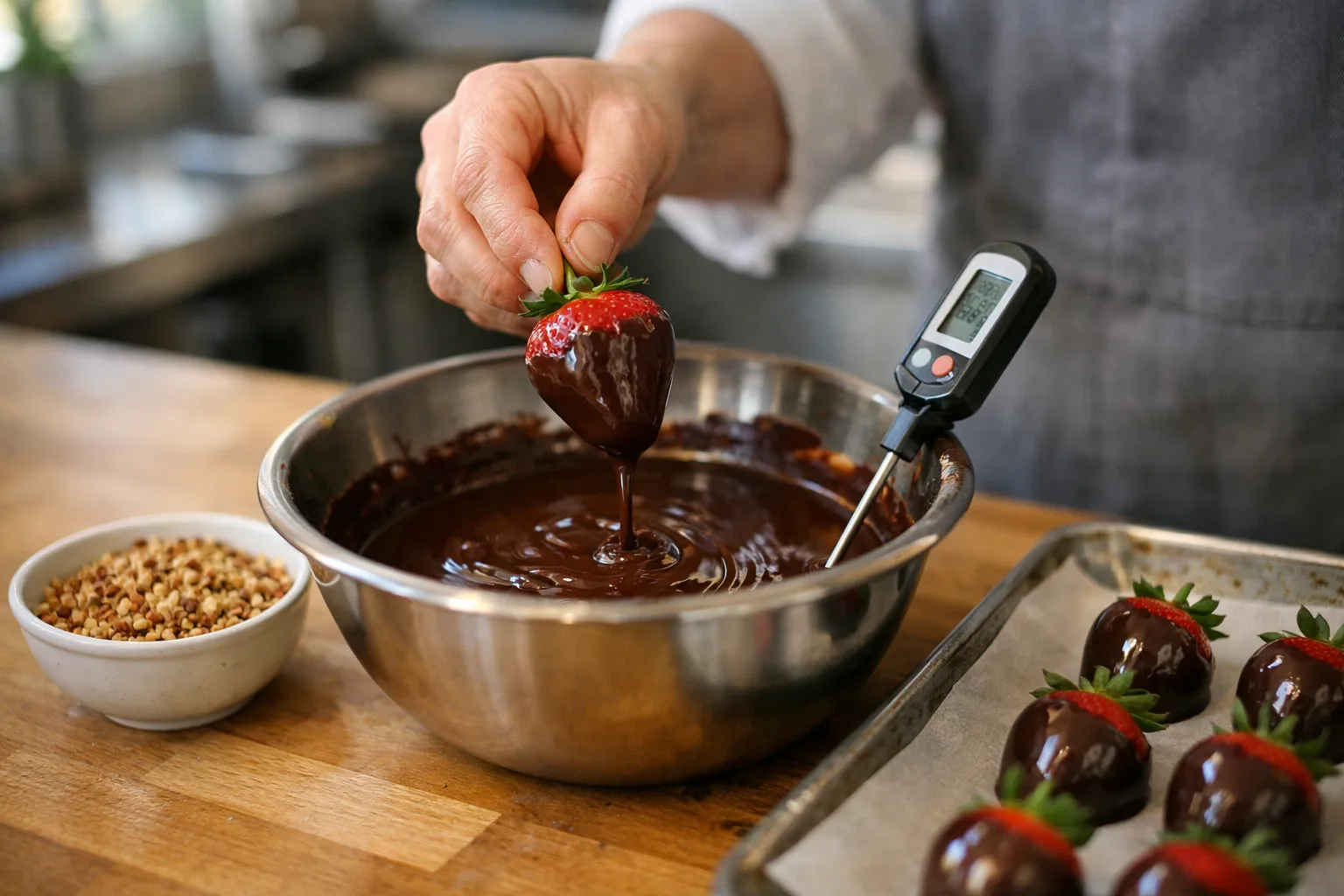
- Working temp: chocolate is fluid, glossy, and drips cleanly off a spoon in a continuous ribbon.
- Final dipped berry: surface is smooth and reflective; edges should set with a clean snap once fully cooled.
Troubleshooting (common issues and fixes)
- Chocolate dull or soft: It’s under‑tempered. Rewarm gently to top melt temp, reseed, and return to working temp.
- Chocolate seized (grainy after water contact): If only a small amount, stir in a teaspoon of neutral oil (affects finish) or use the seized chocolate for ganache (add cream). For true tempering, discard and start fresh.
- White streaks (fat bloom): Usually storage or temperature swings. Keep finished strawberries in a cool, dry place at 15–20°C (59–68°F) and humidity 50% to minimize bloom.
- Too thick to coat: Gently warm in 1–2 second microwave bursts or sit bowl over warm water until fluid; do not exceed top melt temperatures.
- Vegan/sugar‑free chocolate won’t temper: By 2026 many vegan couvertures (with pure cocoa butter) and specialty sugar‑free couvertures are engineered to temper. If using alternative fats (cocoa butter replacers), check supplier notes—those may require specific temps or cannot achieve snap.
Updated 2026 recommendations & context
Supply and product trends have improved since 2024: several major couverture makers now offer labelled temperable vegan couvertures and sugar‑free options formulated to temper. If you buy specialty chocolate, look for “temperable couverture” on the packaging or on the supplier’s tech sheet. For events, renting or borrowing a small tempering machine will save time and reduce waste—machines maintain working temperature and keep chocolate stable for hours.
Storage & serving
Serve at room temperature (18–20°C / 64–68°F) for best mouthfeel. Store in a cool, dry place (15–20°C / 59–68°F) for up to 48 hours. If you must refrigerate, keep sealed in an airtight container and bring back to room temperature before serving to avoid condensation. For events, temper the morning of or use a tabletop temperer to maintain shine.
Next steps
- Try a small batch with the microwave method to practice feel and temps.
- For parties or sales, test a tempering machine the week before to dial in volumes and temperatures.
- Experiment with single‑origin dark chocolate or tempered vegan couverture to match strawberry sweetness—single‑origin chocolates give distinct fruit or floral notes that pair well with different berry varieties.
Quick tips & variations
- Marble effect: dip in dark, let set, then drizzle with tempered white chocolate.
- Flavor lift: a tiny pinch of flaky sea salt right before chocolate sets brightens dark chocolate.
- Save excess: pour leftover tempered chocolate onto a parchment‑lined tray to make shards or decorations; store sealed at working temperatures for reuse within a day or refresh by reseeding.
FAQ
Can I temper chocolate without a thermometer?
Short answer: it’s possible for experienced cooks by using visual and tactile cues, but a thermometer is the most reliable tool. Temperature control is the key to forming stable cocoa butter crystals; a probe thermometer takes the guesswork out and prevents over‑ or under‑tempering.
Will refrigerated strawberries cause the chocolate to bloom?
Yes—chilled strawberries can cause condensation when returned to room temperature and promote sugar or fat bloom. Set strawberries at room temperature before dipping and avoid storing finished berries in the fridge for long periods. If you must refrigerate, use an airtight container and allow them to return to room temperature before serving.
How do I know if vegan or sugar‑free chocolate will temper?
Check the product labeling or technical datasheet for “temperable” or “couverture.” By 2026 many large suppliers list tempering parameters. If unclear, buy a small quantity to test the seeding method; if the chocolate forms a glossy, firm set and snaps, it tempers correctly.
Can I retemper previously tempered chocolate?
Yes. Gently reheat to the top melt temperature, then reseed and bring back to working temp. Avoid repeatedly overheating, which degrades fats and lowers quality.
Is a tempering machine worth it for home bakers?
If you temper frequently or need consistent results for events, a small countertop temperer is worth it—less active monitoring, lower spoilage, and consistent working temperature for longer periods. For occasional use, seeding or microwave methods remain cost‑effective.
Tempering is part science, part feel. With a reliable thermometer, the seeding method or sous‑vide for larger batches, and modern temperable vegan/sugar‑free options available in 2026, you can make glossy, snap‑perfect chocolate‑covered strawberries that hold up at events and impress guests. Happy dipping!