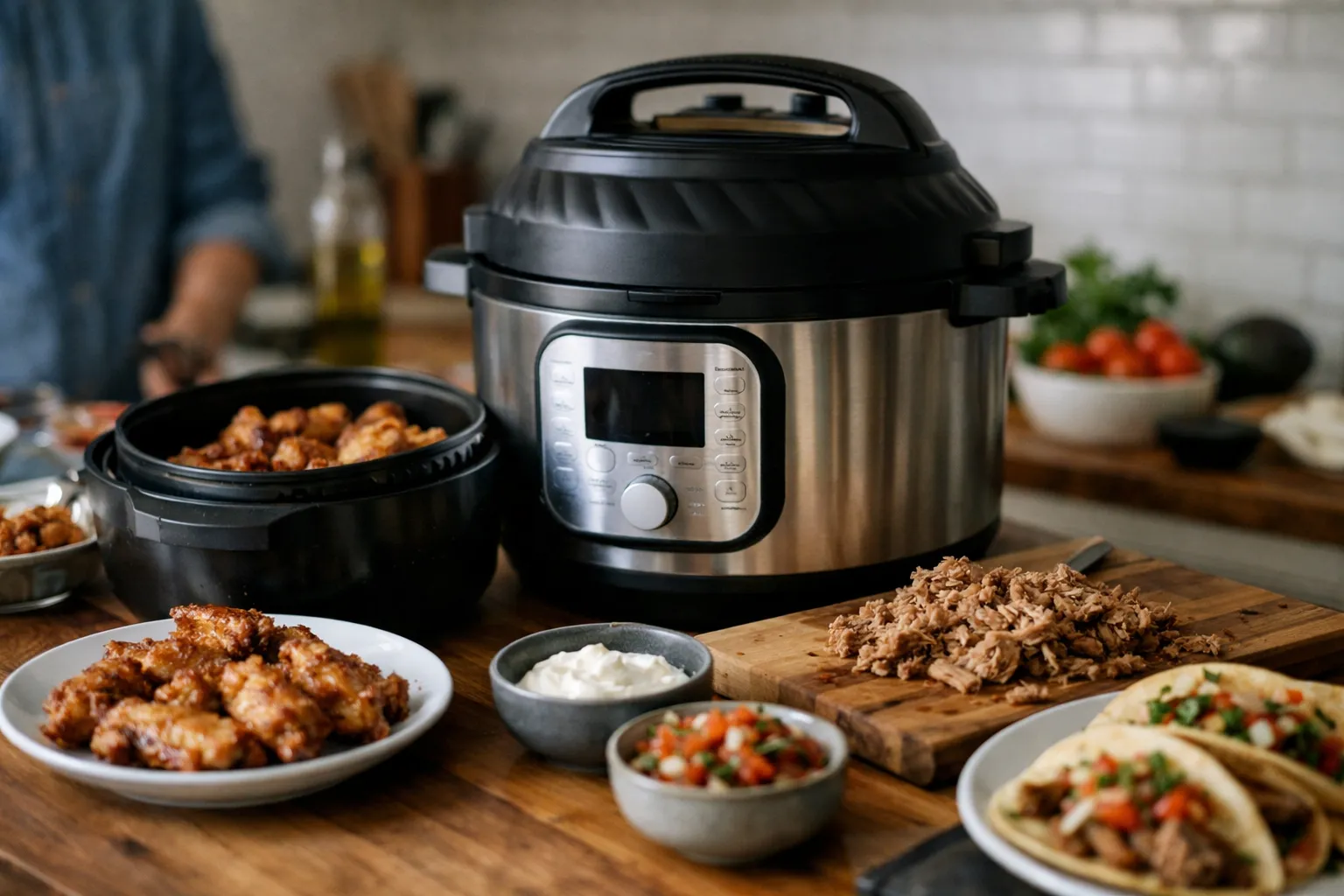
The Instant Pot Duo Crisp—Instant Pot’s pressure-cooker base paired with an air-crisping lid—remains a favorite hybrid appliance for home cooks who want to combine rapid tenderizing with a crisp finish. This September 2026 update pulls together fresh testing notes, 2026 context around appliance trends, pricing, and practical tips that matter to recipe enthusiasts today.
What the Duo Crisp does (at a glance)
- Functions: pressure cook, slow cook, sauté, steam, sous-vide-style low temp (some models), and air-crisp with the included crisping lid.
- Common use cases: pressure-braised meats finished with a crisped top, oven-style roasted vegetables with less oil, one-pot curries and stews, small baked goods and frittatas, and quick crisp reheats for leftovers.
- Why recipe fans care (2026): combines two complementary techniques—pressure for tenderness, air-crisp for texture—in a single workflow that saves counter space and reduces active oven time for midweek cooking and batch-prep.
Background
Instant Pot remains one of the most recognized brands in multi-cookers. The Duo Crisp line extends the base Duo by adding a dedicated crisping/air-fryer lid rather than a single fixed-head design. The product targets recipe enthusiasts and busy home cooks who want more texture than a slow cooker or pressure pot alone can deliver, but who don’t own a separate air fryer or large oven for small batches.
How I tested it
This update incorporates three weeks of recipe testing in August–September 2026 across seven recipes, including some refreshed 2026 trends: BBQ jackfruit “pulled” sandwiches (plant-based), a one-pot harissa chickpea and sweet potato stew, pressure-cooked chickpea pasta with crisped topping, a small gluten-free lemon loaf, sheet-pan–style roasted broccoli and Brussels sprouts (pressure-steamed then crisped), a vegetable frittata, and a reheated leftover rotisserie chicken finished under the crisping lid. For each dish I timed hands-on prep, total elapsed time, texture outcomes, and how the Duo Crisp handled scaling and dietary swaps (plant-based, gluten-free, low-sodium).
Features analysis
Pressure cooking (tenderizing)
The pressure function is unchanged in its usefulness: it reliably tenderizes proteins and softens dried legumes much faster than oven braises. In testing, bone-in chicken thighs reached pull-apart tenderness on a single high-pressure cycle with minimal liquid (0.5–1 cup), and soaked chickpeas softened in a single 20–25 minute cycle when recipes included the recommended liquid and natural release. Tip for 2026 cooks: for best texture in plant-based “meat” substitutes (jackfruit, seitan), reduce pressure time by 20–30% compared with animal proteins to avoid mushiness.
Sauté and sear
The sauté mode is useful for building flavor—sweating aromatics or deglazing after a quick sear. It won’t replace a cast-iron pan for deep, sustained fond. In practice, I used the stovetop to build a darker fond when recipes demanded intense caramelization, then finished the dish in the Duo Crisp for convenience.
Air-frying/crisping (the “crisp” payoff)
The crisping lid produces dependable browning and surface texture that elevates pressure-cooked dishes. Examples from recent tests: shredded jackfruit developed caramelized edges in 8–10 minutes at 400°F-equivalent crisping; chickpea pasta formed a golden, crunchy topping in a 6–8 minute finish; roasted vegetables gained concentrated char and crispness with 7–12 minutes under the lid. It’s not a deep fryer for ultra-thin crackle, but it delivers satisfying texture using a fraction of oil, which aligns with consumer demand for lower-fat methods.
2026 context and relevant trends
- Hybrid appliances remain popular among recipe-focused home cooks who want fewer single-purpose devices on the counter. In 2026 many readers report using a hybrid cooker at least three times per week for midweek meals and batch cooking.
- Plant-forward cooking continues to shape recipe development—Duo Crisp workflows are especially useful for legumes and firm plant proteins that benefit from a pressure-cook then crisp finish.
- Energy-conscious cooking: pressure cooking and small-capacity air-crisping use less energy than preheating a full-size oven for small batches, a practical point for cost-aware cooks in 2026.
Recipe-level observations and updated best practices
- Liquid minimums: Many contemporary recipes are written for dry roasting; when adapting them to pressure cook, add at least 1/2 cup of liquid for 6-quart models (a full cup for denser mixes or beans) to ensure proper pressure and to avoid burn warnings.
- Sequence matters: For leafy greens, delicate herbs, or thinly sliced vegetables, add after pressure release and use the 3–5 minute crisp cycle to preserve texture.
- Oil and smoke: Use oils with higher smoke points (avocado, refined canola) and apply oil sparingly with a pump spray or brush—avoid aerosol cooking sprays that can leave residue on the basket. When crisping fatty cuts, set a tray beneath the basket if your model permits to catch drips and reduce smoke.
- Scaling: The Duo Crisp is best for 3–6 servings; for reliably even crisping don’t overfill the basket—air circulation is the key to texture.
Pros and cons (2026)
- Pros: True two-step workflow (pressure then crisp) shortens total cook time for many recipes; improved community recipe libraries (including Quick Bites Kitchen updates) offer tested Duo Crisp-specific recipes; uses far less oil than deep frying; compact footprint compared with owning separate pressure cooker and air fryer.
- Cons: Crisping capacity is limited for large roasts or party-sized batches; finish won’t match an outdoor grill or deep fryer for extreme char or crunch; additional parts (lid, basket, sling) mean more cleaning and storage; some recipes still require trial-and-error for precise crisp times on newer plant-based formulations.
Cleaning and day-to-day usability
The inner pot, crisping basket, and both lids are dishwasher-safe; I recommend a short soak for stuck-on caramelized sugars. The crisping lid is lighter than many stand-alone air-fryer units and stores easily, but it is an extra component to track. Controls remain straightforward—use manual time/temperature for fine control if you’re transplanting a conventional oven recipe.
Pricing and value (September 2026)
Typical retail pricing in September 2026: the 6-quart Duo Crisp commonly retails around $129–$159, and larger 8-quart versions are commonly priced $159–$189 depending on retailer and bundled accessories. Refurbished or open-box units can be found below $100 from authorized sellers. Standard warranty terms are usually one year; extended-warranty options are often available at checkout.
Value judgment: for recipe enthusiasts who will use both pressure and crisping regularly, the Duo Crisp represents strong value versus buying two separate appliances. If you mostly roast large trays or need professional-level grill char, the oven or grill remains necessary.
Who it’s for
Buy the Duo Crisp if you are a recipe-driven home cook who: wants reliable tender results (beans, tough cuts) and a good crisp finish without a separate air fryer; cooks for 2–6 people regularly; experiments with plant-forward swaps; or batches meals for the workweek. Don’t buy it if you regularly cook very large crowds, need pro-level bake space, or prefer an outdoor grill’s flavor profile.
Alternatives
- Ninja Foodi (multi-cookers with crisping lid): Often comparable in performance with slightly different accessory packages—worth comparing on capacity and preset options.
- Cosori combo pressure cooker + air-fryer models: Typically compete on price and include beginner-friendly recipe guides.
- Separate devices (air fryer + pressure cooker): More countertop space but can outperform the Duo Crisp on capacity or specialized functions for dedicated users.
Verdict
The Instant Pot Duo Crisp remains a practical, time-saving tool for recipe enthusiasts in 2026. It’s especially useful now that plant-forward recipes and energy-conscious cooking have become mainstream—its pressure-to-crisp workflow suits legumes, plant proteins, and midweek dinners. Expect consistently tender results and reliably improved surface texture; plan for modest trial-and-error on liquid amounts and crisping times for new recipe formats. Score: 4 out of 5 — highly recommended for cooks who want versatility without a large appliance footprint.
How do I adapt oven recipes to the Duo Crisp?
Start by adding 1/2–1 cup of liquid if the oven recipe is dry and you plan to use pressure mode. Reduce oven times to pressure-equivalent cooking (many braises drop from hours to 20–40 minutes under pressure), then finish under the crisping lid for 6–12 minutes to develop color and texture. Use manual settings to fine-tune crisp time.
Can I cook dried beans without pre-soaking?
Yes, most dried beans cook from unsoaked in pressure mode, though cooking times increase. For black beans, pinto, and chickpeas expect longer pressure cycles (often 25–40 minutes) and always ensure sufficient liquid to avoid burn errors. Soaking still shortens time and can improve uniform texture.
Is the crisping lid safe to use for every recipe?
The crisping lid is designed for browning and air-frying finishes. Avoid using it for recipes that require completely enclosed steaming or deep frying. When crisping high-fat foods, place a drip tray under the basket if available and monitor for smoke; reduce temperature slightly if smoking occurs.
What accessories are useful to buy?
Helpful accessories include a silicone sling for easy pot removal, a secondary sealing ring to avoid flavor transfer between savory and sweet, an extra stainless inner pot for batch cooking, and oven-safe pans that fit inside the basket for baked goods and gratins.