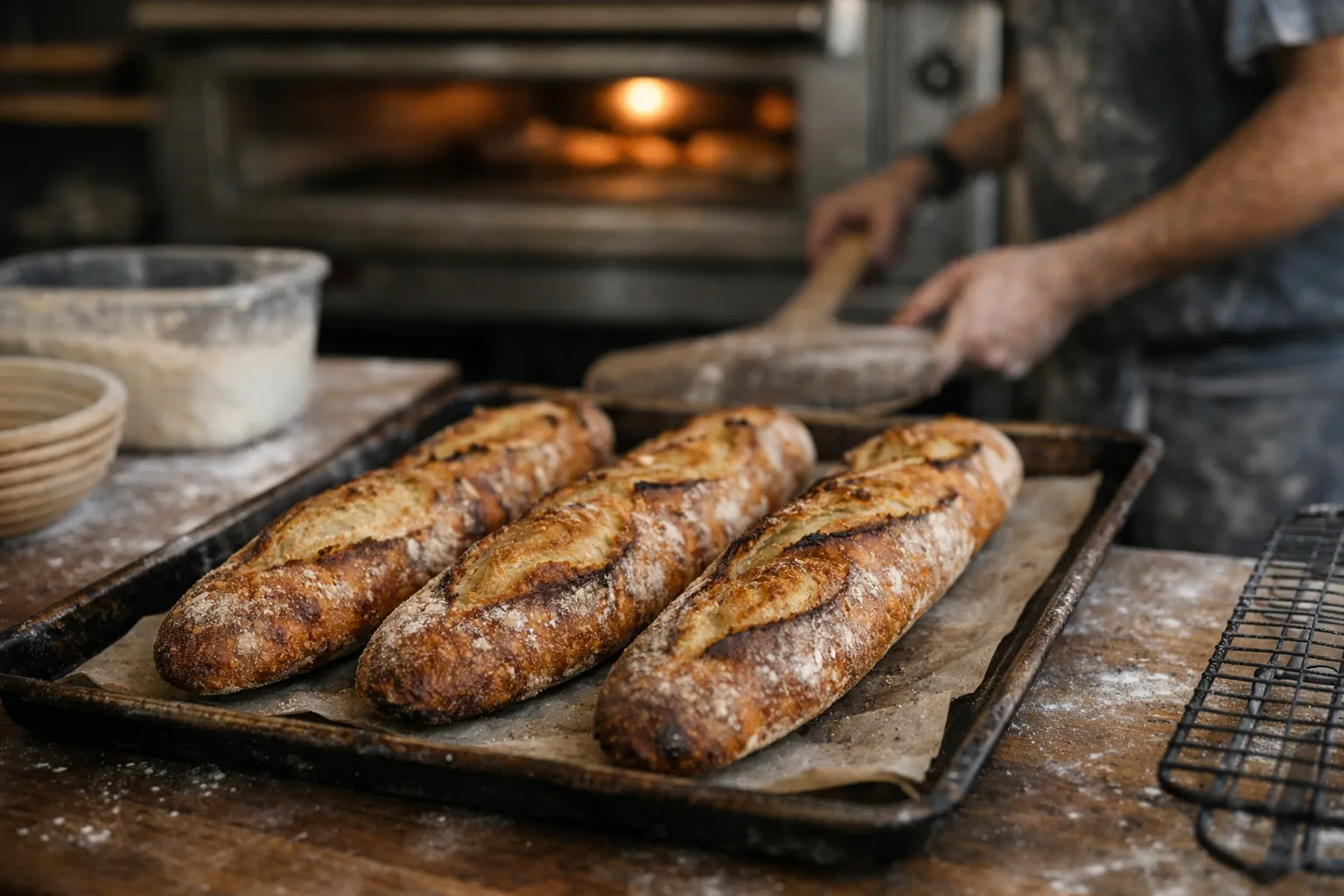
Introduction: This refreshed guide teaches home bakers and recipe enthusiasts how to produce long, blistered high-hydration sourdough baguettes reliably in September 2026. You’ll get updated best practices that reflect current flour availability, affordable home steam/proofing tech, handling tips for climate variability, and practical troubleshooting informed by recent artisan-bakery trends. If you already bake sourdough but struggle with slack dough, inconsistent oven spring, or uneven crusts, this article will give the specific adjustments and modern tools that improve consistency.
Prerequisites and context: what’s changed by 2026
- More consistent flours: By 2024–26 many mills offer clear protein percentages (12–14% for bread flour) and single-origin baguette blends; check package protein to dial hydration.
- Affordable proofing and steam options: Compact proofing boxes and countertop steam injectors are common and can stabilize fermentation and oven steam for home bakers.
- Starter management: With more people returning to regular baking, common maintenance routines (weekly discards, cold storage feeding schedules) are well-documented online; maintain activity by feeding with the flour you plan to bake with for best flavor and performance.
- Why this matters: High-hydration dough (70–80%+) gives the characteristic open crumb and blistered crust of modern artisanal baguettes, but it requires technique and minor equipment updates to control reproducibility in different kitchens and climates.
Overview at a glance (updated for 2026)
- Yield: Two standard baguettes (~350–420 g each) from 800 g total flour.
- Hydration: 70% is reliable; 73–75% gives bigger holes if your flour and handling permit. Increase or decrease in 1–2% increments to tune for flour and humidity.
- Active hands-on: ~40–70 minutes spread across stages.
- Total time: 12–30 hours depending on room temp and cold retard.
- Baking: Oven with steam—Dutch oven, cloche, baking steel + steam tray, or modern countertop steam generators.
Ingredients (baker’s formula — scalable)
Base recipe (800 g total flour → two baguettes):
- Bread flour: 700 g (choose 12–14% protein). For more extensibility, blend 580–630 g bread flour + 70–120 g Italian-style 00 for a silkier crumb.
- Whole wheat or heritage flour: 100 g (optional; increase water by 2–4% per 10% whole grain).
- Water: 560 g (70% hydration). Try 580–600 g (72.5–75%) if your flour and skill are ready.
- Active sourdough starter (100% hydration): 160 g (20% of total flour). For predictability in warmer kitchens, bakers sometimes reduce to 15% or blend with 0.1–0.3% instant yeast (see Pro Tips).
- Salt: 16 g (2% of total flour).
Why these percentages? Baker’s percentages give predictable scaling and let you adapt for flour protein, ambient humidity, and desired fermentation speed.
Tools you’ll want (2026 updates)
- Digital scale (essential)
- Bench scraper and dough scraper
- Proofing couche or linen; alternatively a long, floured baking board if using a steam tray
- Dutch oven or cloche, or baking steel with a rimmed steam tray. New in 2026: compact countertop steam injectors and affordable proofing boxes ($200) that stabilize temperature and humidity.
- Lame or very sharp razor
- Instant-read thermometer (internal loaf temp) and oven thermometer
- Optional: small container of rice or metal weights to create consistent tray steam
Step-by-step method
1. Build and time your starter
For consistent activity, feed your starter with the same flour you’re baking with at least 1–2 cycles before mixing (12–24 hours). Aim for a starter that doubles in 4–6 hours at 24°C (75°F). If your kitchen is warmer, shorten feeding intervals or refrigerate between feedings to slow activity.
2. Autolyse (20–60 minutes)
1) Mix total flour and 90–95% of water until no dry streaks. 2) Cover and rest 20–60 minutes. For higher whole-grain percentages, extend autolyse to 45–60 minutes. Autolyse improves extensibility and reduces required mixing—essential for wet dough.
3. Add starter and salt (5–10 minutes)
1) Dissolve starter in remaining water if stiff; add to dough. 2) Sprinkle salt and fold to incorporate. 3) Use a wet hand or bench scraper to minimize tearing. The dough will be sticky but should hold shape after a few folds.
4. Bulk fermentation and stretch-and-folds (2–4 hours at ~24°C)
1) Place dough in a lightly oiled container. 2) Perform 3–5 sets of gentle stretch-and-folds in the first 60–90 minutes—lift one side, stretch across, rotate; repeat for 4 sides. 3) Let the dough continue to bulk ferment until it increases ~25–40% and shows surface bubbles. Use a transparent container to monitor rise rather than relying on time alone. In cooler homes, extend bulk fermentation; in warmer homes use shorter bulk or cold retard earlier.
5. Pre-shape and bench rest (10–20 minutes)
1) Turn dough onto lightly floured surface. 2) Divide into two equal portions (approx. 680–760 g per piece depending on hydration). 3) Pre-shape into loose cylinders and rest 10–20 minutes uncovered to relax the gluten—this is critical for neat final shaping.
6. Final shaping — classic baguette shaping (8–12 minutes)
1) Flatten a pre-shaped piece into a rectangle, gently degas the center. 2) Fold the top third down, press seam, then roll tightly toward you into a cylinder. 3) Roll the baton under your palms (light, not crushing) to lengthen it to 35–40 cm (14–16 inches). 4) Place on a well-floured couche or linen with seam side up, spaced to avoid sticking. Repeat for second loaf.
7. Proofing: room or cold retard (30–90 minutes room; 12–18+ hours cold)
1) Room-proof until a gentle spring-back remains (30–90 minutes depending on temp). 2) Or cold retard in the refrigerator 12–18 hours (or longer up to 36 hours) for flavor development and easier scoring. In 2026 many home bakers use small proofing boxes set to 4–6°C for reproducible retards.
8. Oven setup and baking (45–55 minutes total)
Preheat oven with chosen vessel to 250–260°C (480–500°F) for at least 45 minutes; longer if using a thick baking steel. Targeted methods:
- Dutch oven/cloche: Preheat vessel; when ready, transfer loaf seam-side down, score, cover and bake at 245°C (475°F) for 18–22 minutes, uncover and bake 8–10 minutes more until deep color and internal 96–99°C (205–210°F).
- Baking steel + steam tray: Preheat steel and rimmed tray. Slide loaves in on a peel, immediately pour 250–300 ml hot water into tray (or use a steam injector), and close oven. Bake at 245°C for 18–25 minutes, rotating once, finishing until internal temp 96–99°C.
- Countertop steam generators: Use short, intense steam for the first 6–10 minutes, then finish dry for color and blistering.
Scoring tips (updated)
Use a sharp lame with a 20–30° angle and make confident, single strokes. For baguettes use 3–4 long diagonal slashes 0.5–1 cm deep. If your dough is very slack, make shallower cuts and more steam to encourage ear development rather than tearing.
Troubleshooting (quick and specific)
- Dense crumb: Likely under-proofed or weak starter. Check starter activity with float test and increase bulk fermentation or perform additional folds for strength.
- Flat, spread loaves: Over-proofing or too warm bulk. Reduce fermentation time or move to a cooler environment for final proof.
- Gummy interior: Under-baked—verify internal temp 96–99°C. Also consider a slightly lower hydration (-1–2%) if your oven runs cool.
- No oven spring: Dough too cold from fridge—let warm 30–60 minutes; or dough lacks strength—add one more fold next time.
- Excessive tearing when shaping: Let dough rest longer after pre-shape to relax gluten; dry surface? Keep it lightly covered to keep pliable.
Serving, storage and reheating (practical tips)
Serve same day for peak crust. Store cooled loaves in paper at room temp for up to 24 hours to preserve crust; for longer storage freeze sliced (double-wrap in plastic then foil) up to 3 months. Reheat frozen slices at 200°C for 8–12 minutes or whole frozen loaf at 200°C for 18–25 minutes. For day-old loaf: mist with water and bake 6–8 minutes at 200°C to revive crust.
Dietary modifications and modern considerations
- Whole-grain: Up to 20–30% whole grain retains baguette character if you increase hydration 2–4% per 10% whole grain and extend autolyse.
- Lower-salt: Reduce salt to 1.5% but monitor fermentation speed—dough will ferment faster.
- Seeded/added inclusions: Add seeds (10–15% of total dough weight) during final folds to avoid disrupting gluten.
- Gluten-free: Techniques differ—use recipes designed for gluten-free sourdough with binders like psyllium or xanthan.
- FODMAP and digestion: Extended sourdough fermentation can reduce some fermentable carbohydrates for some people, but tolerance varies—consult a dietitian if you have sensitivities.
Scaling and scheduling for multiple batches
Keep starter at 20% (or adjust to 15% if using colder retards) and salt at 2%. Stagger batches so one dough is in bulk fermentation while another is shaping. Use a clear container to track rise rather than rigid timing, especially when scaling volume.
Common mistakes to avoid
- Measuring by volume—always weigh ingredients for repeatability.
- Skipping autolyse on wet dough—leads to tearing during shaping.
- Using inconsistent flour without adjusting hydration—flour protein and milling variability are the main causes of unexpected slackness or toughness.
- Over-handling during shaping—causes degassing and loss of oven spring.
Pro tips (advanced)
- If your kitchen is warm and your starter very active, reduce starter to 12–15% or do an earlier cold retard to control fermentation.
- To increase extensibility without weakening structure, add 1–2% vital wheat gluten when working with whole-grain-heavy blends.
- For consistent crust blistering, introduce short, high-volume steam only in the first 6–10 minutes—modern steam injectors or a single large pour into a preheated tray work best.
- Keep a baking log: flour brand, protein percentage, water temp, room temp, starter feeding schedule, and bake time. Small changes compound—notes speed improvements.
FAQ — updated for September 2026
My dough is extremely sticky at 73–75% hydration. Is that normal?
Yes. High-hydration doughs feel sticky. Use wet hands, a bench scraper, and perform gentle stretch-and-folds rather than intensive kneading. If it's unmanageably slack, reduce hydration by 1–2% or add another short rest during autolyse to let flour absorb water.
Should I add a pinch of commercial yeast to my sourdough for predictability?
Some bakers add 0.1–0.3% instant yeast to stabilize fermentation in warm climates or for tight schedules. It speeds fermentation and increases oven spring predictably, but it changes flavor development—use it intentionally if you prioritize schedule reliability over pure sourdough character.
How do I choose the right flour for big open holes without collapse?
Choose bread flour with 12–14% protein and favor flours labeled as “strong” or “high-gluten.” If you need extra strength with whole grains, add 1–2% vital wheat gluten or perform an additional set of folds during bulk fermentation to build structure without overworking the dough.
Is cold retard always better for flavor?
Cold retard (12–36 hours) generally increases acidity and depth of flavor and makes final shaping easier. However, very long retards can over-acidify in some starters—taste and experiment. Shorter retards (12–18 hours) are a reliable sweet spot for most home bakers.
What modern equipment gives the biggest improvement for home bakers?
A reliable instant-read thermometer, a stable proofing box (or an inexpensive cooler with a temperature-controlled hot water bottle), and a consistent steam solution (either a preheated tray plus boiling water or a compact steam injector) give the biggest practical gains for consistent results.
Final note: The core variables—flour, water, starter and time—haven’t changed, but the tools and ingredient transparency available in 2026 make high-hydration baguette baking far more repeatable. Track your variables, make small changes, and rely on feel and visual cues (bubbles, rise, seam behavior) as much as clocks. With practice and the updated practices above, you’ll get long, blistered loaves that reward patience and iteration.