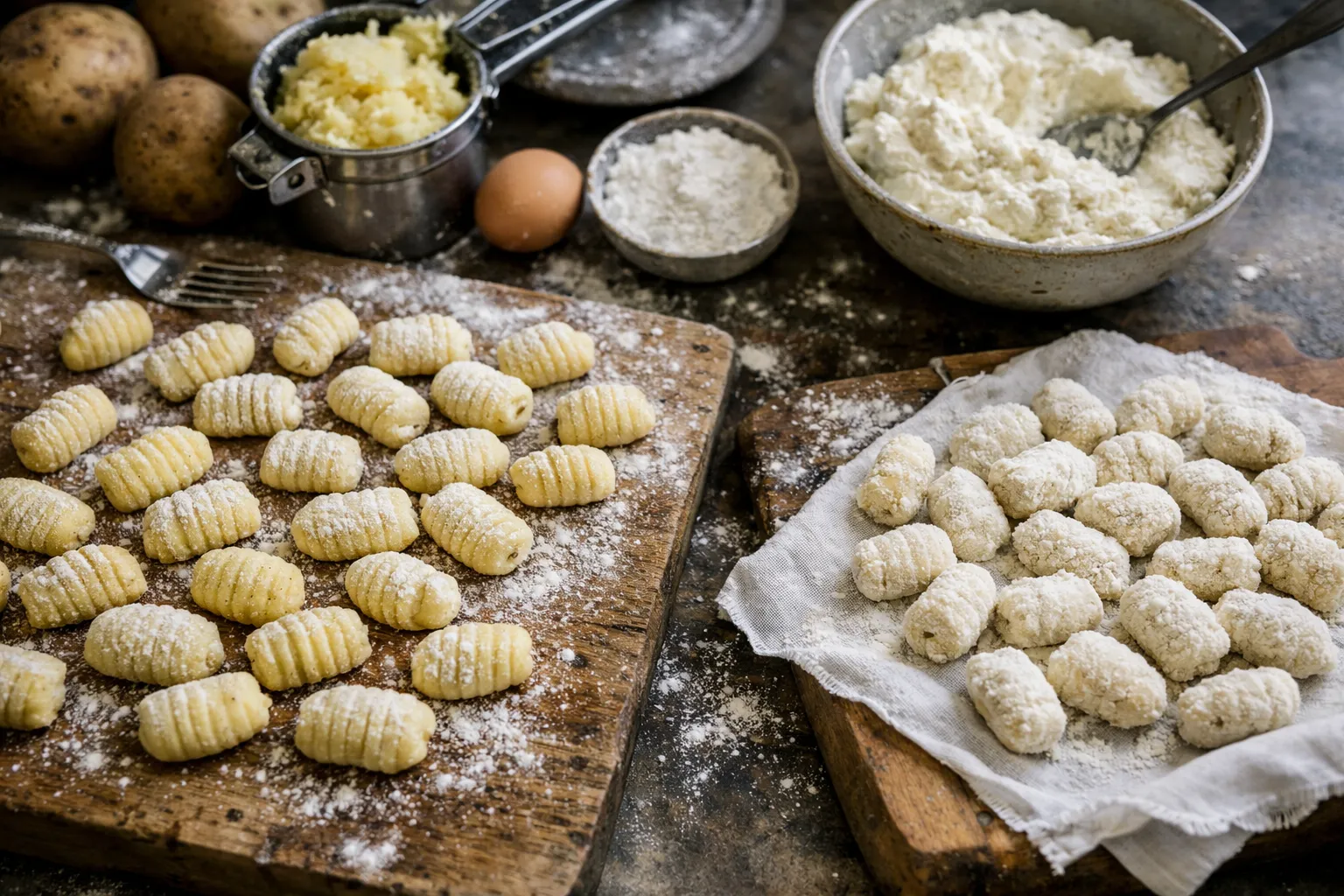
Gnocchi remain one of the most rewarding things to make at home: simple ingredients, a short learning curve and a big payoff. This update (September 2026) keeps the three core methods — classic potato gnocchi, ricotta gnocchi (gnudi) and gluten‑free potato gnocchi — but adds current best practices, kitchen‑tech recommendations, product notes that reflect what home cooks are buying in 2026, and seasonal pairing ideas for early autumn. If you want pillowy dumplings with consistent results and fewer surprises, this is the guide for you.
Who this is for and why it matters
This guide is for home cooks and recipe enthusiasts who want repeatable results: minimal flour, light texture, and reliable cooking/ freezing strategies. It’s also for cooks adapting gnocchi to dietary needs (vegetarian, vegan, gluten‑free). Since 2020 home cooks have more accessible tools (compact steam ovens, countertop ricers, improved vegan ricottas and wider gluten‑free blends). This article explains not only how to do gnocchi but why each step matters so you can adjust for your ingredients and kitchen.
Prerequisites / Context
Before you start:
- Weigh ingredients. Gnocchi dough is sensitive to moisture variation; grams are far more reliable than cups.
- Choose starchy potatoes (Russet or Idaho) or Yukon Gold for a slightly richer flavor. In 2026, many US retailers label potato varieties by starch content—look for "high starch" or "baking" on the bag.
- Use pasteurized ricotta if serving immunocompromised people, pregnant people or older adults. Improved plant‑based ricottas (pea‑ or almond‑based) are widely available in 2024–26 and work well when drained.
- Plan for timing: classic potato gnocchi takes longer mainly because of potato cooking; ricotta gnocchi is faster.
Essential equipment (2026 updates)
- Potato ricer or fine food mill — ricer remains the best way to avoid lumps.
- Kitchen scale — indispensable for consistency.
- Bench scraper and silicone baking mat for shaping and resting.
- Gnó cchi board or fork for ridges (optional).
- Large pot for boiling; slotted spoon. Consider an induction‑ready pot for quick recovery between batches.
- Freezer space and vacuum sealer (optional) — vacuum sealing prevents freezer burn and preserves texture better than plastic bags alone.
Key technique fundamentals — the why behind the how
- Cook potatoes whole, with skins: baking or steaming whole potatoes prevents excess water absorption and reduces the flour needed. Boiling can work but tends to make flesh wetter.
- Rice while hot: ricing hot potato flesh yields a fine, aerated texture and lets you use less flour because steam escapes before you add it.
- Add flour sparingly: the goal is a very soft, barely‑workable dough. Too much flour = dense gnocchi. Start low and add only to bring dough together.
- Handle gently: mixing/kneading develops gluten (when wheat flour is used) and compresses the air from riced potatoes — both make gnocchi heavy.
Recipe 1: Classic Potato Gnocchi (serves 4)
Ingredients
- 900–1,000 g starchy potatoes (Russet/Idaho), whole
- 1 large egg (50–60 g), lightly beaten
- 200–300 g all‑purpose flour, plus extra for dusting (start at 200 g and add as needed)
- 1 tsp fine salt
Prep time: 45–75 minutes (depends on potato cooking)
Yield: ~800–1,000 g finished gnocchi; plan 200–250 g per person for a main course.
Step‑by‑step
- Preheat oven to 200°C (400°F). Scrub potatoes and dry. Bake whole on a tray 45–60 minutes (depending on size) until a skewer slides in easily. Baking keeps flesh dryer than boiling; if you must boil, keep skins on and drain immediately, pat dry.
- While hot, halve and rice through a ricer into a large bowl. Spread the riced potato once or twice to let steam escape for 1–2 minutes — you want warm, not steaming hot.
- Add salt, pour in the beaten egg, then fold lightly to combine. The egg should just bind.
- Sprinkle 200 g flour over the potatoes, fold gently. If the dough still collapses and won’t hold a shape, add flour 10–15 g at a time until it just holds together. Stop as soon as it forms a soft ball. The precise amount depends on potato moisture and ambient humidity.
- Turn the dough onto a floured surface, form into logs about 2 cm (¾ in) thick, cut into 2 cm pieces. Roll with a fork or gnocchi board if desired — ridges help sauce cling but are optional.
- Boil in batches in heavily salted water. When gnocchi rise to the surface, cook 30–60 seconds more and remove with a slotted spoon. Optionally pan‑fry briefly in butter or olive oil for crisp edges.
Why baking instead of boiling?
Baking reduces the potato's water uptake. Less water in the flesh means you can use less flour, which keeps gnocchi lighter. Many professional kitchens and culinary schools advocated this approach through the early 2020s and it remains standard practice in 2026.
Recipe 2: Ricotta Gnocchi (Gnudi) — quick and tender (serves 4)
Ingredients
- 450 g whole‑milk ricotta, well drained (30–60 minutes in a fine sieve or cheesecloth)
- 1 large egg
- 120–150 g all‑purpose flour (or 100 g + 20–30 g semolina for structure)
- 40 g grated Parmesan (optional), ½ tsp salt, pinch nutmeg (optional)
Prep time: 25–40 minutes (including draining)
Step‑by‑step
- Drain ricotta thoroughly; excess moisture is the most common cause of gummy gnocchi.
- Combine ricotta, egg, Parmesan, salt and nutmeg. Fold in flour a little at a time until a soft, slightly sticky dough forms.
- Turn out onto a floured surface, roll into logs and cut. These are softer than potato gnocchi; handle gently and don't compact the dough.
- Boil in gently simmering, salted water — once they float, cook 30–45 seconds more. Remove carefully with a slotted spoon. Serve with brown butter, herb oil or a light tomato sauce.
Recipe 3: Gluten‑Free Potato Gnocchi (serves 4)
Ingredients
- 900–1,000 g starchy potatoes
- 1 large egg
- 300–360 g gluten‑free flour blend that includes a binder (xanthan or guar) OR 150–200 g tapioca/cassava flour + 150–180 g rice flour (blend)
- 1 tsp salt
Prep time: 45–75 minutes
GF tips for 2026
- Use a tested commercial 1:1 GF blend that lists xanthan or guar. Many blends in 2024–2026 improved starch ratios to mimic wheat flour more closely.
- If you mix your own, add about 1 tsp xanthan per 500 g flour blend (a little goes a long way). For sensitive palates, start at ¾ tsp per 500 g.
- If the dough is crumbly, rest 10–20 minutes under a damp towel to hydrate flours before forming logs.
- Freeze GF gnocchi on a tray and vacuum seal for best shelf life; frozen GF gnocchi can be more fragile when boiled directly from frozen, so finish in a skillet if you notice breakage.
Cooking methods & finishing touches
Boiling remains the primary method: heavily salted water, small batches, and remove when they float plus 30–60 seconds. For contrast, pan‑fry boiled gnocchi in butter or oil for 2–4 minutes until golden. In 2026, air‑frying boiled gnocchi for 4–6 minutes at 200°C (400°F) is a reliable hands‑off way to get crisp edges (use a single layer in the basket and a light spray of oil).
Updated sauce and pairing ideas (September 2026)
Early autumn favors mushrooms, squash, late tomatoes and herbs like sage and thyme. Pairings:
- Potato gnocchi: roasted butternut squash purée, crispy sage and browned butter; or a mushroom ragu with a splash of cream.
- Ricotta gnocchi: brown butter with toasted hazelnuts and thyme; lemon‑zest ricotta gnocchi with peas if late‑summer produce is still available.
- GF gnocchi: garlic confit, kale and preserved lemon — the bright acidity balances denser GF textures.
Common mistakes (and how to avoid them)
- Too much flour: Start with the lower flour range. If dough is sticky, chill 10–15 minutes rather than adding copious flour.
- Gummy gnocchi: Cause: wet potatoes or under‑drained ricotta. Bake potatoes, drain ricotta thoroughly, and allow riced potatoes to cool briefly so steam dissipates.
- Falling apart: For ricotta, ensure adequate draining and consider adding 1–2 tablespoons of semolina or more egg if needed. For GF gnocchi, add binder (extra egg or small amount xanthan).
- Sticky while shaping: Dust your surface lightly; don’t over‑flour. A silicone mat and light dusting of flour work well — too much flour ruins the texture.
Pro tips (advanced)
- Weigh out one representative piece of raw gnocchi and note its weight (many pro kitchens target 10–12 g per piece). That makes batch scaling and portioning exact.
- Flash‑freeze single layer on a silicone mat, then vacuum seal. This reduces ice crystals and preserves mouthfeel for up to 2 months.
- Use a small amount of semolina (10–15%) in ricotta dough for extra structure without heaviness.
- When testing for doneness, taste one immediately after the floating interval — texture should be tender but not pasty.
- For vegan ricotta options: modern plant‑based ricottas (pea‑ or coconut‑based) in 2024–26 are closer to dairy ricotta. Still drain well and expect to add a touch more binder (1 tbsp aquafaba per egg equivalent commonly works).
Make‑ahead, storage & freezing — updated 2026 best practices
- Room‑temp short hold: single layer on a floured tray covered — 1–2 hours.
- Freeze: flash‑freeze single layer 1–2 hours, then transfer to airtight containers. For best long‑term results, vacuum seal; frozen gnocchi keep 2 months at best quality.
- Cook from frozen: drop directly into boiling salted water; frozen pieces usually take 30–90 seconds longer to float and finish. If fragile, parboil 30–45 seconds then pan‑fry to finish.
Scaling & serving guidance
Standard planning remains 200–250 g finished gnocchi per adult as a main, 100–150 g as a side. When scaling recipes, increase potatoes and flour proportionally but stay mindful of variable water content: always start with the lower flour estimate and adjust.
Sustainability & low‑waste notes
In 2026 more home cooks prioritize low‑waste kitchens. Save potato skins: crisp them in olive oil with salt as a garnish. Use leftover gnocchi dough scraps in a tight pan to make "gnocchi toast" or add to soups. If you make large batches, portion and freeze to avoid waste.
Final checklist before you start
- Weigh potatoes and flour; choose a baking or steaming method for potatoes to reduce moisture.
- Decide recipe (potato, ricotta, GF) and drain any dairy or plant ricotta thoroughly.
- Have hot water ready for boiling and a tray for resting/freezing.
- Plan your sauce to match the gnocchi texture (richer sauces with potato, lighter with ricotta).
Troubleshooting quick reference
- Dense → reduce flour and handle less.
- Gummy → potatoes/ricotta too wet; drain or switch to baking.
- Falling apart → add a small binder (extra egg or semolina/xanthan).
FAQ
Can I use a microwave to cook potatoes for gnocchi?
Technically yes, but microwaving can create uneven cooking and a wetter texture that requires more flour. Baking or steaming whole potatoes with skins on is the preferred method for consistent, drier flesh and lighter gnocchi.
How much flour is really necessary — why do quantities vary so much?
Flour needs vary because potatoes differ in moisture (variety, size, and storage conditions) and ambient humidity matters. Start with the lower gram amounts given, then add in 10–15 g increments only until the dough holds. Over‑flouring is the most common cause of dense gnocchi.
Are store‑bought vegan ricottas good enough?
Many plant‑based ricottas launched between 2022–2026 improved texture and moisture control. They can work well if drained thoroughly; expect to add a bit more binder (aquafaba or a small extra egg substitute) compared with dairy ricotta.
What's the best way to reheat frozen gnocchi without falling apart?
Drop frozen gnocchi into vigorously boiling salted water and remove once they float and are warm all the way through. If you notice breakage, par‑boil briefly then finish in a skillet with butter or oil to crisp and firm them.
Is there a measurable difference between baking and boiling potatoes for gnocchi?
Yes. Baking typically yields drier potato flesh, reducing the flour needed and producing lighter gnocchi. Boiling increases water absorption; if you boil, keep skins on and drain well, or increase baking time to remove more moisture.
Making gnocchi is a tactile skill — take notes on potato type, flour weight and ambient conditions. Start with the classic potato method to learn your local potatoes, then explore ricotta or gluten‑free versions. With the updated tools, techniques and 2026 product options outlined here, you’ll get consistent, delicious gnocchi that match your diet and season.
Happy rolling — and reserve a tablespoon of browned butter for testing!