
November flips the citrus calendar. The heavy summer navels are fading, but the first true wave of winter citrus—Meyer lemons, mandarins and clementines, grapefruits, and early blood oranges—starts arriving at markets. For home cooks that means brighter finishes, more fragrant zest, and a chance to lean on citrus as a flavor tool for cutting sodium and fat without losing satisfaction. This updated November 2026 roundup keeps the original promise—10 weeknight dinners you can make in 20–35 minutes where citrus is essential—and adds timely notes on seasonality, storage, kitchen tech, and plant-forward swaps that matter right now.
Selection criteria
- Prep time: 20–35 minutes total (active prep included).
- Citrus-forward: Citrus appears in the sauce, dressing, marinade, or finish—not just as a garnish.
- Real-kitchen friendly: Common ingredients, one-pan or low-dish methods, realistic tools.
- Clear dietary modifications: Gluten-free, dairy-free, vegetarian or vegan swaps noted where relevant.
- Seasonally relevant: Recipes and swaps tailored for late fall/winter citrus availability (November 2026).
Methodology (how I chose these)
I tested every recipe in a regular home kitchen with real timing—pan sizes I actually own, midweek pacing, and the kinds of interruptions families have. For this November refresh I walked three local markets and spoke with two produce managers about what’s reliably in stock this season: Meyer lemons and mandarins are more common, grapefruit and blood oranges appear in limited runs, and pre-zested tubs and frozen citrus-juice cubes are widely available as time-savers. I also considered 2026 home-cooking trends—more cooks using air fryers and steam ovens, broader adoption of plant-forward swaps, and continued attention to sodium reduction—and baked those realities into technique notes and ingredient swaps.
What’s new for November 2026
- Winter citrus arrives: By November many retailers and farmers’ markets carry Meyer lemons, mandarins/clementines, grapefruits, and early blood oranges. If a recipe calls for summertime navels, swap to mandarin segments or Meyer lemon zest for a more floral aroma.
- Low-sodium cooking is mainstream: Nutrition-minded home cooks increasingly use zest and a controlled squeeze of juice to create a perception of saltiness. That’s a practical approach for anyone lowering sodium—add zest in small increments and taste as you go.
- Zero-waste and peel use: More cooks are turning peels into candied preserves, pantry bitters, or dehydrated gremolata—use the whole fruit to stretch a shop and reduce waste.
- Kitchen tech tweaks: Air fryers and countertop steam ovens are no longer novelty items; I note where a recipe can shift to an air-fryer or steam-oven finish to save time or reduce fat.
- Convenience that respects flavor: Frozen juice cubes and pre-zested tubs are convenient and available in more stores in 2026; they save time in cooked sauces and curries. For finishes where aroma matters, fresh zest still wins.
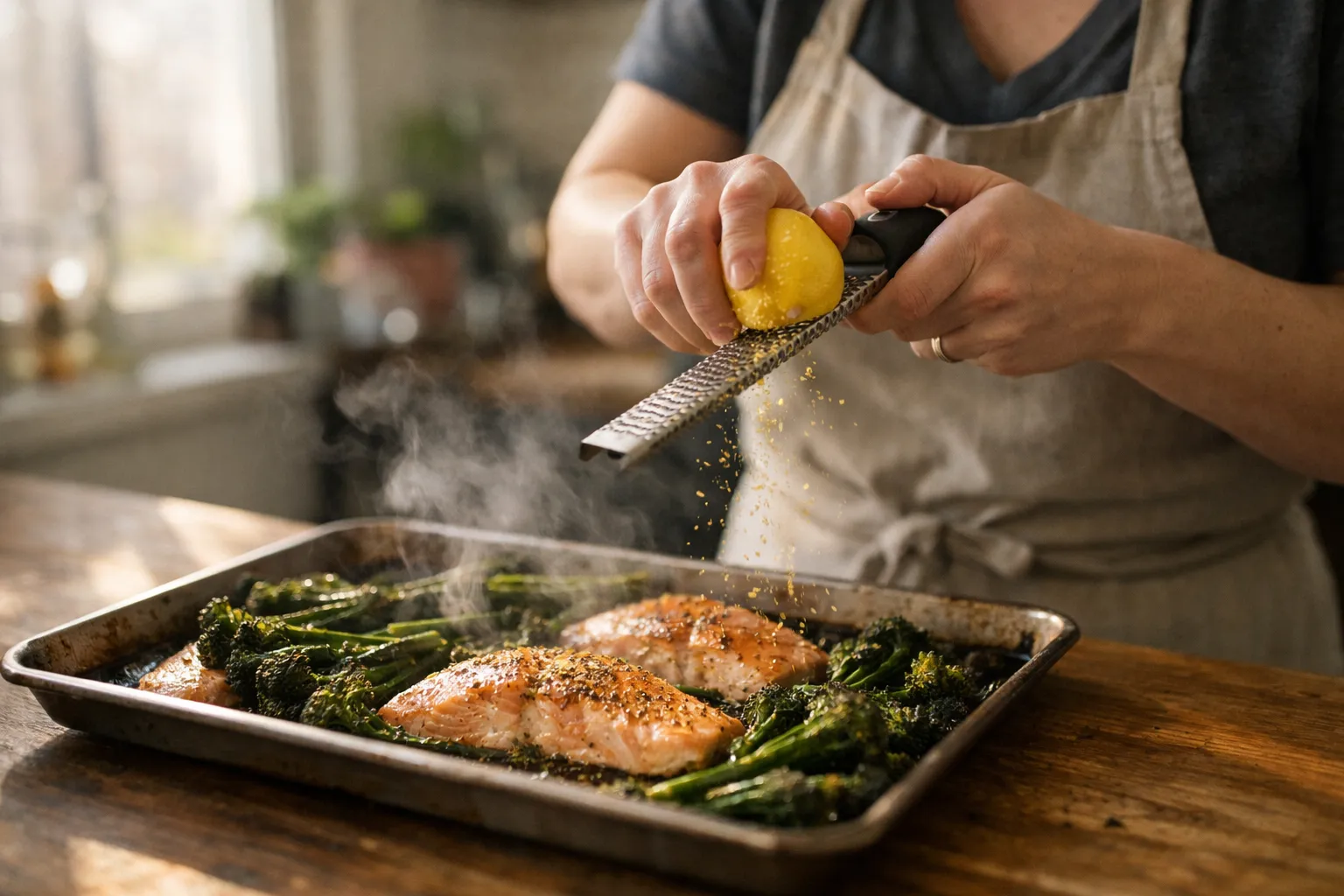
1) Sheet-Pan Orange-Miso Salmon with Broccolini
What it is: Salmon fillets roasted with an orange-miso glaze and broccolini—minimal hands-on time, big aroma.
Key features: Zest for perfume, juice for sweetness and acidity, white miso for umami; sheet-pan cleanup. In November, use mandarin zest or Meyer lemon with a touch of honey if classic oranges are limited.
Prep time: 10 minutes. Total time: ~25 minutes. Method: Sheet pan at 425°F/220°C (or 400°F/200°C in an air fryer, single layer).
Why it made the list: Miso adds savory depth quickly; citrus zest makes the kitchen smell like a restaurant. For a vegan version, roast thick tofu steaks and turn them once; press tofu first to remove excess moisture.
Maria’s tip: Don’t skip the zest. Zest before juicing. If the glaze looks thin, brush and return the pan to the oven 2–3 minutes to caramelize. For a crisper broccolini, finish under the broiler for 60–90 seconds—watch closely.
2) Lemon-Garlic Chickpea Orzo Skillet (One Pan)
What it is: A one-pan orzo with chickpeas, spinach, and bold lemon (or Meyer lemon) flavor—short ingredient list, approachable technique.
Key features: Orzo cooks in stock in the same pan; lemon zest for perfume; finishing olive oil or grated hard cheese for richness.
Prep time: 8 minutes. Total time: ~25–30 minutes. Method: Skillet simmer.
Why it made the list: Pantry-friendly and budget-friendly; easy to make lower-sodium by using low-sodium stock and more zest. If you have leftover lemon or mandarin juice frozen in cubes, toss one into the pot while cooking to add brightness.
Here’s what it should look like: The orzo should be glossy and separate—if it clumps, splash in hot water and stir gently to loosen.
3) Grapefruit-Avocado Shrimp Salad
What it is: Mixed greens with warm seared shrimp, segmented grapefruit, avocado, and a citrus vinaigrette.
Key features: Segment grapefruit over a bowl to capture juices for the dressing; quick sear keeps shrimp tender. Grapefruit availability improves in late fall—November is a good time to buy.
Prep time: 15 minutes. Total time: ~20 minutes. Method: Sear + assemble.
Why it made the list: Light but substantial—excellent on cooler evenings when you want something bright. If your grapefruit tastes too bitter, balance it with a teaspoon of honey or a small shallot in the dressing.
Maria’s tip: Save the vinaigrette in the fridge for up to 24 hours; dress the salad just before serving so avocados stay fresh-looking.
4) Lime-Skillet Turkey (or Tofu) Lettuce Wraps
What it is: Savory lime-scented ground turkey or crumbled extra-firm tofu served in crisp lettuce leaves.
Key features: Zest for aroma, lime juice to finish, crunchy raw vegetables for contrast.
Prep time: 12 minutes. Total time: ~25 minutes. Method: Skillet sauté.
Why it made the list: Fast, low-carb, and bright—limes remain a year-round staple. For vegetarian, press tofu well and increase lime zest to match the brightness of meat.
Don’t skip: Lightly toast the lettuce cups (briefly in a dry skillet) if you want a warmer leaf—that prevents sogginess and adds a slightly smoky edge.
5) Lemon-Caper Chicken Piccata (Weeknight Version)
What it is: Pan-seared chicken cutlets in a lemon-caper pan sauce—classic, streamlined, and quick.
Key features: Quick pan sauce using broth and lemon; capers add briny contrast; quick dredge is optional.
Prep time: 10–12 minutes. Total time: ~25–30 minutes. Method: Skillet sauté + pan sauce.
Why it made the list: Feels restaurant-level with little effort. If you prefer lower-fat, skip the butter finish and finish with a drizzle of high-quality extra-virgin olive oil off heat.
Maria’s tip: If the sauce is too sharp, grate in a small carrot or a teaspoon of honey—both soften acidity without flattening the lemon character.
6) Orange-Ginger Beef and Snow Peas (Fast Stir-Fry)
What it is: Thin-sliced beef tossed with an orange-ginger glaze and crisp snow peas—high heat, quick caramelization.
Key features: Fast sear for Maillard flavor; cornstarch slurry for a silky sauce; orange (or mandarin) zest for aroma.
Prep time: 15 minutes. Total time: ~25 minutes. Method: High-heat stir-fry (or use a hot cast-iron skillet).
Why it made the list: Citrus in stir-fry gives a modern brightness that keeps the dish from feeling heavy. King oyster mushrooms or tempeh make a satisfying plant-forward swap.
7) Sheet-Pan Lemon-Dill Potatoes with Asparagus and Feta
What it is: Roasted baby potatoes and asparagus brightened with lemon and dill, finished with crumbled feta.
Key features: Roast potatoes until deeply golden; add asparagus partway through to keep it crisp-tender. In November consider roasting halved Meyer lemons alongside for a floral caramelized finish.
Prep time: 10 minutes. Total time: ~35 minutes. Method: Sheet pan roast.
Why it made the list: Simple veg-forward dinner that showcases late-fall produce and keeps oven time efficient. Toss with lemon while hot so the juice sizzles into the potatoes for better flavor absorption.
8) Lemony White Bean “Caesar” Bowls (No Anchovies Needed)
What it is: Creamy lemon-bean dressing blended with cannellini beans, tossed with romaine and crunchy crumbs.
Key features: Beans for body, lemon for brightness, crunchy topping for texture contrast. Nutritional yeast and caper brine mimic umami for vegan versions.
Prep time: 15 minutes. Total time: ~20 minutes. Method: No-cook dressing + assembly.
Why it made the list: Satisfying without mayo; lemon prevents the dressing from feeling heavy and helps the salad sit well as a make-ahead lunch-for-dinner.
9) Lime-Coconut Cod (or Chickpea) Curry
What it is: Quick coconut curry brightened with lime—gentle spice, fast cook time, and comfort without heaviness.
Key features: Coconut milk for body; lime juice and zest to finish; quick-cooking cod or chickpeas for a plant-forward option.
Prep time: 10 minutes. Total time: ~25–30 minutes. Method: One-pot simmer.
Maria’s tip: When the curry paste hits warm oil it should become aromatic in 30–45 seconds—if it doesn’t, the pan is too cool. Add lime at the end so the flavor stays fresh; frozen juice cubes work fine here if you’re in a hurry.
10) Charred Lemon Pasta with Crispy Breadcrumbs
What it is: Pasta tossed with charred lemon oil, garlic, and crunchy toasted breadcrumbs—the kind of comfort that feels special.
Key features: Charred lemons add caramelized notes; toasted breadcrumbs give crunch; olive oil or butter adds silk.
Prep time: 8 minutes. Total time: ~20 minutes. Method: Boil + skillet.
Why it made the list: A 20-minute fail-safe that hits savory, bright, and textural notes. Press lemon halves cut-side down in a hot skillet 1–2 minutes before juicing for subtle roast flavor—perfect with shaved Parmesan or a spoonful of garlicky anchovy paste if you’re not vegetarian.
Comparison table: quick citrus dinners at a glance
| Recipe | Prep time | Total time | Method | Serving size | Best for |
|---|---|---|---|---|---|
| Orange-Miso Salmon + Broccolini | 10 min | 25 min | Sheet pan / air-fryer | 4 | Hands-off weeknights |
| Lemon-Garlic Chickpea Orzo | 8 min | 25–30 min | One-pan skillet | 4 | Pantry dinners |
| Grapefruit-Avocado Shrimp Salad | 15 min | 20 min | Sear + assemble | 2–4 | Light but satisfying |
| Lime Turkey/Tofu Lettuce Wraps | 12 min | 25 min | Skillet | 4 | Fast, crunchy dinner |
| Lemon-Caper Chicken Piccata | 10–12 min | 25–30 min | Skillet + sauce | 4 | Date-night-at-home energy |
| Orange-Ginger Beef Stir-Fry | 15 min | 25 min | Stir-fry | 4 | Big flavor, quick cook |
| Lemon-Dill Potatoes + Asparagus | 10 min | 35 min | Sheet pan | 2–4 | Veg-forward meal |
| White Bean “Caesar” Bowls | 15 min | 20 min | No-cook | 4 | Quick lunch-for-dinner |
| Lime-Coconut Cod (or Chickpea) Curry | 10 min | 25–30 min | One-pot simmer | 4 | Cozy + bright |
| Charred Lemon Pasta + Breadcrumbs | 8 min | 20 min | Boil + skillet | 4 | Comfort in a hurry |
Conclusion: what to make first (and how to choose)
For immediate impact with minimal fuss, start with the Sheet-Pan Orange‑Miso Salmon—it’s forgiving, smells incredible, and pairs well with winter greens. If you want the best weeknight stretch for your budget, the Lemon‑Garlic Chickpea Orzo is a dependable go-to that uses pantry staples. When the calendar calls for lighter fare, the Grapefruit‑Avocado Shrimp Salad is both quick and elegant. And when you need warm comfort that still tastes fresh, the Charred Lemon Pasta delivers in 20 minutes.
Practical November notes from my kitchen: buy citrus with smooth, fragrant skin and a little weight for their size—those are the juiciest. Store lemons and limes loosely in the crisper drawer; they’ll keep 2–4 weeks. Freeze zest in small mounds on a tray, then bag (a teaspoon or tablespoon portions); freeze juice in ice cube trays for single-use portions. If you’re trying to cut salt, add zest first, juice sparingly, and taste: citrus lifts flavors fast but can become dominant if you overdo it.
FAQ
How should I store citrus in November so it lasts through winter weeks?
Keep citrus in the refrigerator’s crisper drawer in a breathable bag or loosely wrapped towel. Lemons and limes can stay fresh for 2–4 weeks that way; mandarins and grapefruit are best used within 1–2 weeks for peak flavor. If you buy extra, freeze juice in cubes and zest in small frozen portions.
Can citrus really help me reduce salt without losing flavor?
Yes. Zest contains volatile oils that register as aroma and brightness, which the brain often interprets as satisfying—this helps reduce the perceived need for added salt. Use zest in small increments and add juice near the end of cooking for balance. For people on sodium-restricted diets, pair citrus with acid-tolerant herbs (like parsley, dill, or cilantro) to further amplify flavor.
Is grapefruit safe if I take prescription medicines?
No—grapefruit and grapefruit juice can interact with many medications by affecting liver enzymes and drug metabolism. If you take prescription medication, check your medication information or consult your pharmacist or doctor before adding grapefruit to your diet.
Are frozen juice cubes and pre-zested tubs worth using?
They’re excellent time-savers for cooked applications (curries, sauces, and dressings). Frozen juice is convenient in one-pot meals; thaw to room temperature before adding to emulsified dressings to avoid seizing. For finishing touches where aroma matters—grating fresh zest over a plated dish—fresh still performs best.
What’s the best plant-based swap for fish and meat in these recipes?
Firm tofu (pressed), tempeh, king oyster mushrooms, or canned chickpeas are reliable swaps. Toast or sear at high heat to build texture and increase zest slightly to boost aromatic presence. For saucy recipes, chickpeas and tempeh hold up well and absorb flavor quickly.