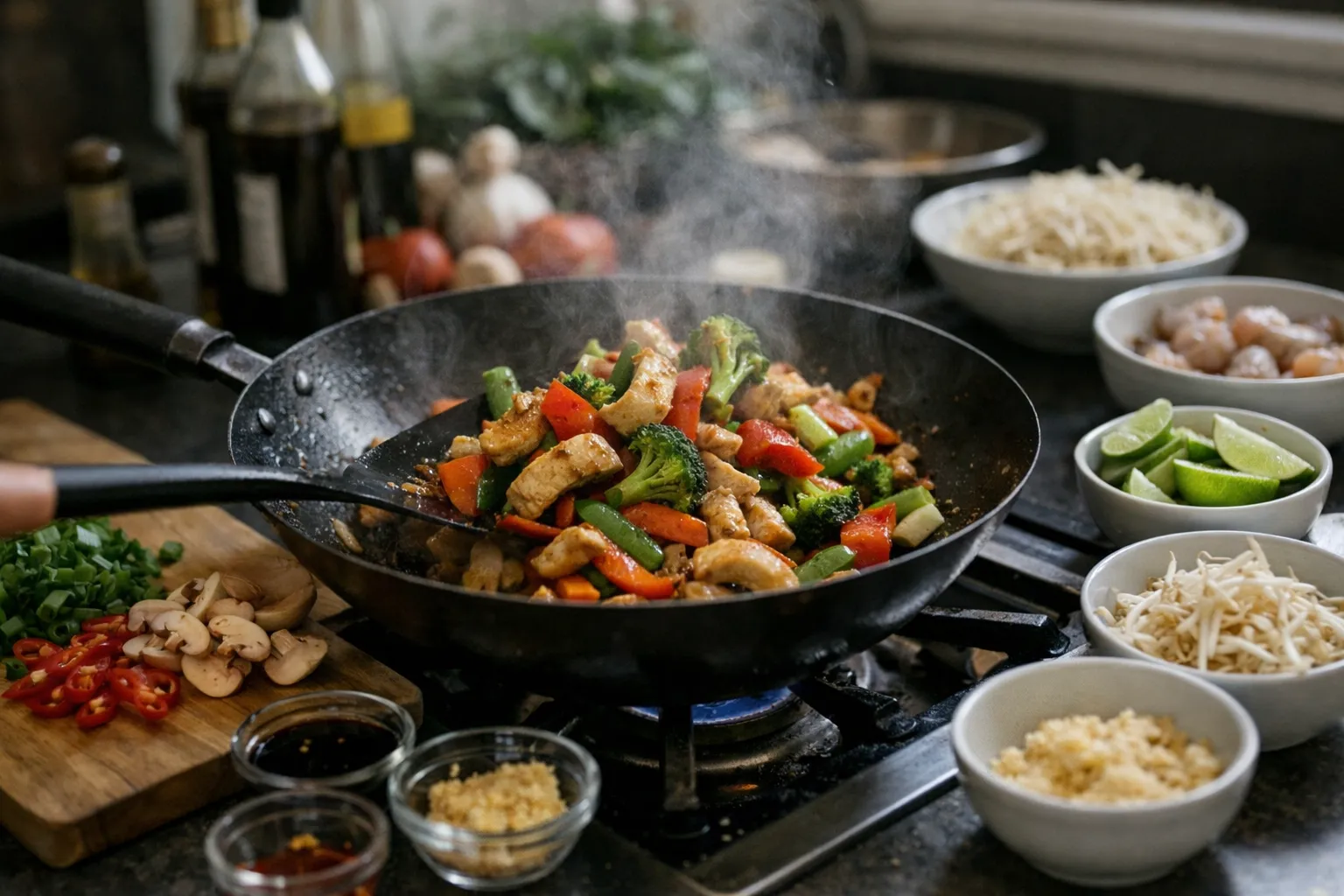
Stir‑fries remain the fastest route from fridge to a satisfying dinner—but the tools, ingredients and priorities of home cooks have shifted since this guide first ran in 2026. This updated piece keeps the original, reliable 15‑minute system (protein + two contrasting veg + sauce + order) and layers in current best practices: improved ventilation guidance, plant‑forward and sustainability swaps, low‑sodium/umami strategies and three refreshed example stir‑fries tested for speed and flavor.
Who this is for and why it matters
This article is for recipe enthusiasts who want to turn pantry staples into dependable weeknight meals in 15 minutes. It’s also for people adapting to new kitchen hardware (faster induction burners, harder‑searing carbon‑steel woks), those reducing sodium or aiming for more plant‑forward meals, and cooks who want practical food‑safety and ventilation guidance backed by current guidance and research.
Prerequisites / Context: what you should know first
Before you start: a reliable high‑heat surface (gas or induction), basic knife skills, and a mise‑en‑place mindset. In 2026 more households have induction cooktops and compact, high‑power burners: these shorten sear times but require a slightly different approach (preheat longer; use slightly more oil for even contact). Also note two growing priorities:
- Ventilation: High‑heat cooking produces ultrafine particles and volatile compounds. Peer‑reviewed studies on cooking emissions show that using an effective range hood or opening a window substantially reduces indoor particulate exposure—so run an exhaust rated for your cooktop or at least use the kitchen fan plus a window.
- Plant‑forward eating: The 2025 Dietary Guidelines emphasize shifting dietary patterns toward more vegetables and plant proteins; swapping tofu, tempeh or mushrooms into the 15‑minute framework is both quicker and aligned with current public health guidance.
What you need now: equipment, pantry staples and mise en place
- Equipment (2026 updates): 12‑inch carbon‑steel wok or heavy skillet (both work on induction with a flat base), high‑smoke‑point oil, chef’s knife, cutting board, small bowl for sauce, silicone spatula, tongs, long‑handled spoon. If you have an induction hob, use wok rings or a flat‑bottom carbon‑steel pan made for induction.
- Ventilation checklist: Run a hood rated to your cooktop (many experts recommend 300–600 CFM for typical home ranges; more if you have a commercial‑style burner). If you lack a powerful hood, open a window and run a portable HEPA air cleaner in a nearby room.
- Pantry (modern staples): neutral oil (refined avocado, grapeseed, peanut), tamari or low‑sodium soy, rice vinegar, toasted sesame oil (finish only), cornstarch (or arrowroot), sweetener (honey, maple, mirin), chili crisp or gochujang, miso paste (for fast umami), garlic and ginger (fresh or paste), MSG (optional—effective sodium reducer).
- Make‑ahead helpers: pre‑pressed tofu, pre‑trimmed frozen veg mixes, jarred chili crisp and fermented condiments (fermented garlic/chili) that add instant depth.
Updated basic sauce template (for 2 servings)
Use this as a dynamic starting point. The additions reflect contemporary flavor trends (miso, gochujang) and sodium‑reduction tactics.
- 2 tbsp soy sauce or tamari (low‑sodium if preferred)
- 1 tbsp rice vinegar or dry sherry
- 1 tbsp sweetener (honey, maple or mirin)
- Optional: 1 tsp white miso (adds umami while allowing you to reduce soy)
- 1 tsp toasted sesame oil (for finish)
- 1 tsp cornstarch + 2 tbsp cold water (or 1 tsp arrowroot + 1 tbsp water for a glossy finish)
- Optional aromatics: 1 tsp chili crisp or 1 tsp gochujang, 1 tbsp grated ginger, 1 minced garlic clove
Why these choices? Miso and mushroom powders provide umami so you can lower soy/tamari (and sodium) without losing savory depth. Chili crisp and gochujang are now pantry staples for many cooks and add quick fermented complexity.
Timing and cooking method: the refined 4‑step fast technique
- Prep (8–12 minutes): Cut to uniform sizes. Protein: 1/4‑inch slices or small cubes. Vegetables: dense veg (broccoli stems, carrots) in small pieces; quick veg (snow peas, zucchini) in thin slices. Measure sauce and whisk cornstarch slurry last. Lay out a plate to hold cooked items.
- Preheat and oil: Preheat pan on medium‑high until hot—on induction this can take longer to feel “hot.” Add 1–2 tbsp neutral oil and swirl to coat. A hot pan is the difference between browning and steaming.
- Cook in order (fast, high heat): Aromatics (20–30s) → Protein (2–4 min depending on thickness) → Dense vegetables (2 min) → Quick vegetables (30–60s) → Add sauce + cornstarch slurry and toss until glossy (30–60s). Remove from heat immediately; finish with sesame oil and fresh herbs.
- Finish and rest: Taste and adjust acidity or salt. Resting is minimal—serve immediately to preserve texture.
Why this order? Proteins and dense vegetables need time to develop color; quick vegetables wilt and lose texture if added too soon. The final slurry both thickens and polishes the sauce so it clings to every piece.
Three concrete 15‑minute stir‑fries (updated for 2026)
1. Miso‑Maple Tempeh & Baby Bok Choy (Plant‑forward; 2 servings)
- Ingredients: 10 oz tempeh (thin slices), 3 cups baby bok choy (halved lengthwise), 1 small carrot (matchsticks), 1 tbsp neutral oil, 1 tbsp toasted sesame seeds.
- Sauce: 2 tbsp low‑sodium tamari, 1 tbsp rice vinegar, 1 tbsp maple syrup, 1 tsp white miso, 1 tsp cornstarch + 2 tbsp water, 1 tsp sesame oil (finish).
- Prep time: 8–10 minutes. Tempeh slices sear quickly—no pressing needed.
- Cooking method: High heat skillet; sear tempeh 2–3 min until golden, remove. Stir‑fry carrots and bok choy stems 1–2 min, add bok choy leaves 30s, return tempeh, add sauce, toss 40–60s. Finish with sesame seeds.
- Serving: Two main servings; pairs with 1 cup cooked farro or 1½ cups steamed rice per person. Tempeh gives ~15–20 g protein per serving.
- Why it’s current: Tempeh has climbed in popularity for its texture and sustainability credentials; miso provides rapid umami so you can cut sodium.
2. Gochujang Beef & Charred Brussels Sprouts (2 servings)
- Ingredients: 10 oz thinly sliced flank or skirt steak, 2 cups halved Brussels sprouts (very thin halves), 1 small red onion (thin), 1 tbsp neutral oil, 1 tsp toasted sesame oil.
- Sauce: 2 tbsp soy or tamari, 1 tbsp rice vinegar, 1 tbsp maple or honey, 1 tsp gochujang, 1 tsp cornstarch + 2 tbsp water.
- Prep time: 8–10 minutes. Slice steak thin across the grain for tenderness.
- Cooking method: High heat; sear steak 1–2 min per side until medium‑rare depending on thickness, remove. Add sprouts flat side down to char 1–2 min, add onion 30s, return beef, add sauce and toss until glossy 30–45s. Finish with sesame oil and scallions.
- Serving: Two hearty servings; serve with 1 cup cooked jasmine rice or over cauliflower rice for lower carbs.
- Why it’s current: Gochujang continues as a mainstream pantry item that adds fast fermented heat and depth without needing many condiments.
3. Lemon‑Garlic Salmon & Asparagus with Charred Corn (2 servings)
- Ingredients: 8–10 oz salmon, cut into 1‑inch chunks (skin removed for speed), 1 bunch asparagus (trimmed, cut into 1½‑inch pieces), 1/2 cup corn kernels (fresh or thawed frozen), 1 clove garlic (minced), 1 tbsp oil.
- Sauce: 1½ tbsp soy sauce, 1 tbsp lime or lemon juice, 1 tsp brown sugar, 1 tsp cornstarch + 1–2 tbsp water, zest of 1/2 lemon, chopped parsley or cilantro to finish.
- Prep time: 8 minutes. Pat salmon dry to get a quick sear.
- Cooking method: High heat; sear salmon 1–1½ min per side until just opaque, remove. Sear corn 45–60s to char, add garlic 15s, add asparagus 1–2 min, return salmon, add sauce and toss 30–45s. Finish with lemon zest and herbs.
- Serving: Two lighter main servings; excellent over mixed greens or 3/4–1 cup rice.
- Sustainability note: Choose MSC‑certified or responsibly farmed salmon where available; plant‑based fish alternatives work here too and cook even faster.
Precise timing tips that keep 15 minutes realistic (and modern mistakes to avoid)
- Prep first, cook second: Do all chopping and sauce mixing before heat goes on. On fast induction burners the pan can overheat in 30–60 seconds—having everything staged is essential.
- Uniform cuts for consistent cook times: Thin equals fast. Dense veg should be small; delicate veg go in last.
- Pat proteins dry: Moisture prevents browning. Use paper towels and rest proteins on a plate while veggies cook.
- Don’t crowd the pan: If feeding 3–4 people, cook in batches to preserve color and texture. Toss everything together quickly once the sauce goes on.
- Manage smoke and oil reuse: Avoid repeatedly reusing oil for high‑heat searing; off‑flavors and oxidation compounds accumulate. Use fresh oil for best flavor and safety.
Dietary modifications and 2026 ingredient swaps
- Gluten‑free: Use tamari labeled GF or coconut aminos. Check fermented condiments for hidden gluten.
- Vegan / plant‑forward: Tofu, tempeh, seared king oyster mushrooms or quick‑seared chickpea crisps replace meat. Use miso & mushroom powder to boost savory notes.
- Lower sodium: Use low‑sodium tamari and add white miso or a pinch of MSG to maintain umami while reducing overall sodium—MSG allows a 20–30% sodium reduction in many sauces without perceived loss of flavor, according to culinary research.
- Allergy swaps: Peanut oil → refined avocado or grapeseed; fish sauce → reduced‑sodium tamari + a teaspoon anchovy paste only if tolerated; sesame oil finish → olive or walnut oil if allergic.
- Climate‑conscious choices: Favor sustainably sourced seafood, choose legumes or tempeh over higher‑impact red meats, and use seasonal local vegetables.
Make‑ahead, batch and scaling advice
- Advance prep: Slice proteins and vegetables and store separately in airtight containers up to 24 hours. Pre‑mix dry sauce bases (without slurry) for a week’s worth of dinners.
- Sauces: Mixed sauces (no cornstarch) keep 5–7 days refrigerated. Add cornstarch slurry just before finishing in the pan.
- Scaling: Double ingredients for four servings but cook in two batches or use a very large wok on a powerful burner to avoid steaming.
- Leftovers: Store cooled stir‑fries up to 3 days. Reheat briefly in a hot pan with a splash of water or stock to revive texture.
Common problems and quick fixes (updated)
- Soggy veg: Often from overcrowding or low heat—use a hot pan and small cuts, cook in batches.
- Watery sauce: Too much slurry or liquid released from ingredients. Use a stronger slurry (1 tsp cornstarch + 1 tbsp water), drain wet ingredients briefly, or rest longer before adding sauce.
- Bland flavor: Add an acidic finish (rice vinegar, lime), a small spoon of miso, or a fraction of MSG as a sodium‑sparing umami boost.
- Excessive smoke: Lower heat slightly, use a higher‑smoke‑point oil, and ensure your hood or window is open.
Pro tips
- Use fermented condiments sparingly: A teaspoon of gochujang or chili crisp adds more flavor than you expect—start small and taste.
- Textural contrast: Add toasted nuts or seeds at the end for crunch; quick‑pickled shallots added off‑heat brighten the dish.
- Speed boost: Keep a jar of thinly sliced preserved lemons or yuzu kosho for instant bright finishing notes.
- Thermal carryover: Proteins continue to cook briefly after hitting the plate—remove just shy of your target doneness.
Weekly menu idea (2026-friendly)
- Monday: Miso‑Maple Tempeh & Bok Choy over brown rice (plant‑forward)
- Wednesday: Gochujang Beef & Brussels Sprouts with sticky rice (communal dinner)
- Friday: Lemon‑Garlic Salmon & Asparagus over greens (light, fresh)
Final encouragement
The 15‑minute stir‑fry system remains one of the most flexible, efficient weeknight strategies. With a few 2026 updates—attention to ventilation, using miso and fermented condiments for umami, and adjusting technique for induction and carbon‑steel—you can make fast, flavorful, and more sustainable meals tonight. Start with the three examples here, then swap proteins and a vegetable and tweak the sauce. Within a few tries you’ll have a personalized rotation that fits your pantry and priorities.
FAQ
Do I need a wok, or will a skillet work?
A skillet works fine if it gets hot and gives even contact; a carbon‑steel wok offers more surface area for searing and easier tossing. On induction, use a flat‑bottom carbon‑steel pan or skillet that sits flush on the hob. The technique—high heat and staging—matters more than the exact vessel.
How can I reduce sodium but keep bold flavor?
Use low‑sodium tamari, boost acid (rice vinegar or citrus), add miso or dried mushroom powder for umami, and consider a small amount of MSG as a sodium‑sparing enhancer. Also finish with fresh herbs and acidic elements to brighten flavors without extra salt.
Is high‑heat stir‑frying unhealthy because of smoke or burned oil?
High heat can produce cooking emissions; good ventilation is the simple mitigation (use a hood or open a window). Avoid overheating oils beyond their smoke point and don’t repeatedly reuse oil for high‑temperature searing. Choosing refined high‑smoke oils and removing charred bits promptly reduces off‑flavors and potential compounds of concern.
Can I make stir‑fries ahead for meal prep?
Yes—prep proteins and veg in advance and store separately. Cooked stir‑fries keep 2–3 days refrigerated. For best texture, reheat briefly in a hot pan with a splash of water or broth and add fresh herbs and a squeeze of acid before serving.
What are quick, low‑waste protein options?
Tempeh, tofu, canned chickpeas pan‑crisped, and king oyster mushrooms are quick, shelf‑stable or long‑shelf proteins that cook fast and reduce waste. Frozen pre‑sliced seafood and portioned proteins also shorten prep time.