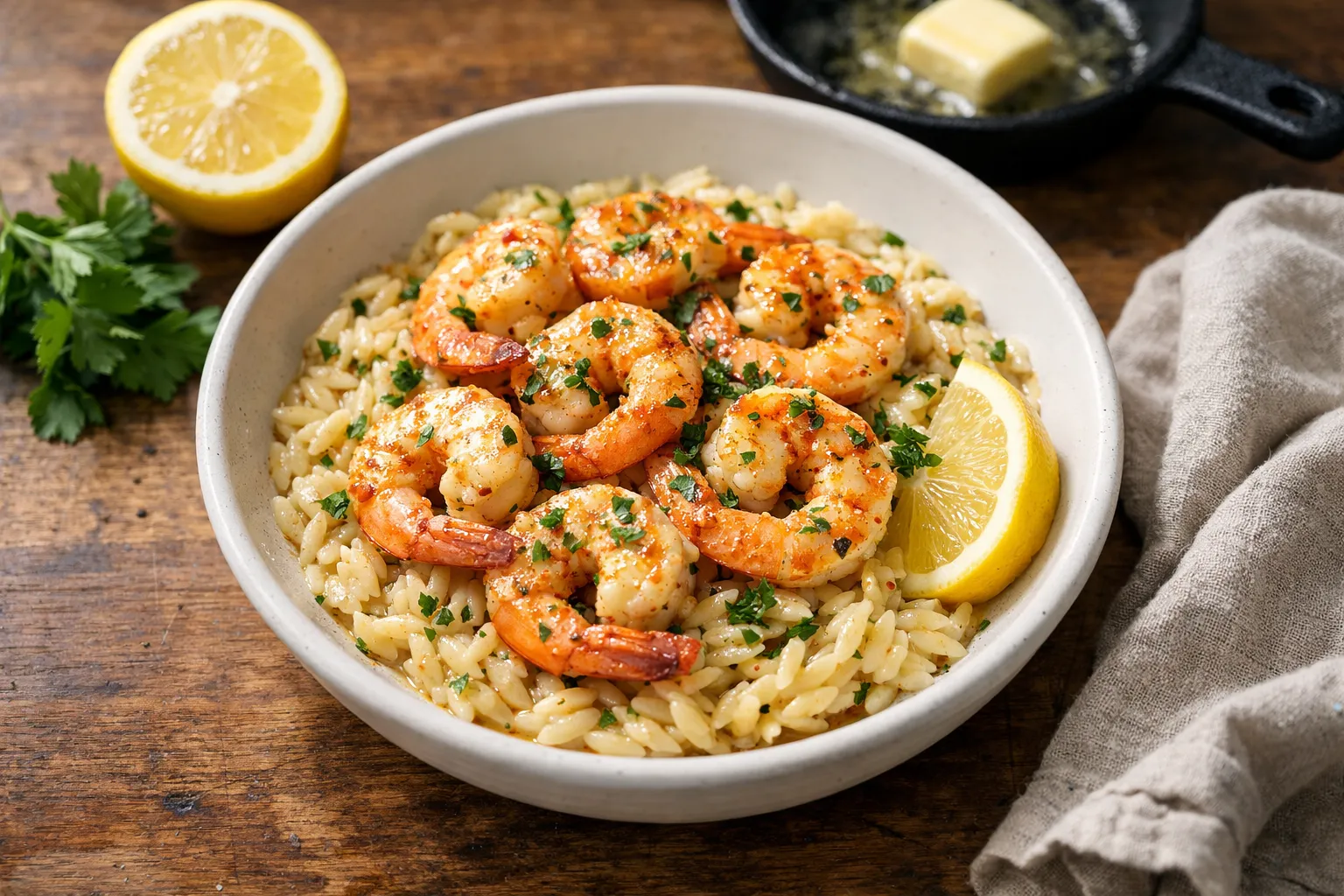
Updated November 2026. This one‑pan lemon‑garlic butter shrimp with quick orzo remains a weeknight star: bright citrus, garlicky butter and tender shrimp come together in about 20 minutes with minimal cleanup. This update adds 2026‑relevant tips on seafood traceability, induction and cookware choices, newer orzo alternatives (legume and gluten‑free shapes), and safe cooking guidance you can use right now.
What you'll learn
- How to make a finished lemon‑garlic butter shrimp and orzo in about 20 minutes.
- Which cookware and tools (including induction‑friendly options and an instant‑read thermometer) improve results in 2026 kitchens.
- How to choose sustainable shrimp, swap in modern orzo alternatives, and adjust for dietary needs.
What you'll need
Prep time: 8–10 minutes. Cook time: 10–12 minutes. Total: ~20–22 minutes. Serves: 2 as a main, 3–4 with sides.
Ingredients
- 8 oz (225 g) orzo (regular, or an orzo‑shaped lentil/chickpea pasta if gluten‑free)
- 12–14 large shrimp (16–20 count), peeled and deveined (about 10–12 oz / 300–350 g)
- 2 tbsp unsalted butter (or vegan butter/extra‑virgin olive oil)
- 1 tbsp extra‑virgin olive oil
- 3 garlic cloves, thinly sliced or minced
- Zest and juice of 1 lemon (≈ 2 tbsp juice)
- 1/2 cup low‑sodium chicken or vegetable broth (or water) + 1 cup water
- 2 tbsp chopped fresh parsley
- 1/4 tsp crushed red pepper flakes (optional)
- Salt and freshly ground black pepper
- Lemon wedges, for serving
Equipment
- Large heavy skillet (10–12 in / 25–30 cm) with lid — induction‑compatible if you have an induction cooktop
- Silicone spatula or wooden spoon, tongs
- Measuring cups and spoons
- Instant‑read thermometer (optional) and a small bowl for seasoning
Why this recipe still works in 2026
- One‑pan cooking concentrates flavor and minimizes cleanup — remains a top preference for home cooks according to ongoing consumer interest in quick, low‑cleanup meals.
- Quick‑cooking orzo and modern orzo‑shaped legume pastas let you get al dente texture fast; legume options add protein and fiber if you want a heartier plate.
- Shrimp sears rapidly and benefits from high heat and short cook time to stay tender — visual doneness (opaque, slightly curled) remains the best practical indicator.
Step‑by‑step: One‑pan lemon‑garlic butter shrimp with quick orzo
-
Prep (0–5 minutes)
Pat shrimp dry and season lightly with salt and pepper. Zest and juice the lemon, mince garlic, measure orzo and liquids. If using frozen shrimp, thaw safely overnight in the fridge or submerge sealed bag in cold water for 10–15 minutes. Have your pan, lid and tools ready.
Expected result: All mise en place measured so the cook moves smoothly once the pan is hot.
-
Toast the orzo (1–2 minutes)
Heat the skillet over medium (medium‑low on some induction surfaces). Add 1 tbsp butter + 1 tbsp oil. When butter foams, add dry orzo and toast, stirring constantly, 1–2 minutes until edges take on a light golden color. This step improves texture and prevents mushiness.
Expected result: Orzo grains look glossy and slightly toasted; aroma is nutty.
-
Deglaze and simmer (9–11 minutes)
Add garlic and lemon zest; stir 20–30 seconds until fragrant. Pour in 1/2 cup broth and 1 cup water (or 1 1/4 cups broth for richer flavor). Bring to a simmer, reduce to low, cover and cook 9–11 minutes, stirring once at 6 minutes to prevent sticking. For legume orzo, follow package timing (often shorter or longer).
Expected result: Orzo should be al dente and have absorbed most liquid; if too dry, add 1–2 tbsp hot broth.
-
Sear shrimp (3–4 minutes)
If your skillet has room, push orzo to one side; otherwise remove orzo briefly to a bowl. Heat a small area over medium‑high, add 1 tsp oil, and sear shrimp 1½–2 minutes per side until opaque and just curled. Shrimp cook very quickly — visual cues (opaque flesh, firm but not rubbery) are the reliable guide. If using a thermometer, fish guidance from USDA says cook fish to 145°F; for shrimp, cook until opaque and firm.
Expected result: Shrimp are opaque, pink and slightly curled (C‑shape), not tightly coiled.
-
Finish the sauce (1–2 minutes)
Lower heat to medium. Add remaining butter to the orzo, stir in lemon juice, parsley and red pepper flakes. Taste and adjust seasoning. Return shrimp to warm through for 30–60 seconds, spooning sauce over them.
Expected result: A glossy, slightly saucy orzo with bright lemon flavor and warm shrimp on top.
-
Serve
Garnish with extra parsley and lemon wedges. Serve immediately.
Screenshots / Visual cues (what you should see)
- Toasted orzo: grains are lightly golden and glossy, not wet or clumped.
- Simmering orzo: small bubbles around the edge, surface mostly covered by the lid condensation; pan not aggressively boiling.
- Shrimp doneness: opaque throughout, firm to the touch and slightly curled; avoid a tight “O” curl which indicates overcooking.
- Final plate: glossy orzo coated in a thin sauce, shrimp on top, visible lemon zest and chopped parsley.
Troubleshooting
- Orzo turns gummy: You likely used high heat or didn’t toast first. Use lower heat and stir more frequently next time; or rinse quick‑cook gluten‑free orzo briefly if the package recommends it.
- Shrimp rubbery: Overcooking is the usual cause. Reduce sear time and rely on visual cues — remove shrimp as soon as they turn opaque.
- Pan scorches on induction: Induction heats fast—reduce power setting by one level once the pan is hot, and preheat more gradually next time.
- Dish too dry: Stir in 1–2 tbsp hot broth or water, or a drizzle of olive oil to loosen the sauce.
Dietary swaps and 2026 ingredient notes
- Gluten‑free: Orzo‑shaped legume pastas (lentil, chickpea) are widely available in 2026. Cook according to package; they often need less liquid and shorter time.
- Dairy‑free: Use vegan butter or extra olive oil; finish with a splash of high‑quality olive oil for silkiness.
- Vegetarian: Seared halloumi, marinated tofu or roasted chickpeas make good protein swaps; crisp them separately then fold into the finished orzo.
- Sustainability: Look for shrimp with BAP (Best Aquaculture Practices), ASC (Aquaculture Stewardship Council), or MSC (Marine Stewardship Council) labels. In 2026, many retailers include QR codes for traceability—scan to see harvest or farm details before buying.
Storage and reheating
Refrigerate in an airtight container up to 2 days. Reheat gently in a skillet over low heat with a splash of broth or water to restore sauciness. A brief covered reheat preserves moisture better than microwaving; if you microwave, add 1–2 tbsp liquid and cover loosely.
Next steps
- Try cherry tomatoes stirred in 4 minutes before the orzo finishes for a juicy contrast.
- Swap lemon for orange and a pinch of smoked paprika for a warmer citrus glaze.
- Scale up to feed a crowd—double the recipe and use a 12‑inch skillet or shallow roasting pan to maintain even heat.
Tips from the pros (2026 updates)
- On induction stoves, preheat at medium rather than high—induction responds faster and prevents scorching.
- If you want a silkier finish without dairy, finish with 1 tsp extra‑virgin olive oil and the warm pan off the heat.
- Use the QR traceability info at many retailers in 2026 to confirm harvest method and supply‑chain details when buying shrimp.
How long can I store leftovers?
Store in the refrigerator up to 48 hours. Shrimp texture will soften over time; reheat briefly and add a splash of broth to refresh the orzo.
Can I use frozen shrimp without thawing?
For best texture, thaw shrimp first (overnight in fridge or cold‑water quick thaw). Searing from fully frozen leads to uneven cooking and excess liquid that can make the orzo gummy.
Is the 120–125°F internal temp okay for shrimp?
USDA guidance for fish recommends 145°F; for shrimp, visual cues — opaque flesh and firm texture — are the most practical guide. Avoid overcooking: remove shrimp as soon as they’re opaque and slightly curled.
Can I make this on a sheet pan instead?
You can roast shrimp and orzo separately: roast shrimp at 425°F (220°C) for 6–8 minutes and cook orzo to package directions, then toss with lemon‑garlic butter. The one‑pan stovetop method retains more sauce and speed.