
By James Crawford, Legal Affairs Reporter (turned kitchen explainer)
What You’ll Learn
- Exactly how to prep and cook tofu in modern (2026) air fryers so it crisps instead of sticking
- Which starches and quick-freeze options improve texture and release
- How to use new air-fryer features (humidity sensors, variable fans) without losing crisp
- Safety and consumer-rights steps when buying baskets, liners, or pre-marinated tofu
What You’ll Need
- Time: 20–40 minutes (5–10 min press; 8–12 min cook; add 12–24 hours if you use the optional freeze method)
- Equipment: basket-style or rackable air fryer (with removable basket/racks recommended), clean towel or paper towels, mixing bowl, tongs, optional perforated parchment (use only after preheat)
- Main ingredients (serves 2–3):
- 1 block (14–16 oz / 400–450 g) extra‑firm tofu
- 1–1½ tbsp neutral oil (avocado, grapeseed, light olive)
- 1–1½ tbsp starch — cornstarch, tapioca, or potato starch (see tip)
- ½ tsp fine salt (adjust for saucy finishes)
- Optional: perforated parchment, aquafaba for oil-free adhesion, freezer if using freeze-thaw method
Step-by-Step Instructions
1) Choose and drain the right tofu
- Open and drain. Pour off the packing liquid.
- Pat dry. Use a clean towel or paper towels until the surface changes from glossy to matte-damp.
Result: Surface looks matte but not bone-dry. That thin slick layer repels starch and causes sticking if you skip this.
2) Press briefly (5–20 minutes)
- Wrap tofu in towel or paper towels and weigh with a flat weight (cast iron skillet or canned goods).
- Press 5–10 minutes for faster meals; 15–20 minutes for noticeably firmer results.
Expected: Damp rings on the towel and denser block. Even a 5-minute press improves browning and release.
Optional: Freeze–thaw for chewier texture
- Freeze the unopened or drained block for 12–24 hours.
- Thaw in the fridge, then press to remove excess water before cutting.
Why: Freezing alters tofu’s internal protein network, creating bigger pockets that absorb coatings and hold up to crisping. Add 12–24 hours to your timeline.
3) Cut for even crisping
- Cut into uniform 3/4–1 inch cubes or slabs.
Why: Uniform pieces cook at the same rate and release evenly from the basket.
4) Preheat your air fryer
- Preheat 2–4 minutes to 400°F / 205°C (or 390°F / 199°C for models running hot).
- If your unit has a humidity sensor or app, use the preheat preset or manual 2–3 minute preheat—do not add a loose liner during preheat.
Why: A hot basket sets starch immediately; newer models with stronger fans accelerate that set but can also displace lightweight liners.
5) Oil, then starch — in that order
- Place cut tofu in a bowl. Drizzle 1–1½ tbsp oil; toss gently until lightly glossy.
- Sprinkle 1–1½ tbsp starch (cornstarch for drier crunch, tapioca for glassy chew, potato starch for very light crisp). Add ½ tsp salt. Toss to coat evenly.
Visual cue: Pieces should look dusted, not wet-clumpy. If clumps form, add 1 tsp oil and retoss.
6) Prep the basket safely
- Lightly oil the basket surface with a wipe or quick spray—no puddles.
- If you use perforated parchment, only insert it after preheating and place tofu atop it. Never run a loose sheet during preheat.
Why: Stronger 2024–26 fan designs improve crisping but can lift and displace liners. Follow your manufacturer's liner guidance to avoid contact with the heating element.
7) Air-fry with space and a shake schedule
- Arrange tofu in a single layer with breathing room; use the rack for two-tier batches if your model supports it.
- Cook at 400°F / 205°C for 8–12 minutes. Shake or flip at 4 minutes; check at 7–8 minutes and shake again as needed.
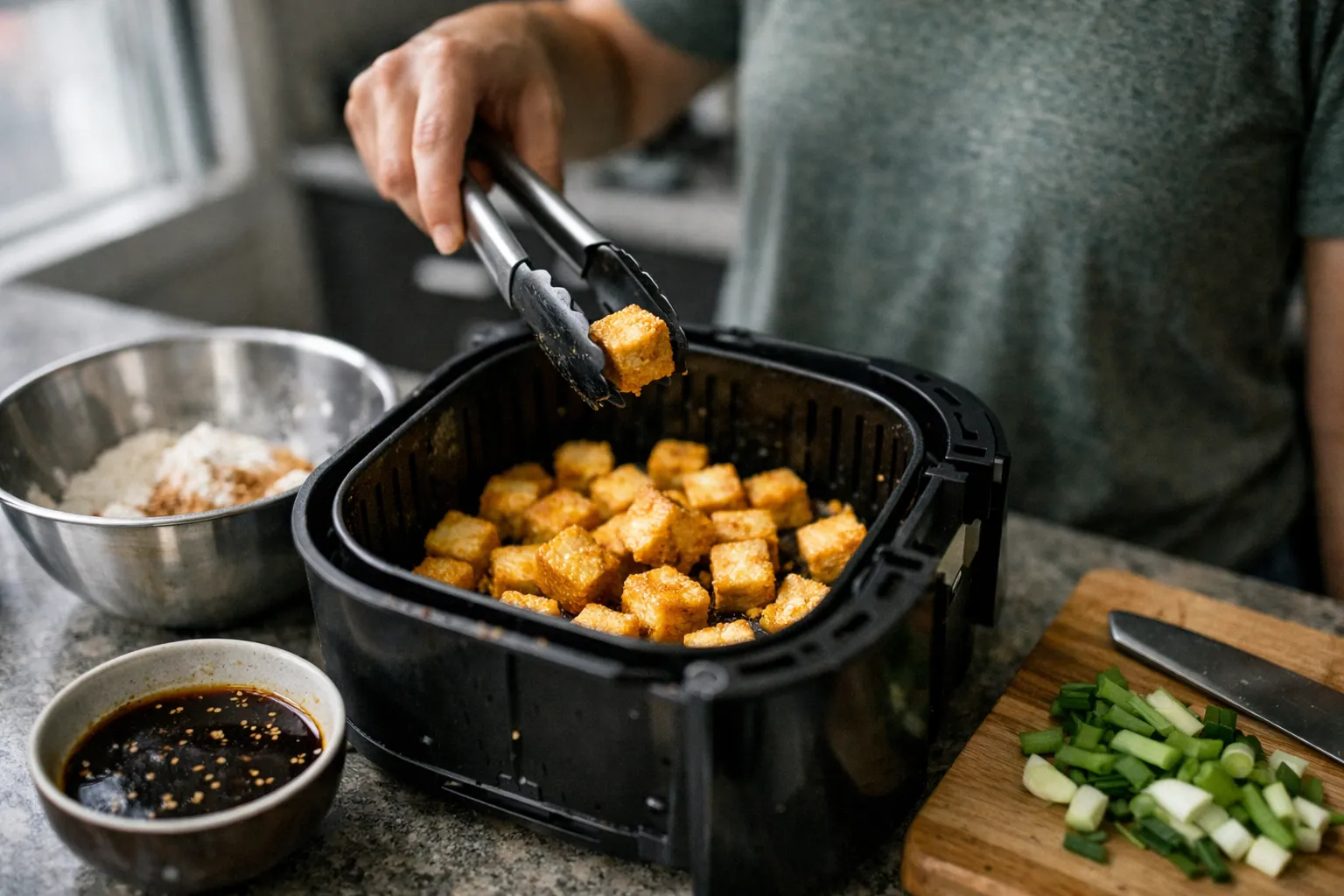
Expected: Even golden edges and a dry-to-the-touch crust. When tapped with tongs you should hear a faint crisp sound.
8) Sauce after — serve immediately
- Transfer tofu to a bowl and toss with sauce just before serving, or offer sauce on the side.
Note: Saucing inside the basket gives flavor but reduces crisp and increases clean-up.
Screenshots / Visual Cues (What You Should See)
- After pressing: Towel with damp rings; tofu surface matte.
- After coating: Thin, even powder coat; no sticky clumps.
- In the basket: Pieces spaced so you can see gaps through the basket.
- At first shake: Pieces should slide with a gentle shake; if they cling, wait 30–60 seconds and try again.
- Finished: Deep golden edges, firm interior, audible crisp on bite.
Troubleshooting
“My tofu stuck to the basket.”
- Cause: Too wet, basket not hot, liner added during preheat, or disturbed too early.
- Fix next time: Preheat 2–4 minutes; press 5–20 minutes; oil basket lightly; add liners after preheat; wait to shake until 4 minutes.
- Fix now: Turn off the unit and let it cool 1–2 minutes—steam loosens stuck spots. Gently work a thin spatula under pieces.
“It’s browned but not crispy.”
- Cause: Overcrowding, trapped moisture, or too-short preheat.
- Fix: Cook smaller batches, press longer, or add 1–2 minutes at 400°F. Re-crisp leftovers at 380–400°F for 3–5 minutes.
“Patchy, floury coating.”
- Cause: Too much starch or oil applied after starch.
- Fix: Always oil first, then starch. If patchy, add 1 tsp oil and toss before cooking.
“Tofu dry inside.”
- Cause: Pieces too small or overcooked.
- Fix: Cut larger (3/4–1 inch) and stop at 8–9 minutes; carryover crisping continues after removal.
Updated 2026 Notes and Real‑World Context
Between 2024 and 2026, air-fryer hardware matured: many consumer models now offer variable fan speeds, humidity or moisture sensors, app-controlled preheat, and removable racks. Those features help crisping but change when and how you should use liners and two-tier racks. Practical rules to follow in 2026:
- If your model has a humidity sensor or steam-assist, expect slightly longer initial cook times for moisture to clear—use the sensor’s “dehumidify” or “crisp” preset when available.
- Brands increasingly advertise PFAS‑free baskets as consumers press for safer coatings. The EPA’s PFAS roadmap and ongoing regulatory attention pushed manufacturers to disclose coating materials; always check product specs and independent test results before relying on marketing claims.
- Perforated silicone mats and solid nonperforated liners block airflow—avoid them. Use perforated parchment only after preheat and only if your manual permits it.
Your Rights (as a consumer)
You have specific protections when buying packaged food or appliances. The law requires accurate ingredient labeling for tofu and pre-marinated products under FDA rules; allergens must be declared. For appliances, manufacturers must provide safety and use instructions—follow them to avoid liner and basket hazards. If a product is mislabeled, unsafe, or recalled, the retailer or manufacturer is required to notify you; check FDA, CPSC, or your state attorney general’s recall pages. Keep receipts and register new appliances with the manufacturer to receive safety notices.
Next Steps
- Meal prep: Store cooked tofu in a sealed container up to 4 days. Re-crisp in your air fryer at 380–400°F for 3–5 minutes.
- Try the freeze trick: Freeze one block to test texture differences. Thaw, press, and follow the same coating/cooking steps.
- When buying a new air fryer: Look for removable racks, PFAS-free/clear-coating disclosures, and explicit liner guidance in the manual.
- For product or label issues: Retain packaging and receipts; contact the manufacturer and check federal recall pages.
FAQ
Can I skip oil entirely and still prevent sticking?
You can reduce oil, but sticking risk rises. For oil-free attempts: add 1 tbsp aquafaba or a light sprinkle of starch to help coatings adhere, use perforated parchment added after preheat, and expect a slightly drier texture. Shorten cook times by 1–2 minutes to avoid overbrowning.
Is tapioca really better than cornstarch in 2026?
Both still work. Tapioca gives a shinier, chewier crust and browns fast; cornstarch yields a drier, crunchier shell. Potato starch is a newer favorite for a very light, delicate crisp. Try each on small batches to decide which you prefer.
Will a perforated parchment or silicone mat damage my air fryer?
Perforated parchment made for air fryers is safe if added after preheat and if your manual allows it. Solid silicone mats or unperforated liners can block airflow and reduce crisp and may cause overheating—avoid them unless explicitly endorsed by the manufacturer.
How long can I keep pressed tofu in the fridge before cooking?
Pressed, uncut tofu stored in an airtight container will keep up to 3 days in the fridge. If it smells sour, has a slimy film, or changes color, discard it. Don’t leave tofu at room temperature for more than 2 hours.
What should I do if my air fryer is recalled or has a safety notice?
Register your appliance and check manufacturer emails and government recall lists regularly. If a recall affects your unit’s basket, coating, or liner guidance, follow the manufacturer’s instructions for repair, replacement, or refund and retain purchase documentation.
Bottom line: control moisture, oil first then starch, preheat, and respect your air fryer’s airflow and liner rules. Do that, and your tofu will stop sticking—consistently. For specific safety or legal questions about food labeling or appliance recalls, consult the manufacturer, FDA/CPSC resources, or a qualified attorney.