What you'll learn: You will make a weeknight-ready sheet‑pan bowl of crispy harissa chickpeas and za'atar cauliflower with a quick tahini‑yogurt, learn faster air‑fryer and convection oven methods, and get updated tips for 2026 ingredient sourcing, storage, and meal‑prep.
Why this update matters (2026 context): In the past few years home kitchens have shifted toward high‑heat, multi‑function appliances (countertop convection ovens, air‑fryer/oven combos), and consumers increasingly seek plant-forward, time-efficient meals that store well for lunches. This update adds practical appliance timings, guidance on ingredient choices that are now widely available (pre‑rinsed high‑quality canned chickpeas, harissa pastes with clearer allergen labeling), and tweaks to improve crispness and flavor while reducing waste.
What you'll need
- Time: 30–45 minutes (sheet pan) or 20–30 minutes (air fryer + quick roast)
- Ingredients (serves 3–4): same core list as original—2 × 15‑oz cans chickpeas, 1 medium cauliflower, olive oil, harissa paste, smoked paprika, salt, za'atar, lemon, tahini, Greek or dairy‑free yogurt, shallot, vinegar, greens, parsley, optional seeds/nuts.
- Kitchen tools: large rimmed half‑sheet pan or two smaller pans, parchment (optional), mixing bowls, whisk, tongs. Optional: baking rack for sheet pan, air fryer or convection oven.
Step‑by‑step instructions
1. Preheat and prep chickpeas
- Preheat oven to 450°F (230°C). If using convection, set 425°F (220°C) and reduce time by ~10–15% (see timing notes below). Line pan with parchment or lightly oil it.
- Drain and thoroughly pat chickpeas dry on paper towels—this is the single most important step to get crispness. In a bowl, toss with 1 tbsp olive oil, 1 tbsp harissa paste (start here; add more later to taste), 1 tsp smoked paprika, and 3/4 tsp salt. Spread in a single layer on one side of the sheet pan. For best airflow, place chickpeas on a wire rack over the pan.
2. Season the cauliflower
- In a second bowl, toss 1½–2 lb cauliflower florets with 2 tbsp olive oil (or 1½ tbsp olive + ½ tbsp avocado oil for higher heat), 1 tsp salt, 1 tbsp za'atar, and zest of 1/2 lemon. Spread on the remaining area, cut side down where possible for caramelization.
3. Roast—watch for timing
- Sheet‑pan method at 450°F: roast 20–25 minutes. At 12–15 minutes, shake the pan or flip cauliflower and stir chickpeas. Remove chickpeas early if they reach deep golden and crisp before cauliflower.
- Convection ovens: set 425°F and roast 18–22 minutes, checking at 10–12 minutes for doneness.
- Air‑fryer shortcut: transfer seasoned chickpeas to a preheated air fryer basket at 375°F (190°C) for 10–12 minutes, shaking halfway; for cauliflower, roast in the air fryer at 390°F (200°C) for 12–15 minutes in a single layer. You can do them sequentially in a 4–6 quart basket; larger air fryers or tray-style models can handle both simultaneously.
4. Make the tahini yogurt and pickled shallot
- Whisk 3 tbsp tahini with 5 tbsp Greek or dairy‑free yogurt, 2 tbsp lemon juice, 1–2 tbsp water to loosen, and 1/4 tsp salt. Adjust for tang and pourability; warm water thins more gently than cold.
- Quick‑pickle the shallot: toss thin slices with 2 tbsp red wine or apple cider vinegar and a pinch of salt. Let sit 10 minutes; refrigerate if not using right away.
5. Finish and assemble
- Toss roasted cauliflower with remaining 1 tsp za'atar and a squeeze of lemon. If you want the greens warm, lay them on the still‑hot pan for 1–2 minutes in the oven; raw gives more bite.
- Divide 2 cups of greens among 3–4 bowls, add cauliflower and chickpeas, drizzle tahini yogurt, scatter pickled shallot and parsley, finish with sesame seeds or toasted nuts and an extra harissa drizzle if desired.
Screenshots / visual cues (what you should see)
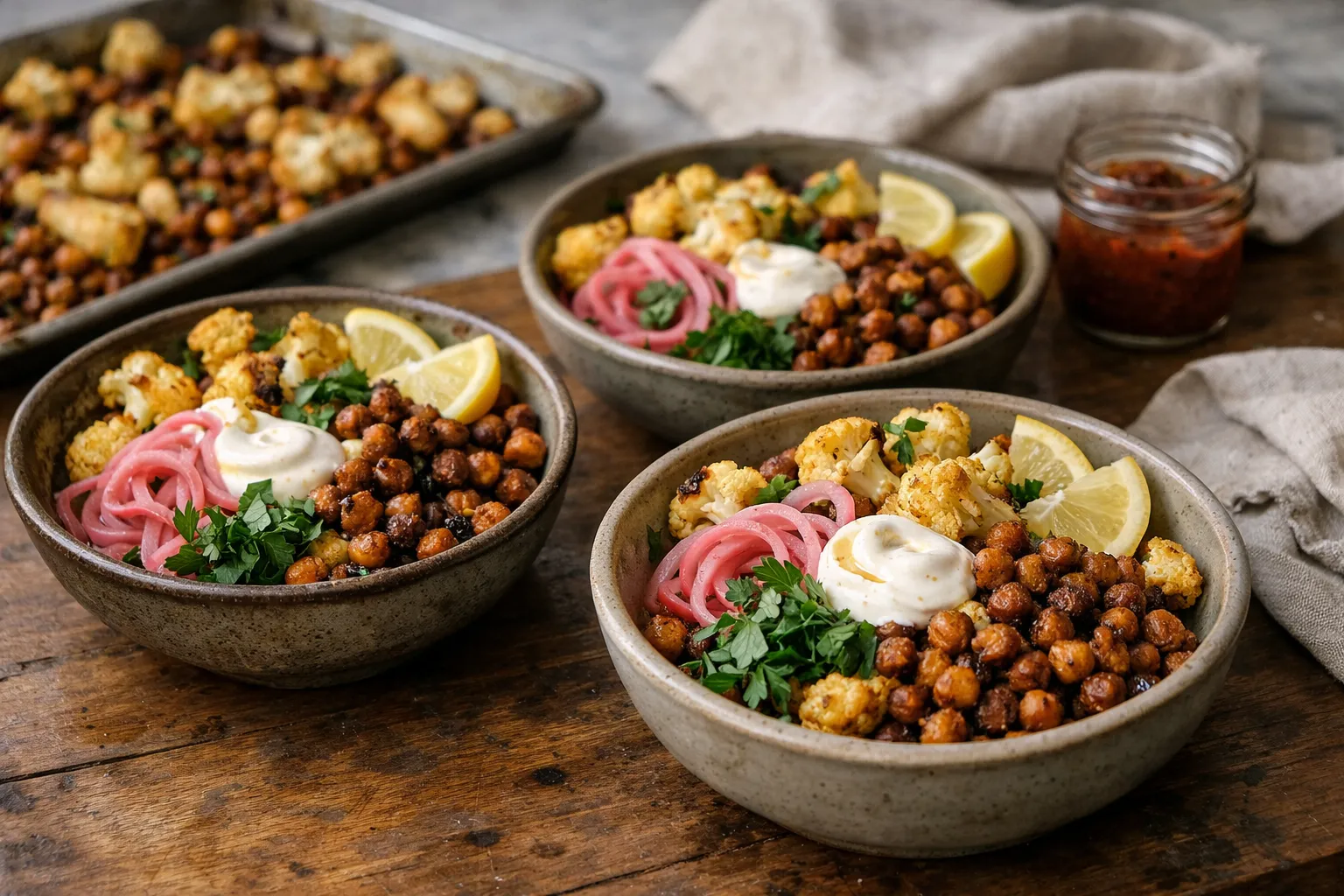
- Chickpeas: deep golden to mahogany specks, visibly dry and not glossy with oil; they should rattle slightly when shaken on the pan.
- Cauliflower: darkened edges and some char on the larger florets, interior still creamy; not shriveled or blackened.
- Tahini yogurt: smooth, thick but pourable—coats the back of a spoon.
- Finished bowl: vivid contrast—green from parsley/greens, orange‑red from harissa chickpeas, golden cauliflower, pale tahini swirls.
Troubleshooting (common issues & fixes)
- Chickpeas are soft: You didn't dry them well enough. Pat completely dry and roast longer on a wire rack. For immediate rescue, air‑fry at 375°F for 3–5 minutes to crisp.
- Cauliflower burned on outside but raw inside: Cut florets more uniformly and place cut side down; lower rack if too close to broiler or reduce temp to 425°F and extend time.
- Too oily or heavy tahini sauce: Thin with warm water and a splash more lemon to brighten; reduce tahini next time.
- Harissa too hot: Start with 1 tbsp and serve extra on the side. Mixing some tahini yogurt into a small portion will neutralize heat for kids or heat‑sensitive eaters.
- Storage loss of crispness: Store roasted elements separately from the sauce and greens. Reheat roasted items at 425°F on a sheet pan for 8–10 minutes or in an air fryer at 375°F for 5–7 minutes to restore texture.
Updated sourcing & 2026 best practices
- Look for canned chickpeas labeled “BPA‑free lining” if you prefer that packaging. Many retailers now offer higher‑quality, low‑sodium options—rinse or retain a bit of aquafaba if you want a little help with sauce emulsification.
- Harissa and za'atar labeling is clearer in 2026—check for sesame and sumac allergens; artisanal blends offer brighter sumac notes, while packaged pastes vary in oil content (less oil gives more concentrated flavor and better roasting control).
- If you prefer higher‑heat roasting (475–500°F) for extra char, use avocado oil or refined oils with higher smoke points and watch closely for smoke; try the higher temp only if your kitchen has adequate ventilation.
- For sustainability: use leftover cauliflower stems in stock or finely chop into slaws; toast and save leftover chickpeas as snack toppers to reduce waste.
Next steps / variations
- Protein boost: fold in quick seared tofu cubes tossed with a teaspoon of harissa oil, or add flaked roasted salmon for a pescatarian option.
- Grain bowl: serve over farro, freekeh, or quick‑cook brown rice for heartier meals suitable for meal prep.
- Make it smoky: add 1 tsp Aleppo‑style pepper or smoked salt for deeper smoke without increasing capsaicin heat.
- Meal prep: roast a double batch on Sunday. Store roasted veggies and chickpeas separately; assemble bowls in under 5 minutes all week.
Serving size and storage (unchanged)
Makes 3 generous or 4 moderate bowls (about 1½–2 cups per bowl). Store roasted vegetables and chickpeas 3–4 days in the fridge in airtight containers; tahini yogurt 3–4 days. Reheat to crisp as noted above.
Dietary modifications (concise)
- Vegan: use dairy‑free yogurt and ensure harissa contains no honey.
- Gluten‑free: this recipe is naturally gluten‑free—confirm za'atar and harissa labels.
- Nut‑free: omit nuts and use seeds like toasted sesame or pumpkin seeds.
- Lower‑fat: reduce oil by ~25% and use low‑fat yogurt; increase roasting time slightly to compensate for less oil.
Tips for success (quick)
- Dry chickpeas thoroughly—this is the most important step for crispiness.
- Space items; use two pans if needed to avoid steaming.
- Use a wire rack for chickpeas on the sheet pan if you want maximum airflow.
- Start with less harissa; serve extra separately.
FAQ — Can I use dried chickpeas instead of canned?
Yes. Soak overnight and cook until tender, then drain and dry thoroughly before seasoning. Home‑cooked chickpeas may hold slightly more moisture—spread them on a baking sheet and dry in a low oven (200°F) for 15–20 minutes to remove surface moisture before roasting to help them crisp.
How do I get the chickpeas extra crunchy without burning the cauliflower?
Either roast chickpeas on a separate pan or use a wire rack so they get full air circulation. Alternatively, air‑fry chickpeas separately (10–12 minutes at 375°F) while roasting cauliflower on the sheet pan.
Can I make this gluten‑free and allergy‑friendly for a crowd?
Yes. The core recipe is naturally gluten‑free; confirm spice blends for cross‑contamination. For nut allergies, omit nuts and use seeds; for dairy‑free needs, use plant yogurt. Label dishes clearly when serving a crowd.
What's the best way to reheat leftovers and keep texture?
Return roasted elements to a sheet pan and reheat at 425°F for 8–10 minutes, flipping once, or air‑fry at 375°F for 5–7 minutes. Avoid microwaving if you care about crispness; if microwaving, finish with 2–3 minutes in a hot oven or skillet.
This 2026 refresh keeps the original sheet‑pan simplicity but adds appliance‑specific timings, sourcing notes, and sustainability-minded tweaks so your bowls are faster, crisper, and better suited to how people cook and shop today. Try the air‑fryer shortcut on your next weeknight and tell us which topping you love most.