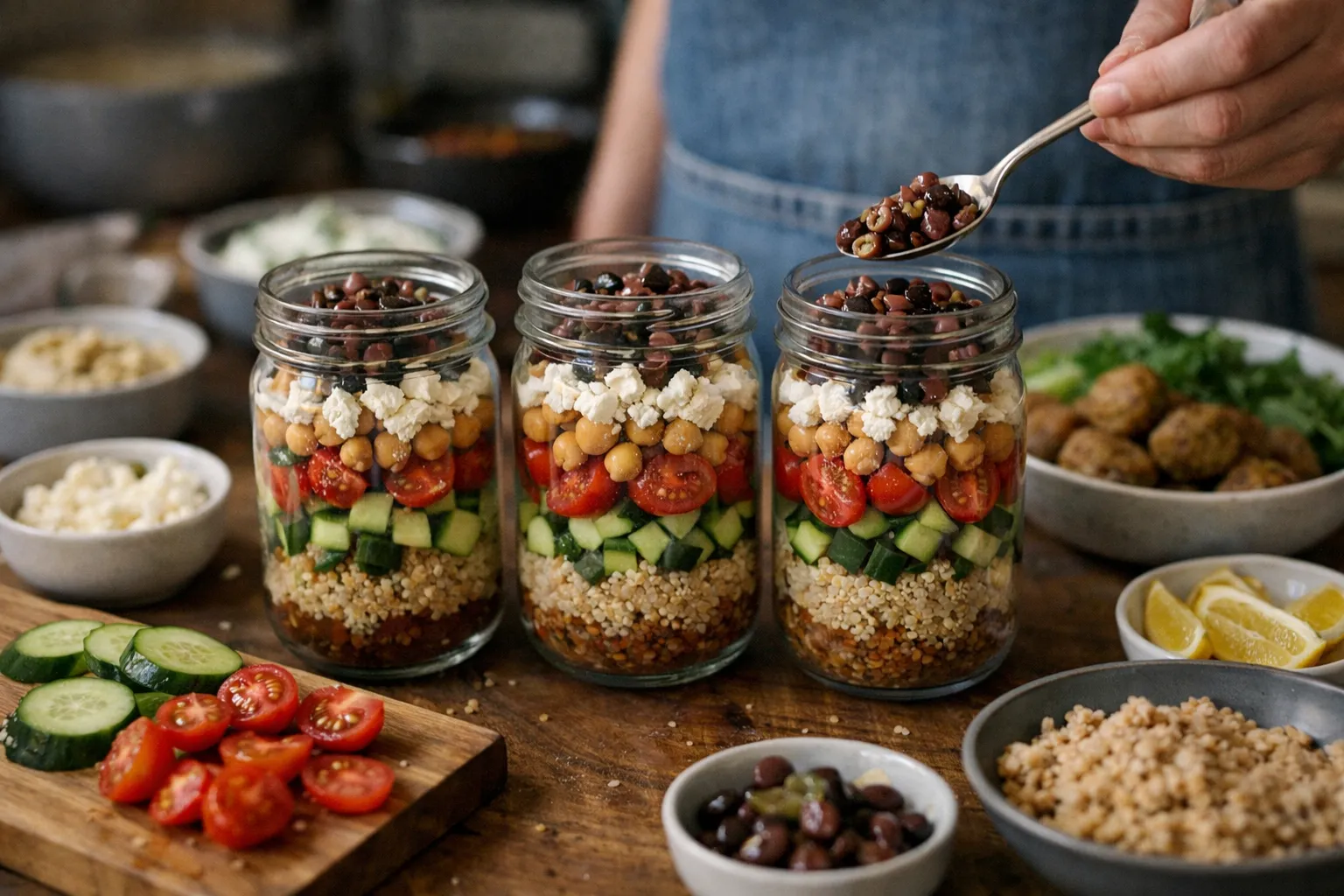
There’s still nothing more satisfying than a bright, nourishing bowl ready to grab on a busy morning — and in 2026 the principle is the same: thoughtful layering, reliable food safety and a few sustainability updates make mason-jar Mediterranean grain bowls an easier, fresher weekday solution than ever. This updated guide is for home cooks and recipe fans who already love meal prep but want current best practices — from cooling and storage changes based on food-safety guidance to climate-conscious swaps, new plant-based protein options, and jar hardware that keeps components fresher longer.
Prerequisites & context
Before you assemble: know two practical constraints that changed little in the past few years but matter for healthy, reliable meal prep.
- Food safety baseline: Follow cold-holding guidance — cool hot foods and get jars into refrigeration so their internal temperature reaches 41°F (5°C) within 4 hours (U.S. FDA/food safety best practices). This prevents condensation and bacterial growth.
- Sustainability baseline: Since 2023, many home cooks prioritize lower-waste prep. Reusable glass, composting trimmings and buying grains/legumes in bulk reduce both cost and packaging waste.
What you’ll need (2026 updates)
- Ball, Mason or Weck-style glass jars with tight lids — 16 oz remain versatile; add 24 oz jars for larger mains or if you prefer warm grains (24 oz hold ~700–800 ml).
- Optional: silicone lids or leakproof stainless twist lids for transport; lightweight insulated tote for longer commutes.
- Basic tools: medium pot, sheet pan, skillet, chef’s knife, cutting board, measuring cups/spoons. Add a digital kitchen thermometer to check cooling temperatures.
- Zero-waste helpers: jar funnel, silicone muffin cups (for wet ingredients), and a mesh salad spinner for drier greens.
Standard ingredient groups — refined for 2026
Organize shopping into five groups for speed. Recent pantry shifting favors more plant proteins and seasonal veg; keep a flexible list.
- Base grain/substitute: farro, quinoa, brown rice, millet or cauliflower rice.
- Cooked/starchy element: roasted sweet potato, fingerling potatoes, or pita croutons.
- Roasted/marinated veg: eggplant, zucchini, charred cherry tomatoes, roasted peppers.
- Fresh crunchy veg & greens: cucumber, radish, red onion, arugula or baby kale.
- Protein & finishers: roasted chickpeas, marinated tofu, canned or pouched tuna (sustainable-certified), grilled chicken, halloumi, olives, toasted seeds.
Prep time & serving size — realistic 2026 expectations
If you're prepping four jars for the week:
- Active prep time: 40–60 minutes (chopping, seasoning, dressing). Experienced multitaskers can shave time by overlapping grain cooking and oven roasting.
- Hands-off cooking: 20–40 minutes depending on roasted veg and proteins.
- Total elapsed time including cooling: ~75–100 minutes. Use a thermometer to verify cooling to 41°F in 4 hours for safety.
- Serving size: one 16-oz jar for a main; 24-oz jars for larger appetites or for those packing warm grains to reheat later.
Best cooking method for consistent results
Combine stovetop and oven techniques for efficient results and predictable textures:
- Grains: Rinse quinoa, follow your package ratio (a good starting point remains 1:1.5 water:quinoa). For brown rice, 1:2–1:2.25 water:rice is dependable; rest 5–10 minutes off heat and fluff with a fork.
- Roasted veg: Roast at 425°F (220°C) on a sheet pan for 20–30 minutes for caramelization; toss halfway through. Denser veg (sweet potatoes) may need 30–40 minutes.
- Proteins: Sear or grill chicken and halloumi; roast chickpeas at 400°F (200°C) for 20–25 minutes until crisp. For firm tofu, press, cube and roast at 425°F for 20–25 minutes with a little oil and cornstarch for crunch.
Layering order — the no-sog method (why it works)
Layering keeps dressings away from delicate greens; the ordering below is designed so the densest, moisture-resistant foods sit under lighter, crisp items. This is the same reliable method food pros use in commercial meal-prep kitchens.
- Dressing (place at the very bottom)
- Dense, roasted or marinated items (roasted veg, potatoes)
- Proteins (tofu, roasted chickpeas, grilled chicken)
- Grains (quinoa, farro)
- Fresh crunchy veg (cucumber, radish, bell pepper)
- Leafy greens (arugula, spinach, baby kale) — on top
- Finishers (nuts, seeds, olives, feta) — add right before sealing if possible
Why: keeping dressing at the bottom preserves crunch and reduces sogginess; layers reduce ingredient-to-ingredient moisture transfer. If a jar will be stored more than 48 hours, keep wet items (dressed tomatoes, avocado) separate and add at service.
Sample build: Mediterranean 16‑oz jar (serving size)
- 2 tbsp lemon-tahini dressing (bottom)
- 1/3 cup roasted cherry tomatoes and zucchini
- 1/4 cup roasted chickpeas (crispy)
- 1/2 cup cooked quinoa (or farro)
- 1/4 cup diced cucumber + 1 tbsp red onion
- 1 cup packed arugula or baby spinach
- 1 tbsp toasted pumpkin seeds + 2 tbsp crumbled feta
Scale by multiplying quantities. For 24-oz jars increase grains to 3/4–1 cup cooked and add an extra 2 tbsp of protein.
Batch schedule (practical make-ahead plan)
- Day -1 (evening): Roast vegetables and chickpeas, cook grains, make dressing. Cool foods quickly: spread grains and veg in a single layer on a tray to speed cooling.
- Day 0 (morning): Verify cooled items with a thermometer (should be below 41°F within 4 hours of cooking), dry greens in a spinner, assemble jars following layering order, seal, and refrigerate upright.
Storage timeline: jars keep peak quality 3–4 days refrigerated. Greens often begin to wilt after day 4; roasted veg and cooked grains remain fine for 4–5 days when stored properly.
Updated dietary modifications & new 2026 ingredients
Food trends through 2024–2026 show more accessible plant-based proteins and convenient pouches. Here are tested swaps and modern additions:
- Vegan: Replace feta with store-made cashew feta or extra roasted chickpeas; use tahini-lemon dressing or a blended silken-tofu ranch.
- Gluten-free: Use quinoa, millet or certified gluten-free oats instead of farro/barley.
- Low-FODMAP: Swap garlic and onion for garlic-infused oil and chives; choose firm tofu or canned tuna for protein.
- Low-carb/Keto: Use cauliflower rice, roasted cauliflower florets and keep olives, halloumi or avocado for fat.
- New protein options (2026): Plant-based chicken-style strips and widely available marinated tempeh are good roasted or pan-seared inclusions; if using commercially produced cultivated meats or novel proteins, follow manufacturer handling and cook recommendations.
Note on dressings and stability
Emulsified dressings (olive oil + lemon + mustard) are ideal and stay stable at the bottom. Creamy dressings with yogurt or tahini work too but should remain chilled and be placed at the base. If you prefer total freshness, use small screw-top condiment cups or silicone cups nested in the jar — these are widely sold and make jars dine-ready without sogginess.
Transport, storage and reheating — updated safety tips
- Transport: Keep jars upright in an insulated tote. Use a small ice pack if you’ll be out longer than two hours. For multi-hour commutes, carry a thermometer or keep jars below 41°F.
- Storage: Refrigerate jars upright. Cooked components (grains, roasted veg) can be frozen separately up to two months; thaw overnight in the refrigerator before assembly.
- Reheating: If reheating grains, empty the jar into a microwave-safe bowl, reheat (stir midway), then reassemble with fresh greens and finishers.
- Cooling fast: Spread warm grains/veg thinly on a sheet to cool faster before putting them into jars — this reduces condensation (a primary cause of soggy textures and elevated bacterial risk).
Flavor combos updated for 2026
Keep the same assembly logic; try these current pairings:
- Mediterranean: quinoa, roasted eggplant & peppers, chickpeas, cucumber, arugula, lemon-oregano vinaigrette, feta, kalamata olives.
- Herb & Citrus Chicken: farro, roasted sweet potato, lemon-herb grilled chicken, shredded kale, parsley, tzatziki, toasted almonds.
- Smoky Halloumi: brown rice, charred cherry tomatoes, grilled halloumi, cucumber, harissa-yogurt dressing, seeds.
- Black Bean & Avocado (vegan): cilantro-lime quinoa, roasted corn & pepper, black beans, avocado added at service, lime-tahini dressing.
- New 2026 idea — Smoky Tempeh Bowl: millet, roasted cauliflower, marinated tempeh, shredded cabbage, pickled onions, chipotle tahini bottom, pumpkin seeds.
Troubleshooting common problems
- Soggy greens: Ensure greens are completely dry; place them on top and keep dressing below. Add tomatoes and avocado at service if storing beyond 48 hours.
- Condensation/soft textures: Cool hot items to room temperature on a tray, then refrigerate. Use a thermometer to confirm cooling targets — per food-safety guidance, internal temps should reach 41°F within 4 hours of cooking.
- Mold or off-odors: Use clean jars and refrigerate promptly; discard jars that smell off. Label jars with date and main protein to track freshness.
- Leaky lids: Test lids before travel; replace bands and seals that are misshapen. For long commutes, consider jars with silicone gaskets or locking clamps (Weck-style) which often maintain seals better for travel.
Cost, scaling and sustainability tips
To scale economically: cook grains in a large pot for multiple jars, roast multiple sheet pans simultaneously (rotate racks mid-roast), and make a quart of dressing to dress 6–8 jars. Buy grains, legumes and seeds in bulk to reduce packaging. Compost vegetable trimmings and save veggie scraps for stock (many home cooks now keep a freezer bag of scraps for weekly stock-making).
Final tips — make it yours
- Label jars with assembly date and main protein; use a simple masking-tape label or chalk marker.
- Keep a “mix-and-match” bin: lemon wedges, pita chips, small containers of avocado or labneh for last-minute freshness.
- Rotate dressings weekly to avoid flavor fatigue — lemon-mustard, red-wine vinaigrette, cilantro-tahini, and a yogurt-dill are solid, varied choices.
Common mistakes to avoid
- Putting warm foods directly into jars — causes steam and soggy greens.
- Placing delicate tomatoes or avocado directly above dressings for multi-day storage.
- Relying solely on metal screw bands for travel — replace worn bands and test lids for leaks.
Pro tips
- Use a digital kitchen thermometer to check cooled foods. Fast cooling reduces food-safety risk and preserves texture.
- Toast seeds and nuts immediately before use to maintain crunch; store toasted finishers separately if assembling more than three days in advance.
- For extra crunch, add a small bundle of pita chips or croutons in a tiny resealable bag tucked into the tote rather than the jar.
Troubleshooting quick reference
- Greens wilt quickly? Pack them dryer and on top; add citrus juice or acid only at service.
- Jars smell off after 4–5 days? Discard — err on the side of caution.
- Want warmer grains midday? Use an insulated jar or reheat in a microwave-safe bowl.
FAQ
How long can I safely store mason-jar grain bowls in the fridge?
For peak quality, plan on 3–4 days refrigerated. Roasted veg and cooked grains remain acceptable up to 4–5 days, but leafy greens are likely to wilt by day 4. Always check smell and appearance before eating.
Can I store warm grains directly in jars?
No — avoid putting hot grains or roasted vegetables into sealed jars. Spread them in a thin layer on a sheet to cool quickly, use a thermometer to confirm they reach below 41°F within 4 hours, then assemble. This prevents condensation and reduces bacterial growth.
Which jar types are best for travel?
Glass jars with robust silicone gaskets and clamp lids (Weck-style) or high-quality Mason jars with new, tight bands work well. For longer commutes, place jars upright in an insulated tote with an ice pack. Test lids for leaks before you commit to travel.
Can I freeze completed jars?
Not recommended — finishes like greens, cheese and dressings do not freeze well. Freeze cooked components (grains, roasted veg) in portioned containers for up to two months, then thaw overnight and assemble fresh.
Any tips for reducing food waste when meal prepping?
Buy staples in bulk, use vegetable scraps for stock, roast vegetable peels/crusts for flavor, and plan to use leftover jar components within 3–4 days. Keeping a small “tasting” bowl of extras for salads or omelets helps ensure nothing goes to waste.
With these 2026 updates — practical food-safety checks, modern protein and dressing options, and sustainability-minded prep — mason-jar Mediterranean grain bowls remain an efficient, adaptable weekly solution. Start with one jar, follow the layering logic and cooling steps, and adapt the flavor profile to your pantry and appetite.