
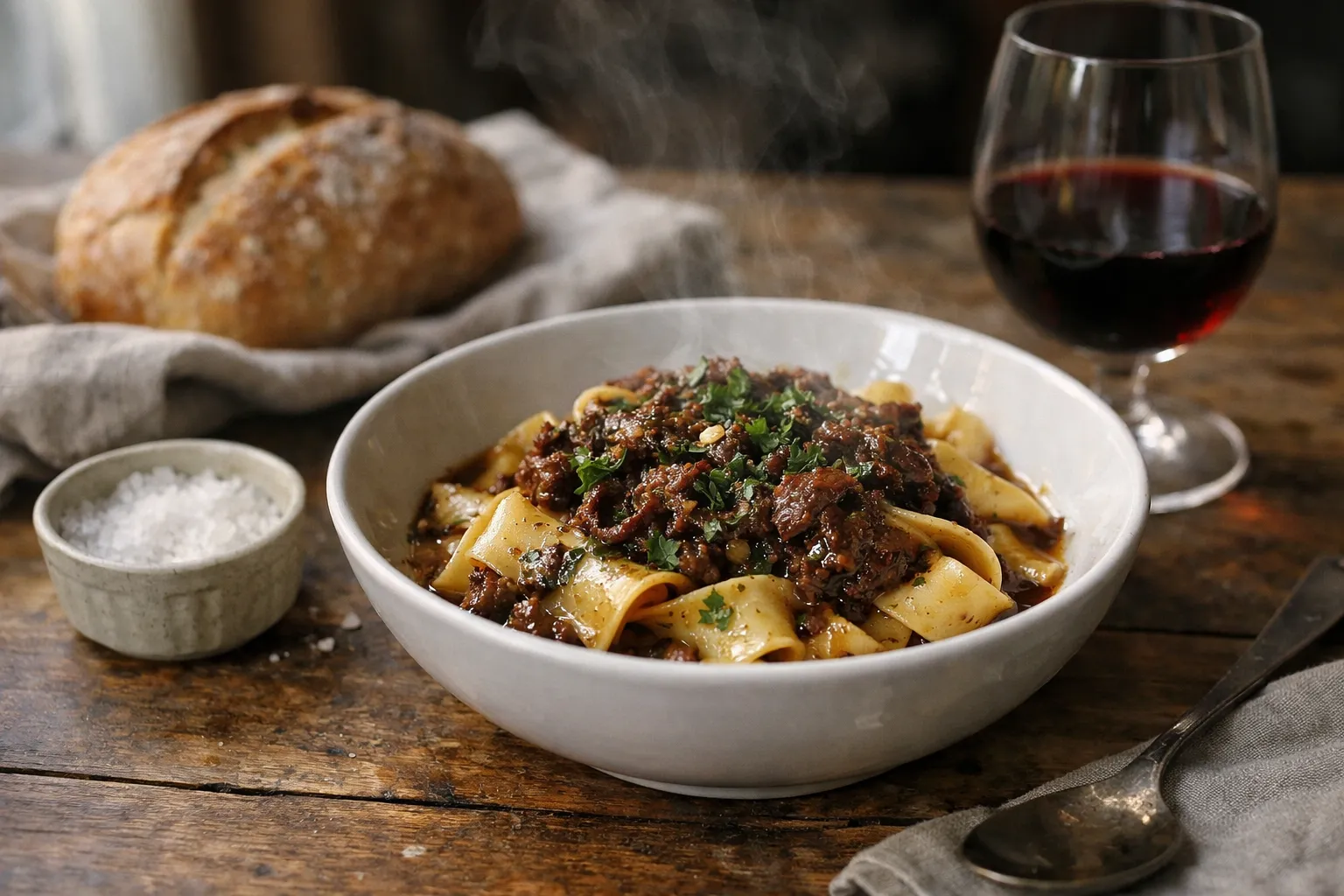
What you'll learn: How to make restaurant‑level short‑rib ragu in an Instant‑Pot in about 90 minutes, prep and freeze portions for reliable weeknight dinners, and apply August 2026 best practices for modern multicookers, food safety, and updated plant‑forward swaps so your freezer game actually helps, not hurts.
What you'll need
- 6‑quart or 8‑quart Instant‑Pot / electric pressure cooker (note adjustments below for 8‑qt)
- 3 lb bone‑in beef short ribs (preferred) or 3 lb boneless chuck, cut into large pieces
- Basic tools: tongs, wooden spoon, chef’s knife, fine‑mesh strainer (optional)
- Instant‑read thermometer (for reheating and food‑safety checks)
- Shallow refrigeration containers, vacuum sealer + freezer bags, or heavy‑duty zip bags
- Time: ~20 min active prep, 45 min pressure cook, ~30–40 min release/reduce; ~90–110 min total
Why this matters in August 2026
Freezer‑ready meals remain a top way to cut waste and weekday friction. By mid‑2026, guided recipe programs and Wi‑Fi‑connected multicookers are mainstream — they can help, but they also encourage overreliance on preset cycles that miss texture nuances. This update gives you actionable adjustments (not just push‑button faith). Food‑safety basics still stand: cool efficiently, refrigerate quickly, and reheat to 165°F (74°C). Plant‑forward alternatives and commercial mycoprotein options have matured, so I’ve added tested swaps that hold up in the freezer and on the plate.
At a glance
- Prep: 20 minutes
- Pressure cook: 45 minutes (bone‑in short ribs); 35 minutes for boneless chuck
- Natural release + reduction: ~30–40 minutes
- Total time: ~90–110 minutes
- Makes: 8 generous servings (10–12 cups finished ragu)
Ingredients
- 3 lb bone‑in beef short ribs (best) or 3 lb boneless chuck
- Kosher salt, freshly ground black pepper
- 2 tbsp olive oil
- 1 large yellow onion, finely chopped (≈1½ cups)
- 2 carrots, peeled and diced
- 2 celery stalks, diced
- 4 garlic cloves, minced
- 2 tbsp tomato paste
- 1 cup dry red wine (or 1 cup stock + 1 tbsp balsamic for non‑alcohol)
- 1 cup low‑sodium beef stock
- 1 (14‑oz) can crushed tomatoes
- 2 bay leaves, 1 tsp dried thyme (or 2 sprigs fresh rosemary)
- 1 tbsp Worcestershire (optional)
- 2 tbsp chopped flat‑leaf parsley
- Optional: pinch of sugar to balance acidity
Equipment notes (August 2026)
- 8‑quart Instant‑Pots give you more headroom for browning — sear in slightly larger batches but never pressure‑cook past the max fill line.
- Many 2025–26 models add guided recipe steps and adjusted pressure curves; use them for timing but trust the texture test (meat should pull from bone easily).
- Air‑fry or crisping lids do not change pressure times — do the sauté sear first, then switch to pressure mode.
- Vacuum sealing preserves quality best. If you don’t have one, freeze in shallow, well‑sealed containers to speed cooling and reduce ice crystals.
Step‑by‑step tutorial
1. Season and sear (10–12 minutes)
- Pat short ribs dry and season liberally with salt and pepper. Dry meat sears better — don’t skip this. Expected: surface moisture removed, salt drawing out surface proteins.
- Select “Sauté” on the Instant‑Pot and heat 2 tbsp olive oil until shimmering. Sear ribs in batches without crowding until deep mahogany crust forms (2–3 minutes per side). Transfer to a plate. Expected result: browned fond on the pot bottom that smells nutty and caramelized.
- Leave the fond — that’s concentrated flavor for your sauce. If using a Wi‑Fi guided program, cancel it before proceeding to manual sauté for better browning control.
2. Sweat aromatics and build the base (6–8 minutes)
- Add onion, carrot and celery; sauté until softened and starting to color, 4–5 minutes. Expected: translucent onion and softened mirepoix.
- Stir in garlic and tomato paste; cook 60 seconds to remove raw tomato taste and begin caramelizing the paste.
- Pour in wine to deglaze, scraping browned bits. Simmer 1–2 minutes to reduce slightly. If skipping alcohol, use 1 cup stock + 1 tbsp balsamic or ¼ cup verjuice.
3. Pressure‑braise the ribs (45 minutes pressure + releases)
- Return ribs to the pot. Add beef stock, crushed tomatoes, bay leaves and thyme. Liquid should come about halfway up the meat — do not overfill. Expected: pieces partially submerged with visible tomato base.
- Cancel “Sauté,” secure lid, set valve to sealing. Cook on HIGH pressure for 45 minutes for bone‑in short ribs; 35 minutes for boneless chuck. If your cooker advertises higher effective PSI, keep the same times but check tenderness at release.
- Allow natural pressure release for 15 minutes, then quick‑release remaining pressure. If meat resists shredding, reseal and add 10 minutes extra pressure (see troubleshooting). Expected: meat will pull from the bone and feel gelatinous when you probe it.
4. Shred and reduce the sauce (12–15 minutes)
- Carefully remove ribs; strain cooking liquid if you want a smoother sauce. Expected: glossy, unctuous braise liquid that gels slightly when chilled.
- Shred meat with two forks, discarding bones and excess fat; use a small spoon to skim surface fat if desired.
- Return shredded beef to the pot. Use “Sauté” to reduce until sauce is glossy and clings to meat, 8–12 minutes, stirring often to prevent sticking. Expected: thick ragu that coats a spoon.
- Taste and finish with salt, pepper and optional pinch of sugar or splash of balsamic. Stir in parsley and serve.
Screenshots / Visual cues (what you should see)
- After searing: deep brown crust on short ribs; dark fond stuck to the pot bottom.
- After sautéing aromatics: softened, slightly caramelized onion and tomato paste browned slightly behind the veg.
- After pressure braise: meat pulling away from bone; cooking liquid enriched with gelatin (it will thicken when chilled briefly).
- Final ragu: glossy, thick sauce coating shredded meat — not watery.
Freezer and make‑ahead strategy (2026 best practices)
- Cool ragu to no more than 70°F within 2 hours, and then to 41°F within 6 hours (two‑stage cooling recommended by the FDA Food Code). Practically: divide into shallow containers or vacuum bags to speed cooling; double‑bag small portions to avoid punctures.
- Vacuum‑sealed portions maintain peak quality about 6–8 months; standard freezer containers peak ≈3 months. Quality declines after these windows, though food remains safe if kept frozen continually.
- Label with contents and date. Flash‑freeze on a tray before stacking sealed bags to preserve shape and speed freezing.
- Reheat: thaw overnight in the fridge and warm to 165°F (74°C) on the stove. For from‑frozen reheats, simmer gently in a covered skillet with a splash of stock; stir every few minutes until 165°F is reached throughout.
Updated plant‑forward swaps (tested for texture & freezer life)
Plant options have matured. These swaps hold up in the freezer and produce satisfying texture:
- Mushroom + lentil ragu: sauté 12 oz finely chopped cremini + 1 cup cooked brown lentils (or use 10–12 oz commercial mycoprotein crumble). Pressure cook 10 minutes on HIGH, natural release 10 minutes, then reduce as usual. Expected: meaty bite and long freezer life.
- Textured vegetable protein (TVP) blend: rehydrate 10 oz TVP in 1 cup stock, fold into sautéed aromatics, add crushed tomatoes and simmer 8–10 minutes. Freeze as above.
- Note on commercial plant meats: many 2025–26 products contain binders that firm up when frozen; vacuum‑seal single‑use portions to avoid a rubbery crust.
Tips & troubleshooting
- If meat isn't shredding: reseal and cook 10 more minutes on HIGH, then natural release 10 minutes. Expect fall‑apart ribs after the extra time.
- Too thin sauce: simmer uncovered on “Sauté” longer, or stir in 1–2 tbsp tomato paste. For rapid thickening, mix 1 tsp cornstarch with cold water and whisk in during reduction.
- Too acidic: a small pinch of sugar or ½ tsp balsamic tames bright tomatoes without obvious sweetness.
- High altitude: increase pressure time by 5–10 minutes above 3,000 ft; consult your cooker manual for exact PSI adjustments.
- Want smoother sauce? Use a handheld immersion blender for 10–20 seconds before adding shredded meat; strain through a fine sieve for a restaurant finish.
Serving suggestions
- Over pappardelle, creamy polenta, mashed potatoes, or buttered egg noodles.
- As a sandwich: pile on toasted ciabatta with provolone, broil 2–3 minutes for melty goodness.
- Finish: grated Parmigiano‑Reggiano, chopped parsley, and a drizzle of good olive oil.
Next steps
When short ribs go on sale, make a double batch and freeze portions labeled with dates. Track inventory on a sticky note on the freezer — you’ll save money and time. Try the mushroom‑lentil swap next to compare texture, and if you have an 8‑quart model, test small searing adjustments to avoid steam‑simmer instead of a true crust.
How long can I freeze this ragu?
For best flavor and texture, freeze up to 3 months in standard containers; vacuum‑sealed portions keep excellent quality for about 6–8 months. Frozen food is safe beyond that if kept frozen, but taste and texture degrade.
Can I skip the wine?
Yes. Substitute 1 cup extra stock + 1 tbsp balsamic or ¼ cup verjuice. That preserves depth without alcohol and is a reliable swap for family or school‑safe meals.
Will this work in a slow cooker or oven?
Absolutely. Slow cooker: sear as directed, transfer to slow cooker, cover with liquids and cook LOW 6–8 hours. Oven: braise at 325°F in a covered Dutch oven for 2½–3 hours until tender, then shred and reduce on the stovetop.
How do I reheat frozen portions safely?
Thaw overnight in the fridge and reheat on the stove to 165°F. If reheating from frozen, simmer gently in a covered skillet with a splash of stock, stirring frequently and checking temperature to reach 165°F throughout.
Can I use guided, app‑led programs on my Wi‑Fi Instant‑Pot?
Yes — but treat them as starting points. Guided programs save time, but textures vary. Check meat tenderness at release and be ready to add extra pressure time for true fall‑apart short ribs.