
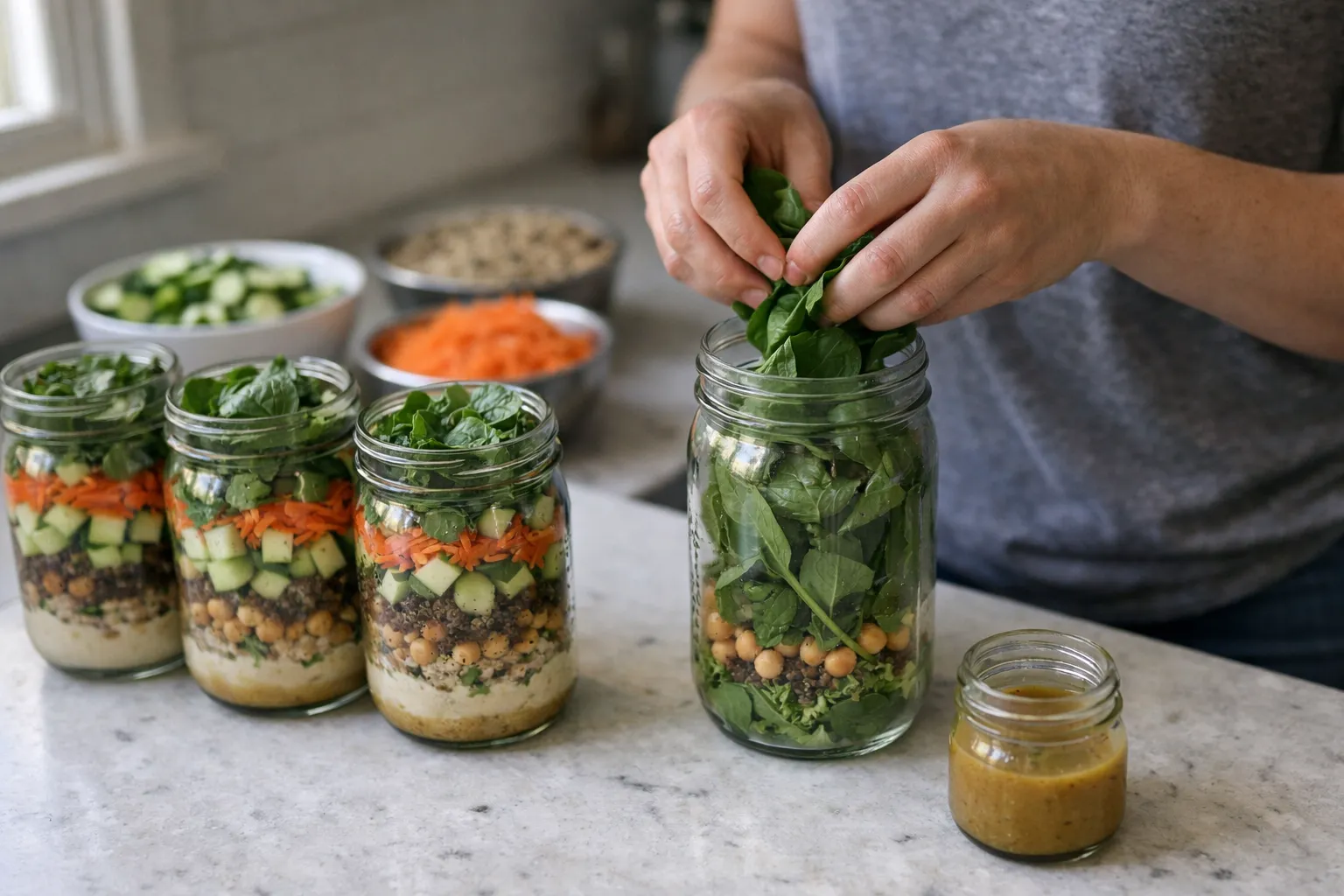
What you'll learn: How to meal-prep mason-jar salads in August 2026 that stay crisp and safe through the workweek, which accessories are worth the cost, how to transport jars without soggy greens, and five fresh jar builds reflecting 2026 flavors (seaweed, fermented toppings, tempeh).
What you'll need
- Time: 45–75 minutes for a first 5-jar batch (24-oz jars). Subsequent weekly batches: 30–45 minutes if grains/proteins are pre-cooked.
- Jars: Five wide-mouth mason jars (24 oz / 710 ml). Expect an up-front cost of roughly $10–35 for a 4–8 pack in 2026 depending on brand and lid type.
- Tools: cutting board, sharp knife, salad spinner or clean towels, sheet pan for rapid cooling, small funnel (optional), labels/marker. Optional: jar vacuum pump or silicone leakproof lids (common in 2024–2026), fridge thermometer or smart temperature sensor.
- Fridge baseline: a reliable refrigerator holding 40°F (4°C) or below — the FDA/USDA safe storage benchmark. Plan to store jars upright in the coldest zone (rear shelf).
Why the new accessories matter in 2026: Vacuum-cap lids and silicone travel lids are more widely available now; they can modestly reduce oxygen exposure and prevent leaks in transit. Smart fridge sensors that notify you if temps rise are also inexpensive and useful if you prep food-sensitive meals and want alerts when your fridge door is left open.
Step-by-step instructions
-
Step 1: Decide servings, plan cost and fridge space
You will choose how many lunches you need and whether the weekly time and fridge footprint fit your routine. A 24-oz jar equals one filling lunch with protein. Expected result: you avoid overbuying and confirm you have room in the coldest part of your fridge.
-
Step 2: Portion dressings first (and keep high-risk dressings short-lived)
You will portion 2–3 tablespoons of dressing into the bottom of each jar. Use oil-based vinaigrettes for the best barrier. If your dressing contains mayonnaise, yoghurt, or cream, plan to consume those jars within 48–72 hours and refrigerate immediately after assembling. Expected result: dry greens and a lower risk of early spoilage.
-
Step 3: Build a moisture-barrier layer
You will add chunky, low-absorbent vegetables directly on top of the dressing — cucumber, bell pepper, shredded carrot, radish, or halved cherry tomatoes. Expected result: dressing stays below the barrier, reducing migration if the jar tips.
-
Step 4: Add proteins and grains — cool them fully
You will add fully cooled cooked grains and proteins next: quinoa, farro, roasted sweet potato, tempeh, chicken, or tofu. Tip: spread hot items on a sheet pan to cool faster and avoid steam. Expected result: no condensation forming that would accelerate wilting.
-
Step 5: Pack greens and herbs last
You will dry greens thoroughly (salad spinner or towels) and pack them lightly into the top third. Use sturdy greens—kale, shredded cabbage, romaine, or spring mix blended with hearty leaves—for longer hold. Expected result: a "dry zone" at the top that keeps crispness through the eating window.
-
Step 6: Keep crunchy toppings and avocado separate
You will store nuts, seeds, croutons, and avocado in small containers or add them the day you eat. Expected result: crunchy elements remain crisp and avocado browning is minimized.
-
Step 7: Label, optionally vacuum, and store upright
You will label jars with the date and salad type; tighten lids and store upright in the fridge's coldest zone. Optional: test a vacuum lid for one jar and compare after 3 days. Expected result: clear labeling, less oxygen exposure, but no change to standard safety windows.
Food-safety and transport rules — updated practical guidance
Official guidance on mixed-ingredient prepared salads remains conservative: plan to consume mixed-ingredient jars within 3–4 days. If your jar includes cooked animal protein, hard-boiled eggs, or dairy-based dressings, err toward the shorter end (3 days). For fully plant-based jars with high-acid dressings and no high-risk protein, you may find quality through day 4 — but always discard if you detect off-odors, slime, or discoloration.
Transport rule (practical and enforceable): follow USDA time-temperature limits — 2 hours at room temperature, or 1 hour if ambient temperature is above 90°F (32°C). In summer or during commutes, carry jars in an insulated lunch bag with an ice pack. If you rely on workplace refrigeration, store jars there promptly.
Five tested 24-oz jar builds for Aug 2026
Each recipe makes one 24-oz jar. Multiply quantities when batch-prepping five jars. These reflect 2026 trends toward fermented condiments, seaweed umami, and plant-based proteins like tempeh.
1) Mediterranean Lentil & Olive Crunch
- Ingredients: 2–3 tbsp lemon-oregano vinaigrette; 1/3 cup chopped cucumber; 1/3 cup roasted red pepper; 1/2 cup cooked green lentils (cooled); 2 tbsp chopped kalamata olives; 2 packed cups shredded romaine + kale mix.
- Prep: 15 minutes (plus lentils). Expected result: hearty, holds well to day 4; olives add salt and flavor without sogginess.
2) Sesame-Edamame Rice Bowl (sturdy cabbage base)
- Ingredients: 2–3 tbsp sesame-ginger dressing; 1/3 cup shredded carrot; 1/3 cup cucumber; 1/2 cup shelled edamame; 1/2 cup brown rice (cooled); 2 packed cups shredded cabbage.
- Prep: 12 minutes (plus rice). Expected result: cabbage preserves crunch to day 4.
3) Smoky Tempeh & Farro with Pickled Onions
- Ingredients: 2–3 tbsp smoked paprika vinaigrette; 1/3 cup roasted corn; 1/3 cup pickled red onion; 1/2 cup cubed smoked tempeh (cooled); 1/2 cup cooked farro (cooled); 2 packed cups baby kale.
- Prep: 20–30 minutes. Expected result: tempeh and pickles add umami and acidity that controls flavor fade.
4) Seaweed & Tofu Umami Jar
- Ingredients: 2 tbsp miso-ginger vinaigrette; 1/3 cup shredded cucumber; 1/3 cup shredded carrot; 1/2 cup cubed extra-firm tofu (pressed and cooled); 2 tbsp rehydrated wakame (well-drained); 2 packed cups shredded romaine.
- Prep: 15 minutes. Expected result: seaweed provides savory flavor and a coastal twist; drain wakame well to avoid excess moisture.
5) Roasted Sweet Potato & Black Bean + Kimchi
- Ingredients: 2–3 tbsp lime-cumin dressing; 1/3 cup roasted sweet potato (cooled); 1/2 cup black beans (rinsed); 1–2 tbsp chopped kimchi; 2 packed cups romaine.
- Prep: 20–35 minutes. Expected result: kimchi adds acidity and flavor—watch salt content.
Screenshots / Visual cues — what you should see
- Bottom: a visible 1/4–1/2 inch dressing layer.
- Second: chunky vegetables forming a distinct colorful layer.
- Middle: proteins/grains forming a dry band with no visible steam.
- Top: dry, fluffy greens with ~1/2 inch headspace under the lid.
- At mealtime after shaking: glossy greens that are not waterlogged; crunchy toppings still crisp because they were added separately.
Troubleshooting
Greens went soggy
- Cause: warm ingredients, wet greens, or dressing migration.
- Fix: cool hot items on a sheet pan, spin greens thoroughly, add sturdier barrier veg, or use a folded paper towel between layers (replace daily if repeatedly opened).
Jar leaked in transit
- Cause: overfilling, loose lid, or jar tipping.
- Fix: leave 1/2 inch headspace, tighten lids, use silicone travel lids or a sealed insulated bag, and pack jars upright.
Flavor faded by day 3
- Cause: under-seasoned dressings or bland middle layers.
- Fix: add preserved items (olives, pickles, kimchi), amp acid/salt in the dressing, or pack a small extra-dressing cup/hot-sauce sachet.
Cost-benefit notes — be realistic
Meal-prepping jars reduces takeout spend, cuts single-use packaging, and saves weekday decision time — but there are trade-offs: upfront jar/accessory costs, weekly prep time, and fridge space. If you lack consistent refrigeration at work, or you won't eat jars within 3–4 days, the ROI falls quickly. Consider prepping fewer jars (3) or using smaller containers if your schedule is irregular.
Next steps
- Pick one protein, one grain, and three vegetables you like; build five differing jars to avoid boredom.
- Run a quick experiment: make two identical jars, vacuum-seal one (if you have a lid) and compare at 72 hours for texture and smell.
- If you commute, add an insulated bag and a reusable ice pack to your prep list and track transport time to stay under USDA limits.
FAQ
How long can I safely keep a mason-jar salad in the fridge?
Plan on 3–4 days for mixed-ingredient jars. If your jar contains cooked animal protein, dairy, or mayonnaise-based dressing, aim for 3 days or fewer. Discard if you detect any off smells, sliminess, or visible mold.
Do vacuum lids meaningfully extend salad life?
Vacuum lids can reduce oxygen exposure and modestly slow oxidation and browning, but they are not a substitute for proper cooling, drying greens, and safe storage temperatures. They should be treated as an experimental supplement, not a way to safely exceed standard 3–4 day windows.
Can I include avocado or mayonnaise in advance?
Best practice: add avocado or mayo-based dressings the day you eat. If you must include them in advance, use acid (lemon/lime) on avocado and plan to consume within 48–72 hours; expect some texture/color change.
What if my fridge temperature fluctuates?
Use an inexpensive fridge thermometer or a smart temperature sensor (widely available in 2026). If temps rise above 40°F (4°C) for extended periods, err on the side of caution and discard perishable prepared food.