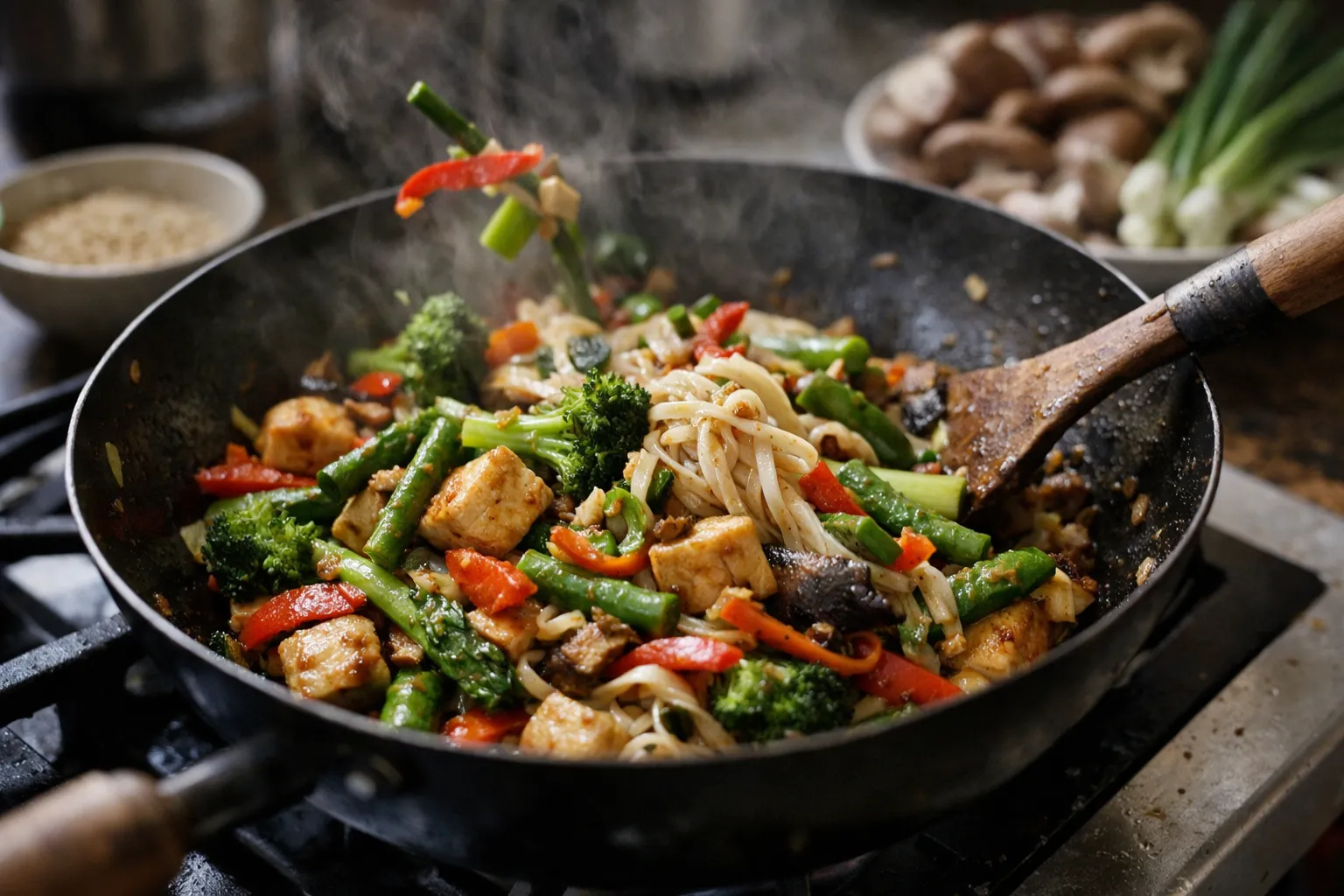
Spring’s bright vegetables—asparagus, sugar snap peas, pea shoots and ramps—still make for some of the fastest, most satisfying weeknight stir‑fries. This updated roundup retains the original 12 recipes (each designed to work in roughly 30 minutes) but adds sourcing and technique notes relevant to September 2026: year‑round availability through controlled‑environment farms, smarter frozen‑produce choices, and small process updates that make these dishes faster and more reliable on a busy weeknight.
How to use this roundup
Each of the 12 entries remains compact: a short description, core shopping list, prep time, primary cooking method, serving size and practical dietary modifications. For this September update we’ve added: (1) out‑of‑season swaps and greenhouse sourcing tips; (2) modest tech updates (air‑fryer and skillet finishing options) and (3) revised safety/storage guidance aligned with current food‑safety practice. All times assume one cook using a wok or large skillet and a sharp chef’s knife.
Methodology
Recipes were selected for three strict criteria: (1) active cooking time of about 30 minutes or less, (2) clear seasonal focus (spring vegetables or direct substitutes), and (3) flexibility—each recipe must accept at least two common swaps (protein, sauce, or veg). To keep this practical we tested batch‑cooking approaches and reheating to confirm texture holds up for leftovers. When recommending out‑of‑season options we prioritized widely available alternatives through large retail chains and greenhouse/vertical farms common in 2026 supply chains.
Quick prep tips (updated for 2026)
- Trim and slice before you heat the pan. For quick browning, pat proteins dry and use a little cornstarch or rice flour (light dusting) on thin slices to encourage caramelization.
- High heat, small batches: don’t overcrowd. If you’re doubling, cook in two batches so the pan stays hot and vegetables caramelize rather than steam.
- Sauces: a reliable baseline is 1 part soy/tamari, 1 part rice vinegar, 1/2 part sweetener, dash of toasted sesame oil. Use a cornstarch or arrowroot slurry only near the end to avoid gummy sauces.
- Out‑of‑season strategy: quality frozen peas, pre‑trimmed asparagus spears, and greenhouse pea shoots now provide close parity to fresh spring harvests—buy frozen peas labeled “IQF” (individually quick frozen) for best texture.
Vegetable‑Forward (Vegetarian & Vegan)
-
Asparagus & Sugar Snap Pea Stir‑Fry with Lemon‑Ginger Sauce
Bright, textural and fast—this dish spotlights tender stalks with a lemon‑ginger finish. In September use local greenhouse asparagus where available or substitute with broccolini for similar bite.
- Ingredients: asparagus tips or broccolini, sugar snap peas (or frozen peas defrosted), garlic, fresh ginger, lemon zest, soy/tamari, sesame oil.
- Prep time: 10–12 minutes
- Cooking method: High‑heat skillet or wok, 6–8 minutes; begin with aromatics, add asparagus/broccolini, then peas; finish with lemon and a light soy glaze.
- Serving size: Serves 2–3 as a main with rice or 4 as a side.
- Why it made the list: minimal prep, strong seasonal profile, flexible veg swaps.
- Dietary modifications: Tamari or coconut aminos for GF; add 2 tbsp toasted almonds for crunch (omit for nut‑free).
-
Ramps & Baby Kale with Toasted Sesame
Ramps remain a fleeting ingredient in many regions. In September, ramps may be absent—substitute young green garlic or a mix of scallion + a small raw garlic clove for a similar allium brightness.
- Ingredients: ramps (or scallion + green garlic), baby kale, soy sauce, rice vinegar, sesame seeds.
- Prep time: 8–10 minutes
- Cooking method: Quick sauté on medium‑high, 4–6 minutes; finish with sesame.
- Serving size: Serves 2 as a main or 3–4 as a side.
- Why it made the list: aromatic profile elevates simple greens; fast finish preserves texture.
- Dietary modifications: Vegan‑friendly; swap soy for coconut aminos for GF; add tempeh for protein.
-
Ginger Carrot & Snow Pea Ribbon Stir‑Fry
Thin carrot ribbons cook rapidly and look elegant; snow peas can be replaced with thinly sliced zucchini in September for similar color and bite.
- Ingredients: carrots (peeler ribbons), snow peas or zucchini, scallion, ginger, toasted sesame oil, rice syrup or maple.
- Prep time: 10 minutes
- Cooking method: High heat, 4–5 minutes; finish with scallions.
- Serving size: Serves 2–3 as a light main.
- Why it made the list: visually appealing and fast; excellent for meal‑prep leftovers.
- Dietary modifications: Naturally vegan and GF; add crushed peanuts for crunch (omit for nut allergies).
-
Spring Mushroom & Baby Bok Choy Stir‑Fry with Miso Glaze
Earthy mushrooms and tender bok choy remain fall‑friendly. Mushrooms’ umami increases in September; use mixed oyster, shiitake and cremini for depth.
- Ingredients: mixed mushrooms, baby bok choy, white miso, mirin (or rice wine), garlic.
- Prep time: 12–15 minutes
- Cooking method: Sear mushrooms first for color, then add bok choy and miso slurry; total 8–10 minutes.
- Serving size: Serves 3–4 as a side or 2 as a main with noodles.
- Why it made the list: rich umami appeals to meat eaters, holds up as a make‑ahead dish.
- Dietary modifications: Use GF mirin or omit; for soy‑free, combine tamari alternative with a touch of tahini.
Chicken & Turkey
-
Sesame‑Ginger Chicken with Asparagus & Snow Peas
A reliable classic; in September choose broccolini or greenhouse asparagus if local stalks aren’t available. Serve with jasmine or cauliflower rice.
- Ingredients: thinly sliced boneless chicken thighs, asparagus or broccolini, snow peas or frozen peas, ginger, sesame oil, soy sauce.
- Prep time: 12–15 minutes
- Cooking method: Sear in batches, remove, stir‑fry veg, return chicken to glaze; total 15–18 minutes.
- Serving size: Serves 3–4.
- Why it made the list: crowd‑pleasing flavor and quick turnaround.
- Dietary modifications: Tamari/coconut aminos for GF; turkey breast is a lean swap.
-
Spicy Lemon‑Pepper Turkey Stir‑Fry with Spring Onions
Lean turkey cooks quickly and pairs well with citrus and chili. Late‑season lemons are often sweeter—adjust zest quantity to taste.
- Ingredients: ground or thinly sliced turkey, spring onions, bell pepper, lemon zest, black pepper, chili flakes.
- Prep time: 10 minutes
- Cooking method: Brown turkey, add veg and aromatics, finish with lemon and pepper; 10–12 minutes total.
- Serving size: Serves 2–3 with grains.
- Dietary modifications: Coconut aminos for GF; omit chili for mild version.
-
Honey‑Garlic Chicken & Mint Peas Stir‑Fry
Sweet honey and bright mint pair with garden peas and tender chicken. September markets often have excellent fresh mint and late peas in cooler regions; frozen peas are an excellent fallback.
- Ingredients: chicken strips, frozen or fresh peas, garlic, honey (or maple), fresh mint, soy/tamari.
- Prep time: 8–10 minutes
- Cooking method: Quick sauté; add peas last to keep them bright—10–12 minutes total.
- Serving size: Serves 3.
- Dietary modifications: Maple for vegan; tamari for GF.
Seafood & Shellfish
-
Ginger‑Scallion Shrimp with Asparagus Tips
Shrimp and asparagus still pair well—select wild‑caught or responsibly farmed shrimp and finish with scallions for brightness. In September, buy peak‑frozen shrimp if fresh is cost‑prohibitive.
- Ingredients: large shrimp (peeled/deveined), asparagus tips or broccolini, garlic, scallions, rice wine, soy.
- Prep time: 8–10 minutes
- Cooking method: Sear shrimp quickly, remove, cook asparagus, combine—6–8 minutes active cooking.
- Serving size: Serves 2–3.
- Dietary modifications: Gluten‑free soy alternatives; swap shrimp for firm fish fillets (add 1–2 minutes).
-
Salmon & Pea Shoot Stir‑Fry with Soy‑Ginger Glaze
Quick‑seared salmon cubes and pea shoots are an upscale weeknight option. Pea shoots are now commonly available year‑round from greenhouse growers, making this recipe reliably accessible in September.
- Ingredients: salmon fillet, pea shoots, ginger, soy/tamari, mirin or rice wine.
- Prep time: 10–12 minutes
- Cooking method: Sear salmon in hot pan, remove, wilt pea shoots and reintroduce salmon to glaze; 8–10 minutes total.
- Serving size: Serves 2.
- Dietary modifications: GF with tamari; citrus‑based glaze for soy‑sensitive eaters.
Plant Proteins & Flexitarian
-
Maple‑Sriracha Tofu with Roasted Fennel & Peas
Crispy tofu with a sticky glaze pairs with sweet fennel. In September fennel is in good supply in many regions—trim thin and use pan‑frying or a high‑heat air‑fryer step for extra crispness.
- Ingredients: extra‑firm tofu (pressed), fennel bulb, peas (frozen OK), maple syrup, sriracha, soy/tamari.
- Prep time: 15 minutes (pressing time if needed)
- Cooking method: Pan‑fry tofu until golden (or air‑fry 10 minutes at 200°C/400°F), sauté fennel and peas, return tofu and coat; 15–18 minutes.
- Serving size: Serves 3.
- Dietary modifications: Vegan and GF with tamari; avoid almond garnish for nut‑free.
-
Tempeh & Broccoli Stir‑Fry with Orange‑Miso Sauce
Fermented tempeh brings chew and umami; orange brightens the sauce. If you’re avoiding soy, replace tempeh with roasted chickpeas and swap miso for tahini + lemon (flavor will shift).
- Ingredients: tempeh, broccoli florets, orange juice/zest, white miso, garlic.
- Prep time: 12–15 minutes
- Cooking method: Brown tempeh, add broccoli and sauce, simmer briefly—12–15 minutes total.
- Serving size: Serves 3–4.
- Dietary modifications: Soy‑free swap is roasted chickpeas + tahini; check labels for GF miso alternatives.
Comparison at a Glance
| Recipe | Main Veg/Protein | Prep Time | Best Swap (Sept) | Dietary Note |
|---|---|---|---|---|
| Asparagus & Sugar Snap Pea | Asparagus, peas | 10–12 min | Broccolini / frozen peas | GF with tamari |
| Ramps & Baby Kale | Ramps, kale | 8–10 min | Green garlic + scallion | Vegan |
| Ginger Carrot & Snow Pea | Carrots, snow peas | 10 min | Zucchini | Vegan, GF |
| Mushroom & Bok Choy | Mushrooms, bok choy | 12–15 min | Mixed mushrooms (more varieties) | Rich umami |
| Sesame‑Ginger Chicken | Chicken, asparagus | 15–18 min | Turkey or broccolini | Swap tamari for GF |
| Spicy Lemon‑Pepper Turkey | Turkey, spring onion | 10 min | Mild version without chili | Lean protein |
| Honey‑Garlic Chicken & Mint Peas | Chicken, peas | 8–10 min | Frozen peas | Maple for vegan |
| Ginger‑Scallion Shrimp | Shrimp, asparagus | 8–10 min | IQF shrimp | Low‑carb option |
| Salmon & Pea Shoot | Salmon, pea shoots | 10–12 min | Citrus glaze if soy‑avoidant | Pescatarian |
| Maple‑Sriracha Tofu | Tofu, fennel | 15–18 min | Air‑fry tofu for crispness | Vegan |
| Tempeh & Broccoli | Tempeh, broccoli | 12–15 min | Roasted chickpeas (soy‑free) | Fermented protein |
Technique, Scaling & Storage (2026 update)
Scaling: increase protein and vegetables proportionally (rough guideline: 3–4 oz protein per person, 1–1.5 cups veg per person). To double without losing browning, cook in two batches so the pan stays hot. For extra crispness on tofu, finish in an air‑fryer at 200°C/400°F for 6–8 minutes.
Storage: refrigerate leftovers in shallow, airtight containers within two hours of cooking. Current food‑safety guidance recommends consuming refrigerated leftovers within 3–4 days; reheat to a simmer and add a splash of water or broth to loosen sauces. Sauces thickened with cornstarch often firm in the refrigerator—refresh on a medium skillet with a little liquid.
Shopping & seasonal notes for September 2026
In September 2026 you’ll find a mix of true late‑summer produce and year‑round greenhouse offerings. Vertical and controlled‑environment farms have made baby greens, pea shoots and short asparagus stems more consistently available in major grocery chains; these are often labeled as greenhouse or hydroponic. When spring-specific ingredients like ramps are unavailable, use recommended substitutions (green garlic, scallion combinations) to preserve the allium character. For peas, IQF frozen peas are a dependable alternative that often surpasses out‑of‑season fresh peas in texture and sweetness.
Final pairing ideas
- Light veg‑forward stir‑fries work well over thin noodles or short‑grained rice; saucier recipes pair with steamed jasmine or soba.
- Add texture with toasted sesame seeds, crushed roasted peanuts or fried shallots at the finish.
- Finish with fresh herbs—mint, basil or cilantro—added off the heat to preserve their bright aromatics.
Do I need fresh spring produce to make these work in September?
No. Many recipes convert cleanly to high‑quality frozen items (peas, shrimp) or greenhouse produce (pea shoots, baby greens). Use the suggested swaps in each entry and prioritize IQF peas, pre‑trimmed asparagus spears, and high‑quality frozen shrimp for best results.
How long can I refrigerate leftover stir‑fries?
Store in shallow, airtight containers and consume within 3–4 days. Reheat in a skillet with a splash of water or broth and bring to a simmer to refresh texture and loosen thickened sauces.
Can I make these ahead for meal prep?
Yes. Cook proteins and vegetables separately and store them layered or in separate containers. Combine and reheat in a skillet for best texture. Tofu and tempeh keep well; they can be crisped again in an air‑fryer for 4–6 minutes before adding to the sauce.
Are greenhouse and hydroponic greens worth buying?
They are a reliable alternative when field‑fresh produce is out of season. Look for minimal yellowing and firm stems; pea shoots labeled as greenhouse/hydroponic are typically milder and very usable in stir‑fries.
What’s the fastest way to get a crispy finish on tofu or tempeh?
Press tofu, toss lightly with cornstarch or rice flour, and pan‑fry in neutral oil over medium‑high heat, or air‑fry at 200°C/400°F for 8–10 minutes, shaking halfway. For tempeh, a quick pan‑sear in well‑heated oil before adding sauce gives the best caramelization.
Whether you’re cooking with true spring harvests or their September equivalents, these 12 recipes remain practical, fast and adaptable. The small sourcing and technique updates here should help you maintain the bright flavors and textures that make a stir‑fry feel like a seasonal meal—no matter the month.