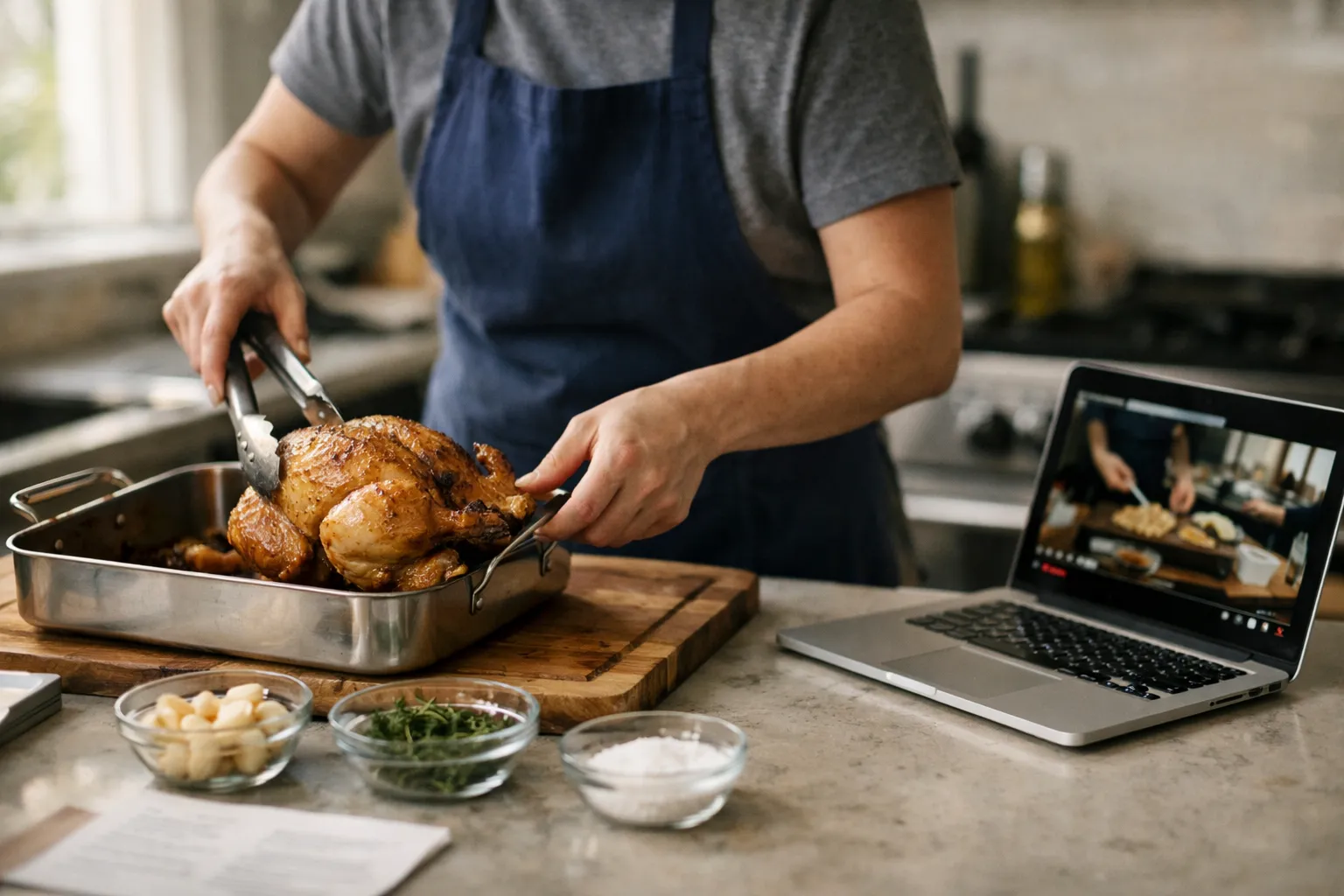
Overview — What this review covers
This July 2026 update revisits America’s Test Kitchen (ATK) Online Cooking School to assess what’s changed since the original 2024 review: catalog breadth, video instruction, search and discovery, dietary adaptation tools, and overall value for recipe enthusiasts. Key specs at a glance:
- Core offering: searchable recipe database + technique-driven courses and short how-to videos
- Platforms: desktop web, iOS and Android apps (tested)
- Primary audience: home cooks who value reproducibility and method-based learning
- Notable 2026 trends evaluated: microlearning modules, improved discovery, and greater plant-forward content
Background — Who makes this and who it’s for
America’s Test Kitchen has built its reputation on rigorous recipe testing through its Cook’s Illustrated and ATK TV brands. The Online Cooking School packages that testing methodology into searchable recipes, step-by-step videos, and modular courses. The product is aimed squarely at cooks who want evidence‑based reasoning (“why this temperature, why this pan”) and repeatable results rather than trend-chasing or purely entertainment-driven food content.
What I tested in July 2026
Over three weeks I used the platform on a 2022 MacBook and on current iOS and Android phones, cooking eight recipes across categories: pan-seared salmon with pan sauce, a weeknight one‑pot pasta, an olive-oil laminated pastry, a plant-forward lentil shepherd’s pie, and two baking projects to test scaling. I also completed two short technique micro-modules (searing and emulsifying) and tried the recipe-swap/dietary notes on several entries.
Features analysis
Search, discovery and new filters
The search remains one of ATK’s most practical features. Since my last review, the platform has added more granular filters that reflect 2024–2026 home-cooking trends: “plant-forward,” “meal-prep friendly,” and a more useful “leftovers/fridge-first” search. Results are still sortable by cook time, difficulty and rating. In practice, searching “chicken + 45 minutes” returned relevant, clearly labeled recipes; the new “leftovers” tag helped locate recipes designed to reuse cooked proteins or roasted vegetables without heavy rework.
Recipe clarity, measurements and time estimates
ATK continues to list ingredients in order of use with precise weights where practical — a point of consistency that benefits baking and professional cooks. Prep times again skew optimistic for novice cooks: during testing the “total time” listed for the roast chicken and laminated pastry underestimated total elapsed time by 10–20 minutes when accounting for resting and proofing. Active prep time and step-level timing remain accurate and helpful. The in-recipe scaling tool still does a solid job for straightforward ingredient quantities but requires manual checks for leavening agents, baking pans and laminated dough ratios.
Video instruction and microlearning modules
Technique content remains ATK’s strongest advantage. The short, focused video clips are shot from practical angles and paired with annotated, stepwise recipe instructions. In 2026 the platform has leaned into microlearning: 1–3 minute “skill shots” that demonstrate one critical action (e.g., how to judge a sauce’s sheen or how to feel doneness by touch). These are ideal to watch immediately before a step and save time compared with longer lecture-style videos.
Dietary modifications, plant-forward and sustainability notes
Since 2024 I noticed a tangible increase in plant-forward modules and explicit sustainability notes in recipes — e.g., guidance on ingredient swaps that reduce food waste or lower the recipe’s carbon footprint (use-of-stems, root-to-stalk suggestions). Substitution notes remain practical for gluten-reduced and lower-sodium cooking; however, fully reworked vegan versions that require technique changes (rather than direct swaps) are still less common and often involve additional guidance rather than complete recipe rewrites.
Community, personalization and AI-assisted features
Over the past two years many learning platforms added AI-assisted search and personalization. ATK’s implementation is cautious: personalized recipe suggestions now appear based on viewed courses and saved recipes, and the app offers suggested “next steps” for skills to practice. The community element is modest — comment threads and user photos are available, but this is not a social-first platform. If you expect recipe-sharing communities like Reddit or Facebook Groups directly embedded, ATK keeps the focus on tested content rather than user-generated experimentation.
Pros and cons (updated)
- Pros: Rigorous, repeatable recipes; concise, angle-focused technique videos and new micro-modules; improved discovery for plant-forward and leftover-first cooking; robust ingredient precision for consistent results.
- Cons: Total time estimates still optimistic for less experienced cooks; automated scaling can’t fully account for leavening and laminated dough; fully vegan technique rewrites remain limited; community features are lightweight for cooks who want active peer feedback.
Pricing and value (what to expect in 2026)
Subscription models for culinary learning have trended toward tiered access. ATK continues to offer subscription-based access to its Online Cooking School, with monthly and annual billing options. As of mid-2026, expect the usual structure: a monthly plan and a discounted annual plan that lowers the monthly-equivalent price. For context and budgeting, similar cooking-subscription services commonly price annual plans in the ~$70–120/year range (roughly $6–10/month equivalent) and month-to-month plans notably higher per month. If you cook often and value technique-led recipes and short video lessons, the annual plan typically delivers better value. Always check ATK’s site for the current exact price and any promotional offers.
Who it’s for — updated use cases
- Recipe enthusiasts who want reproducible results and clearer “why” explanations behind steps.
- Home cooks learning core techniques who benefit from micro-modules (searing, emulsifying, laminating, basic fermentation).
- Meal-preppers and plant-forward cooks who want tested swaps and waste-reduction guidance.
- Not ideal for cooks seeking rapid, novelty-driven global street-food deep dives or large social sharing communities.
Alternatives to consider
- NYT Cooking — broader recipe breadth and strong editorial curation; excellent for weeknight ideas and large community of readers. Less focused on technical micro-lessons.
- Serious Eats — technical, science-minded recipes and long-form explainers; stronger on experimental, global technique content but less consolidated as a course-based learning path.
- MasterClass — cinematic, personality-driven cooking instruction from celebrity chefs; inspirational but less hands-on for step-by-step reproducibility compared with ATK.
Practical tips for using ATK in 2026
- Use the ingredient-first and “leftovers” filters to plan weeknight meals without extra shopping.
- Watch a 60–90 second micro-module right before the key step — it often contains the decisive visual cue that prevents a mistake.
- Treat total time as optimistic; plan a 10–20 minute buffer for resting, proofing or oven variability.
- When scaling baked goods, double-check leavening amounts and pan size; use ATK’s scaling as a starting point, not a final authority.
Verdict
For recipe enthusiasts and serious home cooks in July 2026, ATK Online Cooking School remains a best-in-class resource for reproducible, technique-focused learning. The platform’s incremental improvements — tighter discovery filters, more micro-modules, and expanded plant-forward guidance — make it more useful for contemporary home cooking needs. If repeatable results and understanding the “why” behind methods matter to you, ATK delivers clear, evidence-based instruction. If you need extreme dietary specialization, large social communities or highly novel global street-food content, supplement ATK with niche resources.
FAQ — Common questions
Has ATK improved its mobile experience for following recipes in 2026?
Yes — the mobile apps continue to be solid for step-by-step cooking. The addition of short micro-modules and clearer in-step timing makes it easier to follow recipes on a phone or tablet while cooking. For long baking sessions, many users still prefer a tablet or laptop for easier navigation.
Can I rely on ATK for vegan or highly restricted diets?
ATK offers practical swap notes and an increasing number of plant-forward recipes, but fully reworked vegan versions that change technique (not just ingredients) are fewer. For strict clinical diets or performance nutrition plans, pair ATK with specialist resources.
Does ATK’s recipe scaling work for large batches or baking?
The built-in scaling tool handles ingredient quantities for most savory recipes well, and works for simple doublings and halvings. For baking (yeasted doughs, laminated pastry) and recipes where chemistry matters, manual checks on leavening, pan sizes and resting times are still necessary.
Is the subscription worth it for occasional cooks?
If you cook only occasionally and want single recipes, the subscription may feel expensive compared with free recipe sites. But if you value consistent results, care about technique, and expect to use the library repeatedly, an annual subscription typically offers better value than month-to-month billing.