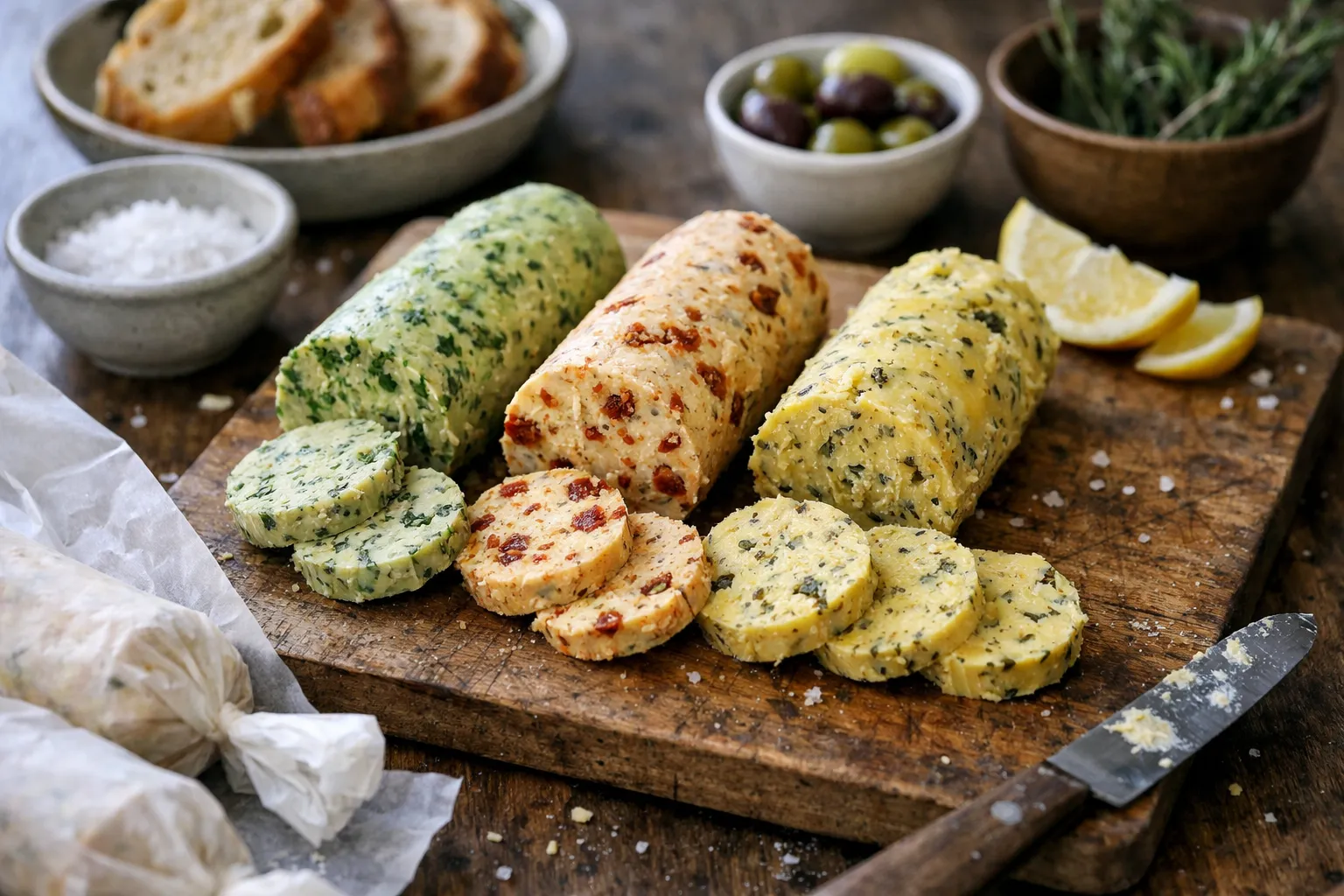
What you'll learn
You will make three make‑ahead compound butters—Garlic‑Herb, Lemon‑Thyme and Chili‑Lime—prepare them for fridge or freezer storage, and adopt updated 2026 best practices: vacuum sealing for long-term freezing, safe garlic handling, and modern plant‑based swap recommendations so your compounds keep texture and flavor.
What you'll need
- Time: 35–50 minutes active; 30–60 minutes chilling (fridge) or 10–25 minutes (freeze) to firm.
- Equipment: mixing bowl or food processor, rubber spatula, microplane, bench scraper or spoon, parchment paper or plastic wrap, kitchen scale (optional), vacuum sealer or freezer-grade zip bags.
- Ingredients (per flavor): 1 stick unsalted butter (113 g / 8 tbsp) or a stick-style plant-based butter; salt to taste; see recipes below for aromatics.
- Storage supplies: labels, marker, optional vacuum-seal bags or airtight containers.
Why this update matters (Oct 2026)
Compound butter hasn’t changed, but how home cooks store and choose fats has. Demand for high‑fat, cultured-style plant butters rose through 2024–2026, improving vegan texture options. Vacuum sealing at home is now inexpensive and widely recommended for longer freezer life and to prevent flavor transfer. Food‑safety guidance around fresh garlic in oil/low‑acid mixes is clearer: always refrigerate garlic‑forward compounds and use sooner rather than later. This guide adds those practical updates so your finished butters taste their best and last longer.
Overview: ingredients, yield, updated storage
- Yield per recipe: ~1/2 cup (8 tbsp) = about 8 generous pats (1 tbsp / 14 g each).
- Serving guideline: plan ~1 tbsp per serving as a finishing pat.
- Fridge: use within 1–2 weeks (label with date).
- Freezer: for best flavor and texture, freeze up to 6 months; vacuum-sealed, well-wrapped logs can keep quality up to ~9–12 months, though peak flavor is within 6 months.
Shopping list (for all three flavors)
- 3 sticks unsalted butter (or three stick‑style plant‑based butters—choose high‑fat, stick format for texture)
- Fresh parsley (small bunch), fresh chives, fresh thyme, 1 lemon, 1 lime
- 4 garlic cloves, 1 small fresh chili (jalapeño or serrano) or 1 tsp chili flakes
- Smoked paprika, kosher salt, black pepper, optional honey or fermented honey alternatives
- Parchment paper, plastic wrap, vacuum bags or freezer containers, small cookie scoop or tablespoon
Three recipes (exact quantities)
1) Garlic‑Herb Compound Butter
- 1 stick unsalted butter, softened (113 g)
- 2 garlic cloves, very finely minced or grated
- 2 tbsp finely chopped flat-leaf parsley
- 1 tbsp finely chopped chives
- 1/2 tsp lemon zest
- 1/4 tsp kosher salt (adjust)
- Pinch black pepper
2) Lemon‑Thyme Compound Butter
- 1 stick unsalted butter, softened
- 1 tbsp finely chopped fresh thyme leaves
- 1 tsp finely grated lemon zest
- 1/2 tsp lemon juice
- 1/8–1/4 tsp salt
- Optional: 1/2 tsp honey or a touch of cultured yogurt (for dairy versions) for rounding
3) Chili‑Lime Compound Butter
- 1 stick unsalted butter, softened
- 1 small fresh chili, finely minced (remove seeds for milder) OR 1/2 tsp chili flakes
- 1 tsp finely grated lime zest and 1/2 tsp lime juice
- 1/4 tsp smoked paprika
- 1/4 tsp salt
Step-by-step: make all three in one session
- Soften the butter. Leave butter at room temperature 20–30 minutes until spreadable but not melty. If in a hurry, microwave 5–7 seconds at low power, turn, then check. Expected result: smooth, still cool to the touch.
- Prep ingredients. Mince herbs and chili, grate zest, press garlic, measure salt. Have parchment ready. Expected result: mise en place prevents over-softening and uneven texture.
- Mix — bowl or processor. Option A: bowl and spatula—press and fold until uniform (rustic texture). Option B: food processor—pulse 6–10 times for an emulsified, silky butter. Tip: if using a processor, add soft butter in chunks and pulse; scrape sides and add aromatics near the end so flavor stays bright. Expected result: evenly distributed aromatics and a homogeneous paste.
- Check seasoning. Taste a tiny amount (or warm a smear on a spoon) and adjust salt/acid. Expected result: bright, balanced flavors—add more acid for lift or a pinch more salt if muted.
- Shape for use and storage. Spoon each butter onto a sheet of parchment. Shape into a 1.5–2 in (3.8–5 cm) diameter log, roll tightly, twist ends. For pre‑portioning, use an ice‑cube tray or silicone mold. Expected result: neat logs that slice cleanly when chilled.
- Chill or freeze. Chill logs in the fridge 30–60 minutes to firm. For quick firming, freeze 10–25 minutes. For long storage, wrap parchment, then vacuum-seal or place in airtight freezer bag, label with date and contents. Expected result: firm logs that retain aroma and resist freezer burn if vacuum-sealed.
- Label and store. Mark flavor and date. Fridge: use within 1–2 weeks. Freezer: best within 6 months (vacuum-sealed up to about 9–12 months). Expected result: consistent flavor and texture when thawed.
Screenshots / visual cues (what you should see)
- Softened butter: smooth surface with slight shine, not pooled liquid.
- After mixing: herbs evenly flecked through butter—no large clumps.
- Shaped log: tight parchment cylinder with visible twisted ends; slices show a clean cross-section of butter and inclusions.
- Vacuum-sealed bag: parchment-wrapped log compressed with minimal air pockets; label clearly visible.
Food-safety notes (important)
- Garlic and low‑acid mixtures: do not store garlic-infused oils or butter at room temperature. Refrigerate and use within 1–2 weeks, or freeze immediately. Botulism risk is associated with garlic stored in oil at room temp—keep cold.
- Thawing: move frozen logs to the fridge for several hours or overnight. You may slice frozen pats directly onto hot food (steak, corn) for immediate use.
Troubleshooting & pro tips
- If butter is too soft to slice cleanly: return to freezer 10–15 minutes until firm; use a sharp, warmed knife (run under hot water and dry) for cleaner cuts.
- If butter tastes flat after freezing: add a final grate of fresh citrus zest or a sprinkle of flaky salt when serving to revive brightness.
- Want spreadable fridge butter? Shape logs smaller in diameter (1 in / 2.5 cm) to allow easier spreading straight from the fridge.
- Vegan swap tip (2026): choose stick-style plant‑based butters that list coconut oil + refined oils and have at least 70–80% fat for closest texture. New cultured plant-based options often deliver tangy, buttery flavor; use them 1:1.
- Long-term freeze: vacuum-sealing prevents freezer burn and keeps quality longest; without vacuum, double-wrap in parchment and foil to protect flavor.
Serving ideas & updated pairings
- Garlic‑Herb: melt over grilled cuts, roast mushrooms, or stir into hot pasta with reserved pasta water for a quick sauce—also excellent on air‑fryer roasted potatoes.
- Lemon‑Thyme: spoon onto baked fish, roast chicken or steamed new potatoes; swap lemon for preserved lemon rind for winter months.
- Chili‑Lime: finish corn on the cob, shrimp skewers, or melt on grilled tofu/tempeh for plant-forward mains.
Next steps
- Make one batch this weekend to practice shaping and seasoning.
- Test one plant‑based stick if you want a vegan option—note texture differences and adjust zest/acid to boost flavor.
- Invest in a vacuum sealer or quality freezer bags if you plan to keep butter long term; freeze a few logs and note flavor after 1 month vs 6 months so you can calibrate your timing.
FAQ
How long can I safely keep garlic‑herb butter in the fridge?
Store garlic‑herb compound butter in the refrigerator for up to 1–2 weeks. Because garlic can create low‑acid environments, keep it chilled and use within that window or freeze for longer storage.
Can I use plant‑based butter for all three recipes?
Yes. Use stick‑style plant‑based spreads with a high fat content for best texture. The 1:1 swap works well; you may need to boost acid (lemon/lime) or salt slightly to compensate for milder flavor.
Is vacuum sealing necessary?
Not necessary, but recommended. Vacuum sealing minimizes air and prevents freezer burn—extending the period that quality is retained (best flavor is within 6 months; vacuum‑sealed logs can remain good up to about 9–12 months).
Can I add roasted garlic or black garlic instead of raw garlic?
Yes. Roasted garlic gives a sweeter, mellower profile and is safer for slightly longer fridge storage; black garlic adds umami and a molasses note. Both are excellent if you prefer a less pungent finished butter.
What’s the best way to use frozen pats quickly?
Slice frozen pats directly onto hot food—steak, corn, or steamed vegetables—so they melt immediately. For sauces, shave frozen pats into a warm pan and whisk with a splash of cooking liquid.