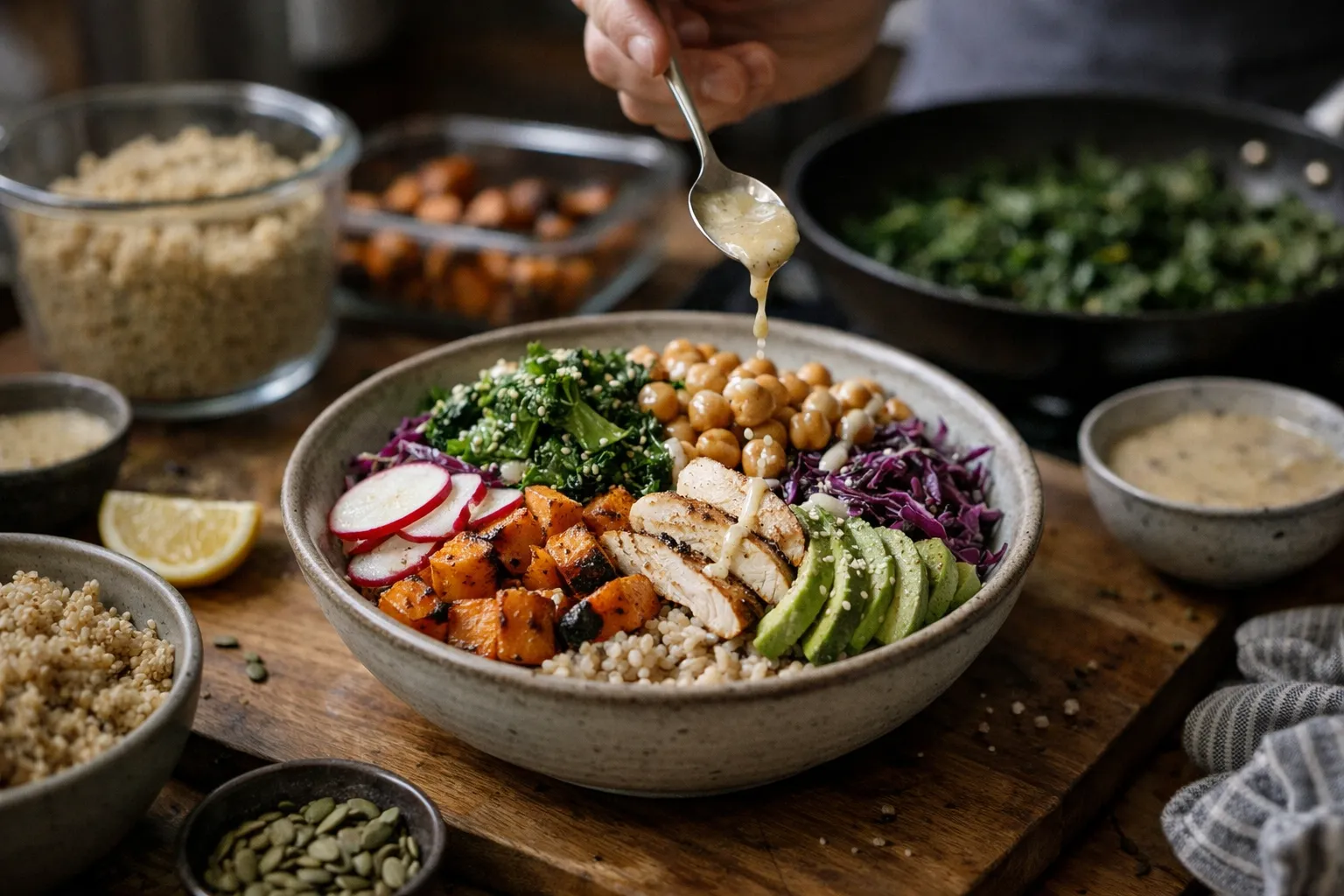
What you'll learn: how to build fast, flavorful grain bowls that reflect October 2026 produce and pantry trends; two tested timelines (30- and 60-minute); updated storage and reheating best practices; and three seasonal recipes you can use immediately. Who this is for: recipe enthusiasts who want reliable weeknight dinner templates that scale for leftovers, seasonal shopping, and modest kitchen setups.
Prerequisites / Context
Before you start: keep one cooked grain or a ready-to-heat refrigerated grain pouch on hand (see equipment list below), a quick-cooking protein option, one roasted or air-fried veg, and one sauce. October brings a clear seasonal shift from spring greens to heartier root vegetables and squash—adjust your bowls accordingly. This article assumes basic stovetop and oven skills and access to a refrigerator and microwave or stovetop for reheating.
Why grain bowls still work (and what's new in 2026)
Grain bowls remain popular because they’re modular and resilient to schedule noise: components can be cooked at different times and combined when you’re ready. What’s changed in 2026:
- Retail convenience: More supermarkets now stock chilled, ready-to-heat whole grains (farro, brown rice, barley) in refrigeration bays. These save 10–20 minutes of active time and reduce waste for small households.
- Air-fryer adoption: Air fryers have become a standard weeknight tool for crisp roasted veg and chickpeas without long oven preheating.
- Ingredient focus: Autumn produce—delicata squash, Brussels sprouts, late-season apples and pears, and mushrooms—dominates October bowls and pairs well with warm grains and nutty dressings.
- Food-safety clarity: Follow USDA guidance for leftovers—store promptly and reheat to 165°F (74°C) for meat/fish. Cooked grains and mixed bowls kept refrigerated should be consumed within 3–4 days.
Core components and decision rules
Think in four lanes: base, vegetables, protein, sauce/toppings. Treat grains and proteins as the time anchors; veg and sauces can be made quickly or prepared ahead.
1. Base (grain or substitute)
- Options & typical times: brown rice (25–30 min stovetop), quinoa (12–15 min), farro (18–25 min), pearl barley (25–35 min), bulgur (10–12 min), cauliflower rice (5–7 min). Ready-to-heat refrigerated pouches shave 8–20 minutes.
- Serving: 3/4–1 cup cooked per person. Why it matters: the base sets volume and satiety—choose higher-fiber grains for longer fullness.
- Cooking tip: If using a multi-cooker or instant pot, use the manufacturer’s short-grain/sturdy-grain settings for consistency; for stovetop, rinse grains where recommended and use a 1:2-ish grain-to-water ratio as a starting point, adjusting to package directions.
- Diet swaps: cauliflower rice or konjac rice for low-carb; certified gluten-free grains for celiac needs.
2. Vegetables
- October suggestions: roasted delicata or kabocha squash, Brussels sprouts (halved and caramelized), roasted mushrooms, sautéed kale, quick-pickled fennel, or apple slices for brightness.
- Methods & times: roasting at 400–425°F (200–220°C) for 12–25 minutes depending on veg; air-fry at 375°F for 10–15 minutes for a crisp finish; quick-sauté for 3–6 minutes for greens and mushrooms.
- Serving: 1/2–1 cup per bowl. Why it matters: texture and seasonal flavor anchor the bowl—combine one soft element (roasted) with one crunchy or acidic element (raw, pickled).
3. Protein
- Options: roasted salmon or trout, pan-seared tofu, smoked tempeh, roasted chickpeas, shredded rotisserie chicken, or canned fish like sardines for quick umami. Cold beans, lentils, and edamame are fast vegetarian choices.
- Time planning: fresh proteins generally require 8–25 minutes. Using pre-cooked options (rotisserie chicken, canned beans, refrigerated smoked tempeh) trims time significantly.
- Serving: 3–6 oz cooked protein per person. Swap rules: replace animal proteins with 1/2–3/4 cup legumes or 4–6 oz tofu/tempeh for plant-based bowls.
4. Sauce and toppings
- Sauces transform bowls: lemon-tahini, maple-miso vinaigrette, pumpkin-seed pesto, or yogurt-dill are fast. Build in 2–5 minutes.
- Toppings: toasted seeds, chopped hazelnuts, quick apple slaw, pickles, and finishing acids (cider vinegar, lemon) are compact flavor boosters.
- Make-ahead: jar dressings keep 5–7 days if acidic; dairy-based sauces 3–4 days.
Quick checklist: shopping and ratios for two bowls (October)
- Base: 1 cup dry grain (yields ~2–2.5 cups cooked), or two 250–300 g chilled grain pouches
- Vegetables: 2–3 cups mixed (one roasted/air-fried, one raw/pickled)
- Protein: 8–12 oz total (use rotisserie or canned for speed)
- Sauce: 1/3–1/2 cup total
Two practical timelines: 30-minute and 60-minute weeknight builds
30-minute “fast lane” (one-pot + air-fryer assist)
- Start a quick grain: quinoa on the stove (12–15 min) or heat a chilled grain pouch in the microwave (90 seconds). Why: grains are time anchor; choose the fastest option you have.
- While grain cooks, season and pan-sear a thin fish fillet (3–5 min per side) or sear tofu cubes (8–10 min). Use a hot skillet to shorten cook time and preserve texture.
- Air-fry cubed delicata or halved Brussels sprouts at 375°F for 10–12 minutes with olive oil and salt for a quick roast without oven preheat.
- Whisk a fast sauce: 2 tbsp tahini, 1 tbsp lemon, 1 tsp maple or honey, water to loosen (2 minutes).
- Assemble: 3/4 cup cooked base, veg, protein, sauce, and toasted seeds.
60-minute “batch prep” (dinner + lunches)
- Cook 2 cups dry grains on stove or in multi-cooker (yields ~4–5 cups cooked). Cool quickly to avoid bacterial growth if storing.
- Roast a tray of sturdy veg—kabocha or delicata squash, Brussels sprouts, red onions—at 425°F for 20–25 minutes. Use one sheet for all to save energy and time.
- Roast chickpeas or make smoked tempeh (20–25 minutes) as crunchy protein options.
- Make two jarred sauces (e.g., pumpkin-seed pesto and maple-miso vinaigrette). Label with date and refrigerate.
- Portion into 4 containers with grains, veg, protein separate for grab-and-assemble bowls all week.
Three seasonal grain bowls (exact ingredients, prep, method & swaps)
1) Roasted Delicata & Farro Bowl with Cider Vinaigrette (40 minutes)
- Ingredients (serves 2): 1 cup farro (dry), 1 small delicata squash (halved, seeded, sliced), 1 apple (thinly sliced), 1 cup baby kale, 1/2 cup toasted hazelnuts, 6 oz smoked tempeh or roasted chickpeas, 3 tbsp cider vinaigrette (see below).
- Prep & cook: Cook farro 18–22 minutes. Roast delicata at 425°F for 18–20 minutes with olive oil and salt. Pan-sear tempeh 6–8 minutes. Toss kale with vinaigrette to wilt slightly.
- Vinaigrette: 2 tbsp apple cider vinegar, 1 tbsp Dijon, 3 tbsp olive oil, 1 tsp maple syrup, salt and pepper. Shake in a jar (2 minutes).
- Serving: ~1 cup cooked farro + veg + 3–4 oz protein per bowl. Swap: replace farro with barley or brown rice; hazelnuts with pumpkin seeds for nut-free bowls.
2) Mushroom & Brown Rice Bowl with Maple-Miso Glaze (35 minutes)
- Ingredients (serves 2): 1 cup brown rice (dry) or a chilled brown rice pouch, 10 oz mixed mushrooms (shiitake, cremini), 1 block firm tofu (pressed), 1 tbsp white miso, 1 tbsp maple, 1 tbsp soy/tamari, sesame seeds.
- Method: Cook rice (25–30 min) or heat pouch. Sauté mushrooms with garlic (5–7 min). Pan-fry tofu cubes until golden (8–10 min). Whisk miso, maple, tamari and toss with mushrooms/tofu at the end.
- Serving: 3/4 cup rice + 4 oz tofu/mushrooms per bowl. Swap: use tempeh or cooked lentils for extra fiber.
3) Autumn Grain Bowl — Farro, Roasted Beet, Goat Cheese & Walnuts (50 minutes)
- Ingredients (serves 2): 1 cup farro, 2 medium beets (roasted), 2 cups baby spinach, 1/4 cup goat cheese, 1/4 cup toasted walnuts, lemon-honey vinaigrette.
- Method: Roast beets wrapped in foil at 400°F for 35–40 minutes or roast pre-cubed beets at 425°F for 25–30 minutes. Cook farro. Toss with spinach, crumble goat cheese, finish with vinaigrette.
- Serving: 3/4–1 cup farro + veg + cheese per bowl. Swap: use feta for a tangier profile or vegan ricotta for dairy-free bowls.
Make-ahead, storage and reheating (updated October 2026)
- Refrigeration windows: follow USDA guidance—store cooked components in airtight containers and use within 3–4 days. Label containers with date cooked.
- Sauces: acidic vinaigrettes 5–7 days refrigerated; dairy-based sauces (yogurt, tzatziki) 3–4 days.
- Reheating: reheat meat, fish, and mixed bowls to 165°F (74°C) for safety. Grains and plant proteins can be reheated in a skillet with a splash of water or in the microwave covered to retain moisture.
- Freezing: cooked grains and cooked chicken freeze well up to 2 months. Roasted vegetables and tofu lose some texture—freeze only if texture loss is acceptable.
Common mistakes to avoid
- Over-saucing: too much sauce drowns textures—start with 1–2 tbsp per bowl and add as needed.
- Mixing hot and cold into storage: cool hot items to room temperature (2 hours) before sealing to avoid condensation and bacterial growth.
- Ignoring texture balance: bowls should combine a soft element, a crunchy element, and an acid. Without contrast, bowls feel flat.
Pro tips
- Batch dressings in small jars, label with dates and rotate flavors—acidic dressings extend fridge life and brighten leftovers.
- Use the air fryer to re-crisp roasted chickpeas or Brussels sprouts in 3–5 minutes at 375°F before assembling.
- For minimal cleanup, roast grains and veg on the same sheet using parchment, separating by cook-time with foil packets when needed.
- Invest in one good digital instant-read thermometer to confirm reheated proteins reach 165°F (74°C).
FAQ
How do I keep grains from drying out when reheating?
Sprinkle 1–2 tablespoons of water per serving over the grains and cover the container (microwave-safe lid or damp paper towel) before microwaving. Or reheat in a skillet over low heat with a splash of water or broth and a lid for 2–3 minutes to steam and restore moisture.
Can I prep grain bowls for an entire week?
Yes—separate components. Cook grains and proteins and store them separately from sauces and crunchy toppings. Follow refrigeration windows: use cooked components within 3–4 days. Keep dressings and pickles separate until serving to preserve texture.
Are raw apples or pears safe in bowls if I pack them for lunch?
Yes. Thinly sliced apples or pears stay crisp in an airtight container for a day or two; toss slices with a light squeeze of lemon or a splash of vinegar to slow browning if you plan to store them longer.
What's the easiest swap to make a bowl plant-based?
Replace animal protein with legumes (roasted chickpeas, lentils), tempeh, or extra-firm tofu, and use plant-based yogurt or tahini-based dressings instead of dairy. Add a heaping spoonful of seeds or nuts for extra fat and texture.
Why this matters now (October 2026)
With autumn produce at peak flavor and more convenience-format grains available in stores, now is a productive moment to refresh your weeknight routine. The templates and seasonal examples above let you capitalize on crisp, economical produce and quicker pantry options without sacrificing flavor or food-safety standards. Pick one of the three recipes this week, batch the grain, and you’ll save time while enjoying fresh, autumn-forward bowls all week.