
What you'll learn
You will make a 40-minute stovetop pan paella with glossy, separate short-grain rice and a true socarrat (crispy bottom). I’ll show timing tweaks for gas, electric and induction, how to pick sustainable seafood in 2026, and fast plant-forward swaps so everyone at your table can enjoy it.
What you'll need
- Time: 10 minutes prep + 30 minutes cook = 40 minutes total
- Equipment: wide 12-inch (30 cm) paella or sauté pan (shallow, with a large surface area), induction diffuser if you use induction, long-handled spatula, kitchen towel and a lid or foil for resting
- Key ingredients for 3 servings (tested in my home kitchen): 2 tbsp olive oil (30 ml), 1 small onion (≈100 g), 2 garlic cloves, 1 red bell pepper, 150 g (1 cup) bomba or Calasparra rice, ½ tsp smoked paprika, pinch saffron threads soaked in 2 tbsp warm water (optional), 400 ml warm chicken or vegetable stock, 100 g cooked chicken thigh OR 150 g peeled shrimp (sustainably sourced), 100 g frozen peas, salt, black pepper, lemon wedges and parsley.
- Notes: Bomba and Calasparra are short-grain Spanish rices that absorb about 2–3x their volume of liquid. If you substitute another rice, expect to adjust liquid and timing.
Why this method (August 2026 context)
Stovetop paella is still the fastest, most reliable route to a true socarrat. Since 2020, induction ranges have become far more common in new kitchens and in 2026 many manufacturers ship deeper, heavier pan bases made specifically for induction. That changes the way heat transfers: socarrat forms faster and with less inertia. Also, grocery and fishmarket transparency improved—look for MSC/ASC labels and QR traceability codes that many sellers now include. Finally, plant-forward and responsibly farmed proteins are easier to find, so this method is flexible whether you use shrimp, chicken, or smoked tofu.
Step-by-step instructions
-
Prep ingredients (10 minutes).
Chop the onion, mince the garlic and dice the red pepper. Measure rice and warm the stock (warm stock steadies the simmer). Soak a pinch of saffron in 2 tbsp warm water if using. Pat shrimp dry and season lightly; if using cooked chicken, dice and set aside. Expected result: mise en place arranged so everything is within arm’s reach.
Tip: I learned from my abuela to have the lemon wedges cut last so they’re bright and juicy when you squeeze them over the finished paella.
-
Warm the pan and sauté aromatics (3–4 minutes).
Heat 2 tbsp olive oil over medium heat. Add onion and pepper and cook until softened and glossy, about 3 minutes. Stir in garlic and ½ tsp smoked paprika for 30 seconds until fragrant. Season lightly with salt. Visual cue: onions should be translucent and glossy, not browned.
-
Toast the rice (30–60 seconds).
Add the rice and stir to coat each grain in oil for 30–60 seconds. This step helps keep grains separate and gives the texture you want. The rice should look slightly translucent and glossy—don’t let it brown.
Don’t skip this step. Toasting is small but crucial; it changes how the grains absorb and keeps them separate.
-
Add liquid and simmer, no stirring (12–15 minutes).
Pour in the warm stock and saffron water, increase to a gentle boil, then reduce to a low simmer so the surface shows small pinhole bubbles rather than a rolling boil. Spread rice evenly and do not stir. Taste the broth and adjust salt now. Cook uncovered for 12–15 minutes until rice is nearly al dente and most liquid is absorbed. Visual cues: grains plump; tiny pinhole bubbles in center; oil gathers at edges.
Energy tip: on induction you can often drop the heat lower than you expect—the pan responds quickly and retains a lot of energy.
-
Add proteins and peas (3–4 minutes).
Evenly nestle raw shrimp on top (they’ll cook in 2–3 minutes) or scatter diced cooked chicken and frozen peas across the surface. Continue simmering—no stirring—until shrimp are opaque or everything is heated through. You should hear a soft crackle from the bottom; that’s the socarrat beginning.
-
Create socarrat and finish (1–3 minutes).
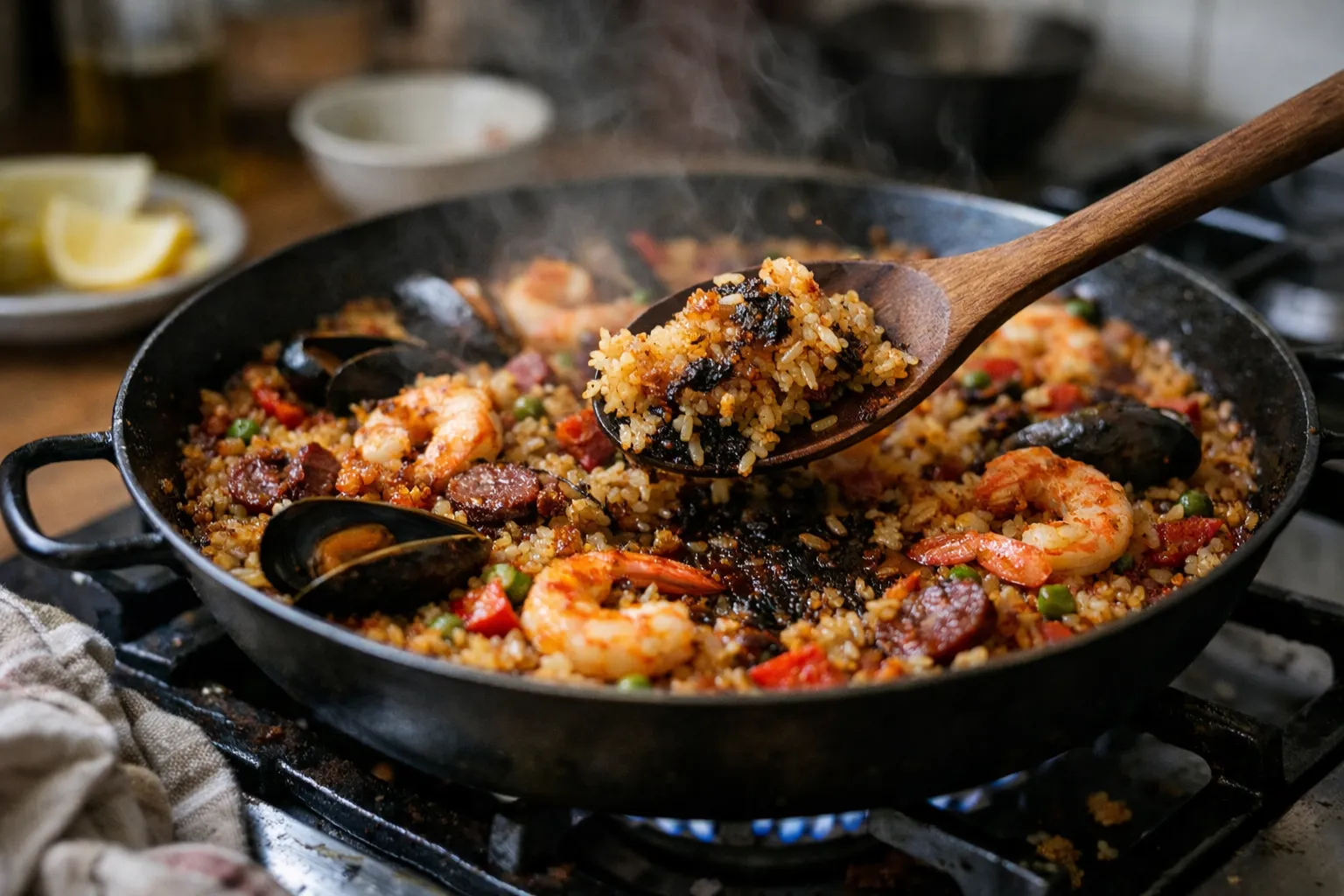
Increase heat briefly to medium-high to encourage the bottom to crisp. Listen for a gentle crackling and watch the edges darken to deep golden brown—not black. On gas, 2–3 minutes is typical; on induction, 1–2 minutes is usually enough—adjust and watch closely. Expected result: a nutty, toasty socarrat without bitterness.
Pro tip: If your pan is very heavy or thick-based, the socarrat may take a touch longer—use short, attentive intervals rather than one long blast of heat.
-
Rest and serve (2–3 minutes).
Remove from heat and cover loosely with foil or a plate for 2–3 minutes to let the rice settle. Garnish with parsley and lemon wedges. Serve straight from the pan—look for glossy grains that separate easily and a toasty aroma when you lift the edge to peek at the socarrat.
Screenshots / Visual cues (what you should see)
- After sauté: onions and peppers are translucent and glossy, not browned.
- After toasting rice: each grain appears slightly translucent and shiny.
- Mid-simmer: small, regular pinhole bubbles at the center; oil pooling at the edges.
- Finish: edges darken to deep golden brown; a gentle crackle under the pan; top remains glossy.
Troubleshooting (common issues and fixes)
- Rice too firm: Add 2–4 tbsp hot stock and continue simmering uncovered until tender.
- Rice mushy: Likely too much liquid or stirring. Next time reduce stock by 2–3 tbsp or shorten simmer time.
- No socarrat: Pan too deep, heat too low during finish, or you stirred. Use a wider, shallower pan and a short high-heat finish.
- Burnt bottom: If bitter or black, stop heating immediately. Salvage the top by transferring the unburnt portion to a new pan.
Updated Aug 2026 tips
- Induction cookware: Many newer paella pans and skillets have flatter, thicker bases. If you use induction, test the finish time on a small batch—reduce the final high-heat interval and consider an induction diffuser for gentler, more even socarrat formation.
- Sourcing: Continue to favor MSC/ASC labels and consult NOAA Seafood Watch (or your national guide) for local recommendations. Many vendors now attach QR codes with origin and harvest method—scan them before you buy.
- Plant-forward options: Chilled responsibly farmed shrimp and convincing plant-based seafood are widely available. For a vegetarian paella, roast artichoke hearts, smoked tofu, or chickpeas and increase smoked paprika for savory depth.
- Saffron alternatives: If saffron prices are high, use ½ tsp smoked paprika + ¼ tsp turmeric for color and warmth. It won’t mimic saffron’s floral note, but it’s a delicious, budget-friendly option.
- Food safety reminder: Refrigerate paella within 2 hours and consume within 3–4 days. For longer storage, freeze in shallow portions for up to 1–2 months; thaw overnight in the fridge before reheating.
Next steps
- Try a plant-forward version with roasted artichokes and smoked tofu.
- Practice socarrat on different pans to learn how your stove behaves—each kitchen will vary.
- Host a paella night using a larger pan outdoors on a tabletop burner for an authentic, sociable cook.
Can I use arborio or long-grain rice if I can’t find bomba?
Yes, with caveats. Arborio absorbs less and releases starch, giving a creamier texture—reduce liquid slightly and expect a risotto-like result. Long-grain rice (jasmine, basmati) won’t produce traditional paella texture; it will be fluffier and less cohesive. If you must substitute, reduce stock by 2–4 tbsp and watch doneness closely.
How do I choose sustainable seafood for paella?
Look for MSC/ASC labels or vendor traceability information. Use national resources like NOAA Seafood Watch (U.S.) or equivalent guides in your country. Ask your fishmonger about species, harvest method and seasonality—local, in-season shellfish often has the lowest environmental impact.
What’s the best way to get socarrat without burning?
Use a wide, shallow pan so liquid spreads thin; avoid stirring after adding stock; and finish with a short, higher-heat interval while listening for a gentle crackle. On induction reduce finish time to 1–2 minutes and monitor closely. If you fear burning, use an induction diffuser or slightly lower the final heat and extend by small intervals.
How long can I keep leftover paella?
Refrigerate within 2 hours and eat within 3–4 days. For longer storage, freeze in shallow portions for 1–2 months. Thaw overnight in the fridge and reheat gently in a wide skillet with a splash of stock.
Personal note: my grandmother always said the secret to paella is patience and good listening—watch the bubbles, listen for the crackle, and trust the aroma. Put on a song you love, pour a small glass of something you enjoy, and savor the hands-on rhythm of making socarrat. When you catch that toasted, nutty whiff from the bottom, it’s a quiet little triumph worth celebrating.