What you'll learn
You will learn how to make a bright, creamy lemon-herb chickpea pasta in one pot in ~25 minutes, plus 2026 updates: higher-protein pasta swaps, low-sodium and BPA-free canned-chickpea guidance, quick-cook dry chickpeas, and reheating/storage best practices based on USDA food-safety guidance.
What you'll need
- Time: 8 minutes prep, ~17 minutes active cook, total ~25 minutes
- Equipment: 10–12 inch deep skillet with lid (induction-safe if needed), wooden spoon or silicone spatula, measuring cups/spoons, microplane/zester, colander
- Ingredients (serves 3–4): see list below — you’ll see options for canned vs dry chickpeas and regular vs legume pastas
Updated ingredient list (Serves 3–4)
- 8 oz (225 g) short pasta — regular durum semolina or higher-protein legume pasta (chickpea/lentil) for more protein
- 1 (15 oz / 425 g) can chickpeas, drained and rinsed (reserve 2 tbsp aquafaba), or 1 cup dry chickpeas (see quick-soak below)
- 2 tbsp olive oil
- 1 small yellow onion, finely chopped (about 3/4 cup)
- 3 garlic cloves, minced
- 1 cup low-sodium vegetable broth (or 1 cup water + 1 tsp concentrated bouillon)
- 2 cups water (add up to 2 1/2 cups total liquid as needed)
- Zest and juice of 1 large lemon (about 1 tbsp zest, 3 tbsp juice)
- 1/3 cup plain yogurt (dairy) or 3 tbsp cashew cream / unsweetened pea-protein yogurt / tahini (see vegan swaps)
- 2 tbsp chopped fresh parsley + 1 tbsp chives or basil
- 1/2 tsp crushed red pepper (optional), salt and black pepper to taste
- Optional finish: grated Parmesan (non-vegan) or toasted pine nuts
2026 update: choose low-sodium canned chickpeas (many brands now label sodium and list BPA-free linings). For higher protein and fiber, use legume-based pasta (brands such as chickpea- or lentil-based lines). If you use a legume pasta, expect slightly longer or different cook times (see Step 4).
Why this method still works (and what’s new in 2026)
The one-pot technique relies on pasta starch to create a silky sauce and uses chickpeas for body and protein. Since the early 2020s home cooks have continued to favor fast, plant-forward recipes; in 2026 that means more people are using legume pastas and plant-based cultured yogurts (pea-protein yogurts are now widely available) to boost nutrition and texture without dairy. Using the reserved chickpea liquid (aquafaba) remains a low-waste trick to improve creaminess.
Prep time and equipment
- Prep: 8 minutes (chop, zest)
- Active cook: ~17 minutes
- Total: ~25 minutes
- Equipment notes: On induction cooktops lower settings yield gentler simmering; if you use a nonstick deep sauté pan the sauce is less likely to cling and scorch.
Step-by-step cooking method
- Sweat aromatics: Heat 2 tbsp olive oil over medium. Add chopped onion and a pinch of salt; cook until translucent, about 4 minutes. Add garlic and cook 30 seconds until fragrant. Expected result: onions glossy and soft, garlic aromatic but not browned.
- Toast the chickpeas: Add drained chickpeas and 1/4 tsp black pepper; sauté 2 minutes to warm and toast. This adds texture and a toasty flavor. Expected result: chickpeas lightly golden at edges.
- Add pasta and liquid: Add pasta, 1 cup broth, 2 cups water and reserved 2 tbsp chickpea liquid. Stir to submerge pasta; bring to a steady simmer. If using legume pasta, stir carefully — these pastas release more starch and can thicken faster. Expected result: liquid covers most pasta and the pan is at a gentle simmer.
- Simmer, stirring occasionally: Reduce to medium-low so the pot simmers but doesn’t boil over. Stir and scrape bottom every 2–3 minutes; cook until pasta is al dente and liquid reduces to a silky sauce, about 10–12 minutes for wheat pasta; legume pastas may take 11–14 minutes. If the pan dries before the pasta is cooked, add 1/4 cup hot water and continue. Expected result: sauce thick, glossy, clings to pasta; chickpeas incorporated.
- Finish the sauce: Remove from heat. Stir in lemon zest, lemon juice, yogurt or vegan cream substitute, chopped herbs, and crushed red pepper. Taste and adjust salt/pepper. If sauce is too thin, return to low heat 1–2 minutes to reduce; if too thick, add a splash of hot water. Expected result: bright lemon aroma, creamy mouthfeel from starch + yogurt/cashew cream.
- Plate and garnish: Serve immediately with black pepper and optional Parmesan or toasted nuts. Drizzle 1 tsp olive oil and scatter a few whole chickpeas or microgreens for freshness.
Screenshots / Visual cues
- Step 1: Onions should be translucent and slightly glossy; garlic should not be browned.
- Step 3: Pasta should be mostly submerged; liquid should look cloudy from released starch.
- Step 4: As the dish nears done the liquid will cling to the pasta and reduce into a glossy sauce — you’ll see a shallow pool that coats a spoon.
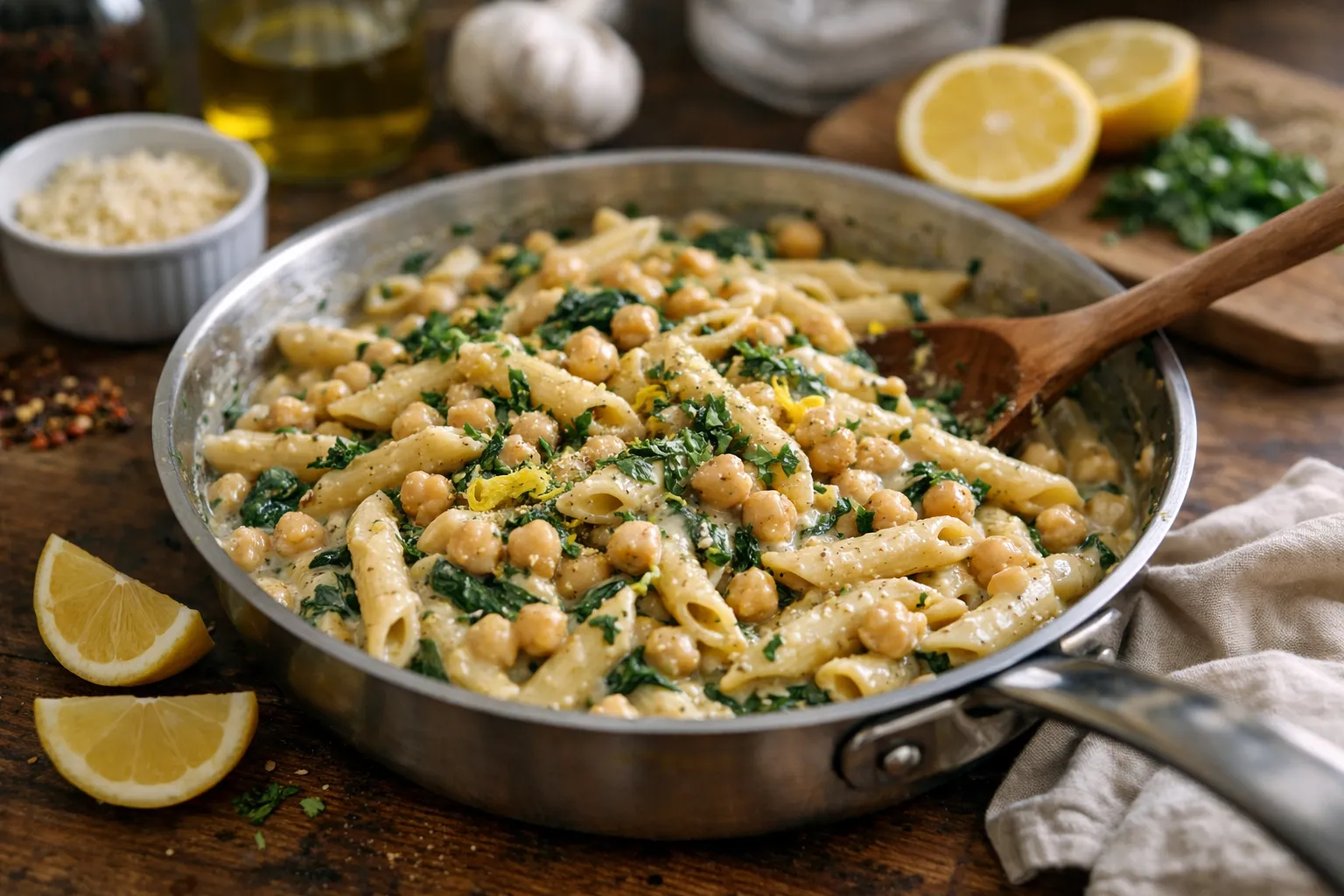
- Final plate: pale-yellow sauce with flecks of parsley, lemon zest and whole chickpeas; a sheen of olive oil on top.
Troubleshooting & tips (2026 practical tips)
- If pasta is undercooked but liquid is gone, add 1/4 cup hot water and continue cooking to prevent burning.
- For silkier sauce, blend 1/4 cup cooked chickpeas with 2 tbsp cooking liquid and stir back in — this mimics a quick bean purée without extra fat.
- Using dry chickpeas? Quick-soak: cover 1 cup dry chickpeas with 3 cups water, boil 2 minutes, remove from heat and soak 1 hour; drain and simmer 40–50 minutes until tender (or pressure-cook 20–25 minutes). Cooked dry chickpeas lower sodium and reduce packaging waste.
- Salt management: start with low-sodium broth and add salt at the end. Canned chickpeas vary — check labels and rinse well to reduce sodium.
- Appliance note: on induction, reduce heat slightly; induction transfers heat faster and can scorch starch if too high.
- Storage: refrigerate in an airtight container 3–4 days per USDA guidance. Reheat gently on stovetop with a splash of water or broth.
Dietary modifications (quick reference)
- Vegan: Use unsweetened soy, oat, or pea-protein yogurt; or 3 tbsp cashew cream or tahini. Omit Parmesan or use a fortified vegan alternative.
- Gluten-free: Use certified GF short pasta; note cooking times differ and starch release may be lower.
- Higher protein: Swap to legume-based pasta (chickpea or lentil) and add a handful of cooked white beans or 1/4 cup hemp hearts at the end.
- Nut-free creaminess: Use yogurt or tahini instead of cashew cream.
Next steps
- Try a variation: add roasted cherry tomatoes and olives for a Mediterranean twist, or toss in baby spinach in the last 2 minutes for extra greens.
- Make-ahead: cook pasta fully but store sauce separately to keep texture; reheat gently with lemon and fresh herbs before serving.
- Experiment with protein: try half wheat pasta + half legume pasta to balance texture and protein content.
Leftovers and storage
Store in an airtight container for 3–4 days in the refrigerator. Reheat on the stovetop over low heat with a splash of water or broth and fresh lemon/herbs added at the end. Freezing is not recommended for best texture; if you must freeze, freeze only the sauce (up to 1 month) and reheat with freshly cooked pasta.
FAQ
Can I use dry chickpeas instead of canned?
Yes. Dry chickpeas have less sodium and can be more economical. Use the quick-soak method (boil 2 minutes, soak 1 hour) and simmer until tender or cook in a pressure cooker for 20–25 minutes. Reserve 2 tbsp cooking liquid to mimic aquafaba if you want extra creaminess.
Will legume pastas work in this one-pot method?
They work well but release more starch and may thicken the sauce faster. Expect slightly different cook times (typically 11–14 minutes). Stir more frequently to prevent sticking and be ready to add extra hot water if the pan dries.
How much protein is in this dish?
Protein varies by ingredients. One cup cooked chickpeas has about 14–15 g protein (USDA database). Using canned chickpeas plus regular pasta yields a moderate-protein meal; swapping to legume pasta and adding hemp hearts or extra beans raises protein substantially.
Is aquafaba safe to use?
Yes — the starchy liquid from canned chickpeas (aquafaba) is widely used to improve texture. Use 1–2 tablespoons reserved liquid to boost creaminess; if you’re concerned about sodium, rinse the chickpeas and use low-sodium cans or cook dry chickpeas yourself.
Any sustainability tips?
Choose low-sodium, BPA-free labeled cans where possible or cook dry legumes in bulk to reduce packaging. Leftover sauce can be frozen separately to minimize waste and preserve texture.